


Anyone meeting this category for the first time runs into the same wall. You search, you read, and the sources fight each other. One guide tells you printed shoes are firmer and more supportive, another says they are stiff and tiring after two hours. One says they are not a replacement for normal shoes, another sells them as everyday wear. One review praises the breathability, the next says the upper matters more than the midsole.
The reason is not that half of these writers are wrong. It is that "3D-printed shoe" describes a price range spanning roughly fifteen dollars to several hundred, and the experiences at either end have almost nothing in common. The category arrived through fashion first — as the industry's own beginner guide notes, printed shoes and accessories went to global catwalks before they reached shelves, and prototyping is still one of the largest uses of the technology. Now it is also a mass-market product, in a footwear industry that makes more than 20 billion pairs a year, of which an estimated one in five is thrown away unworn.
So this piece does something different from a buying guide. It is a map. It explains what a printed shoe physically is, why four different kinds of product all get the same label, what genuinely differs from a normal sneaker, what your first month in a pair is actually like, where the honest objections come from, and the vocabulary you will meet on a product page. At the end you should be able to read any listing in this category and know what you are looking at.

The Short Answer
What Is a 3D-Printed Shoe?
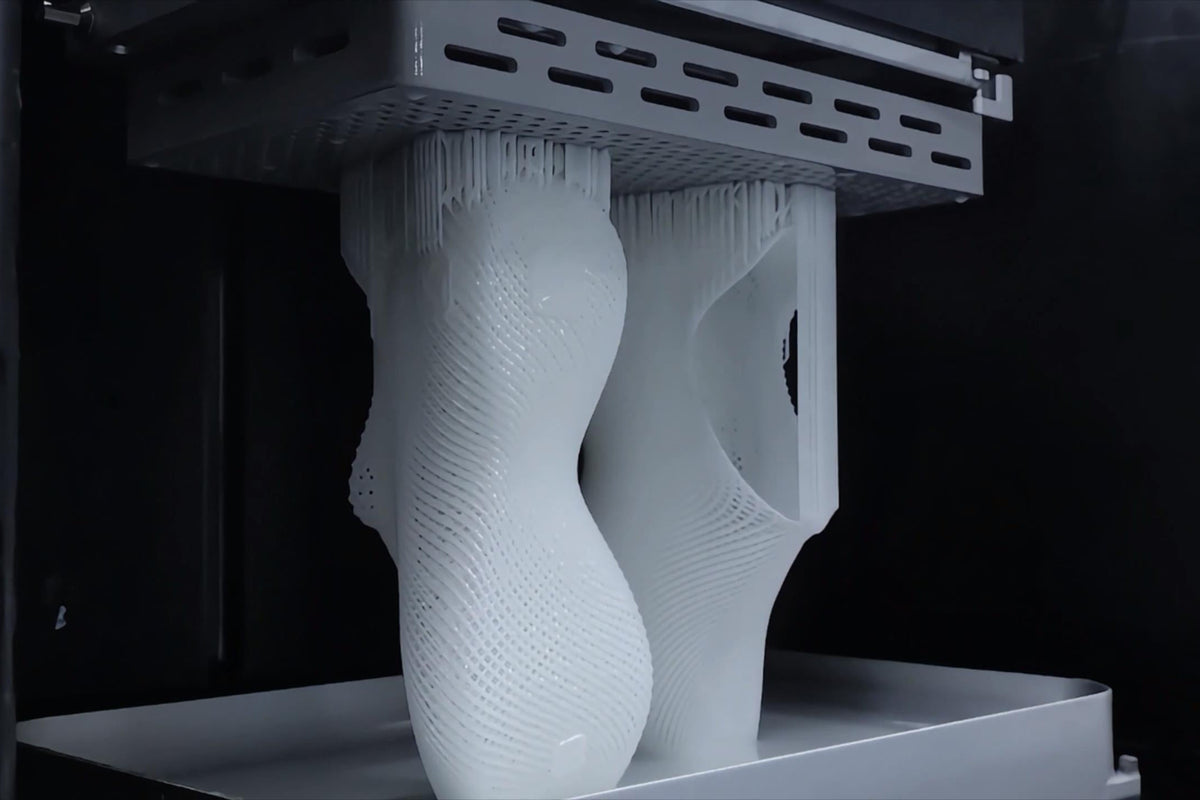
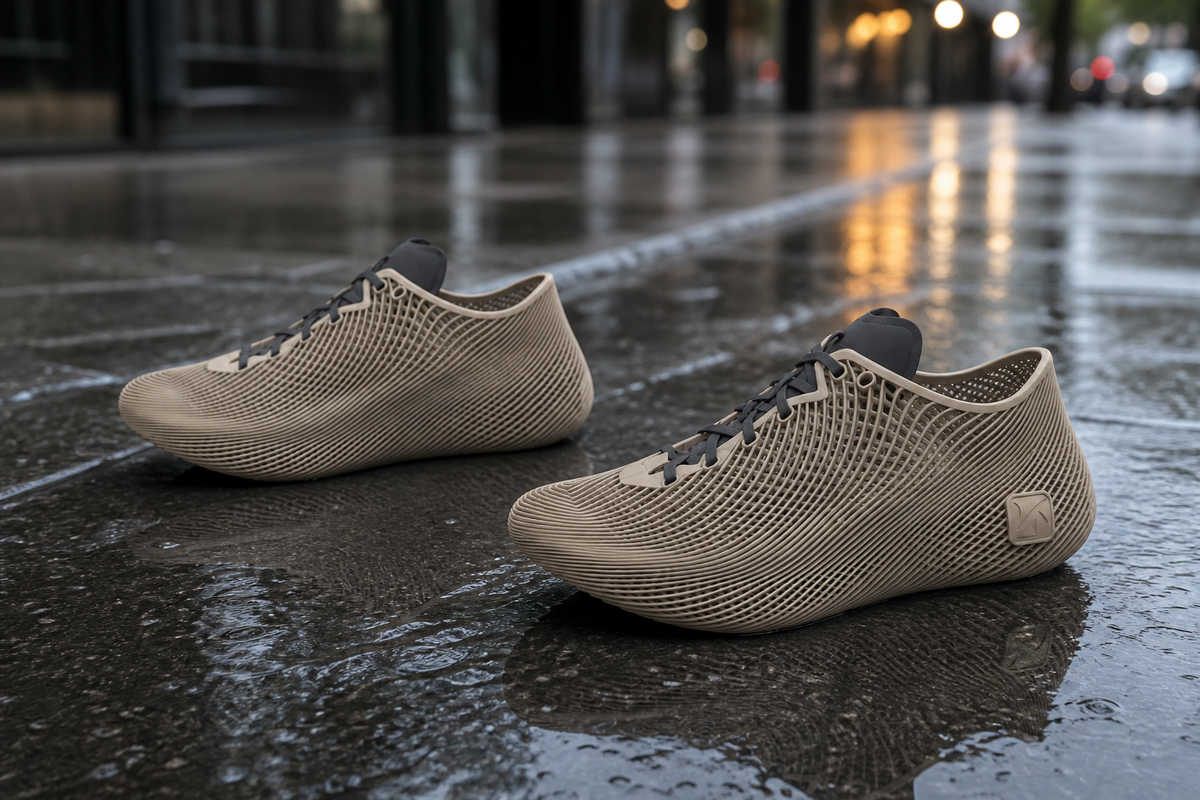
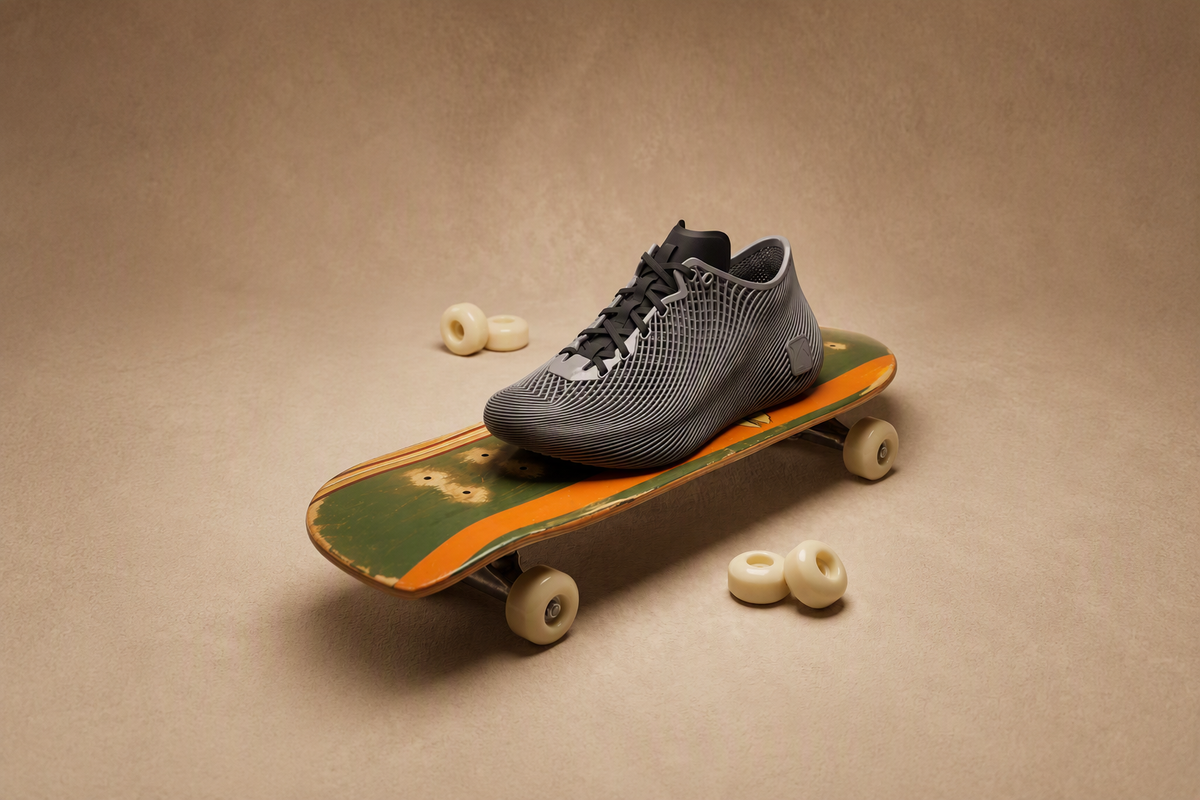
It is a shoe, or part of a shoe, built by an additive process from a digital file rather than cut from sheet material, moulded from a block, or stitched from panels. In practice that means one of two things: a sole or midsole that is printed as a lattice, or a whole shoe whose body comes off the printer as a single piece. What makes it feel different from a normal sneaker is almost always the first of those — the midsole is a designed structure rather than a uniform slab of foam.
Why You Will Read Contradictory Things About Them
Because the label covers products with different physics, different materials and different prices. A shoe whose midsole is a tuned lattice and a shoe whose shell merely has a moulded lattice pattern are both sold as "3D printed". Reviews of one tell you very little about the other. The single most useful thing a first-time buyer can learn is to tell those apart before reading any further.
The Four Kinds of Shoes Sold as "3D Printed"
This is the map. Almost every product you will encounter belongs to one of these four groups.
| Category | What is actually printed | What it usually costs | What it feels like |
|---|---|---|---|
| Fully printed shoe | The whole body: upper and sole as one piece | Highest | Light, firm, highly breathable, one-piece with no stitching |
| Printed midsole in a conventional shoe | The midsole only; the upper is conventional | Mid to high | Familiar fit, but a firmer, springier ride than foam |
| Hybrid | A printed component plus a moulded or stitched part | Mid | Depends entirely on which part was printed |
| Moulded lattice-look | Nothing; the lattice appearance is reproduced by a mould | Lowest | Behaves like ordinary moulded footwear, because that is what it is |
Why the Last Row Matters
Moulding is a legitimate, mature way to make a shoe, and a moulded shoe is not a bad shoe. The problem is only labelling: a moulded lattice appearance can be produced at very high volume — one published manufacturing analysis describes a 30-station rotary moulding line producing as many as 3,000 lattice-look pairs in 24 hours — and the appearance alone will not tell you which process you are holding. If knowing matters to you, ask what printed it and look at a cross-section rather than the outside.

What Actually Differs From a Normal Sneaker
The Midsole
This is the whole story, and it is worth understanding properly. Foam cushions by trapping gas in a polymer and compressing; it is broadly uniform in every direction. A printed lattice cushions through geometry: a network of struts and cells that can be made firmer in one zone and softer in another, and that can be engineered to behave differently in different directions. The practical consequences are that the support is more localised, the feel is firmer and more responsive, and the structure does not flatten the way foam cell walls do over time.

The Upper
Less different than beginners expect, and this is where a lot of review confusion comes from. Many shoes described as printed have a printed sole and a conventional upper, so breathability, fit and water behaviour depend on the upper material as much as on the printing. If a review praises ventilation, check which part the reviewer is describing.
The Weight
A printed lattice generally weighs more than the foam it replaces for equivalent protection, because the material is distributed as struts rather than filling the volume. This is the clearest, least controversial trade-off in the category.
The Wear Pattern
Foam wears by compressing; the shoe gets flatter and softer until you replace it. A printed lattice wears at stress points — repeated flex zones can fatigue, and a one-piece printed shoe cannot be resoled. The end of life is more likely to be the outsole wearing through than the midsole collapsing.
The Fit
A printed structure adapts less to your foot than soft foam does, so the initial fit matters more than it does in a cushioned sneaker. Sizing that would be tolerable in a foam shoe can produce pressure points in a firm one. Check the brand's size chart rather than assuming your usual size carries over.

What the First Month Actually Feels Like
The most common complaint from first-time buyers is not that the shoe is bad. It is that the shoe is different from what they expected, which is a different problem and an easier one to prepare for.
| When | What most people notice |
|---|---|
| First hour | Light, cool, and firmer underfoot than a foam sneaker; the support is more noticeable than the cushioning |
| First few days | No real break-in, and no softening either — the structure keeps its shape, so the feel on day one is close to the feel on day thirty |
| First two weeks | Clearer picture of where the pressure sits; if a pressure point exists, this is when it shows up, and it is a fit issue rather than something that wears in |
| First month | You know whether you like a firm, structured ride. Reviews that call printed shoes "tiring after a couple of hours" are describing exactly this preference boundary, not a defect |
| Beyond | Wear appears first at the flex zones and the outsole, not as a general flattening |
The Caveat
The independent guides that warn about fatigue, limited shock absorption and short-duration comfort are describing real experiences with real products — usually at the entry end of the category, and usually with stiffer materials. A well-designed lattice in a flexible polymer does not behave the same way. Both statements can be true at once, which is precisely why the map at the top of this article matters more than any single review.
A Glossary for Your First Product Page
Product pages in this category use vocabulary that is rarely explained. These are the terms worth knowing before you read one.
- Additive manufacturing — the umbrella term for printing processes that build a part up rather than cutting it down. "3D printing" and "additive manufacturing" mean the same thing in a footwear context.
- Lattice — a repeating structure of struts and open cells. In a shoe, it is what replaces a solid foam midsole.
- Midsole — the layer between your foot and the ground that provides cushioning and support. The part most affected by printing.
- TPU (thermoplastic polyurethane) — the flexible polymer most commonly used for printed shoe components. Softer and more forgiving than rigid resins.
- FDM / FFF — fused deposition modelling, a printing method that extrudes melted filament. Genuine printing, with visible layer lines and a weaker bond between layers.
- DLS / vat photopolymerisation — processes that cure liquid resin with light. Smoother surfaces and fewer layer interfaces than extrusion.
- HALS — a continuous resin curing route used for volume production of printed footwear. If you want the mechanics, ARKKY's own explainer on what HALS 3D printing is goes through it.
- One-piece — a shoe printed as a single body with no stitched upper or bonded midsole. Fewer failure points, but not resoleable.
Where the Honest Objections Come From
"They Are Not a Replacement for Regular Shoes"
This is the conclusion of the most thorough independent buying guide in the category, and it is worth taking seriously rather than arguing with. Read closely, though, and the reasoning is about price-to-performance and about high-impact use — not about whether a printed shoe can be worn daily. Whether a given pair replaces your regular shoes depends on the pair.
"They Are Not for Running"
Same source, same caveat. The warning is aimed at the general category, and it is accurate for a firm, denser lattice. It is not a statement about every printed midsole: adidas built its 4D running line on a printed lattice, and the 4DFWD midsole was selected from five million candidate variations with a reported 15% average reduction in peak braking force. If running performance is what you care about, printed sneakers versus traditional sneakers is the more useful comparison.
"Comfort Is Not Universal"
This one is simply correct, and it is the most useful sentence in the critical literature. A firm, structured ride suits some feet and not others. There is no version of this decision that avoids trying a pair.
"Durability Is Unpredictable"
Also fair, with a specific mechanism: printed shoes do not wear out the way foam shoes do. Where foam degrades gradually and evenly, a lattice fatigues at the points that flex most.
How to Check a Pair Before You Buy
Ask What Was Printed
The whole body, the midsole, or nothing. If a listing cannot answer that, that is your answer.
Look for a Cross-Section
An exterior photo shows you the design; a cut section shows you the construction. This is the single most reliable check available to a buyer, and it is why how to tell a printed shoe from an injection-moulded one spends its length on construction rather than photography.
Match the Shoe to the Job
A soft, breathable lattice suits walking, standing and warm weather. A denser lattice suits stability. Neither suits everything, and no manufacturer has solved that yet.
Decide How You Feel About a Firm Ride
This is a preference question, not a quality question, and it is the one thing no review can settle for you. If you have only ever worn soft foam, expect an adjustment.
Plan the Care
Printed shoes are easier to clean and harder to dry badly than foam-lined shoes, because water passes through the structure instead of soaking into it. How to dry lattice shoes covers the routine.
If You Want to Start Somewhere
We make one-piece printed footwear, so everything above applies to our products directly. Two models cover most first-time buyers. The AeroDash is the sport-leaning print, and the better first pair if you want to test a printed sole against a foam one on runs, commutes and gym sessions, because its printed sole does the cushioning job without a foam layer. The AeroLace carries the same one-piece construction in a more everyday shape, which makes it the safer first pair if the shoe also has to work with ordinary clothes. Sizes and materials differ between models, so confirm them on the product page; the full range is in the 3D printed footwear collection. This paragraph describes our own products and should be read as our description rather than an independent assessment.

Questions First-Timers Ask
Are 3D-printed shoes comfortable?
They can be, and the deciding variable is not the printing but the lattice density, the polymer and the fit. Independent reviewers who find them firm are usually describing denser, stiffer designs; a well-tuned lattice in a flexible TPU feels supportive rather than hard. The one reliable rule is that a firm structure adapts less to your foot, so fit matters more than it does in a foam sneaker.
How long do they last?
Longer in the midsole, shorter in the sole, and less predictably than foam. Foam ages gradually and evenly; a printed lattice holds its cushioning but fatigues at flex points, and a one-piece shoe cannot be resoled. Treat the outsole as the end-of-life indicator.
Are they worth the price?
For some buyers, yes; for others, plainly not. The category's own critical guide frames the value as design, novelty and a structured ride rather than performance per dollar — and that is a fair summary. If you are optimising for cost per mile, a conventional cushioned shoe is hard to beat. If you want the specific feel and the construction, the premium buys something real.
Do they fit true to size?
Sizing is usually accurate; the internal feel is not. Firm structures produce pressure points that soft foam simply absorbs, so a size that works in foam can be uncomfortable in a lattice. Measure rather than assume.
Are printed shoes better for the environment?
Not automatically. Printing reduces tooling and lets a brand produce closer to demand, which speaks to the industry's largest waste problem — the estimated one in five pairs discarded unworn. Against that, printed footwear is harder to recycle at end of life than a shoe designed for disassembly, and the polymers involved are not inherently greener than foam. Fewer shoes made is a real gain; a printed shoe is not automatically a green shoe.
Should I buy a fully printed shoe or one with a printed midsole?
A printed midsole is the lower-risk first purchase, because you keep a conventional fit and change only the ride. A fully printed shoe is the bigger change: lighter and far more breathable, but firmer, not resoleable, and less forgiving of a sizing miss. If you are unsure, read whether a printed pair is worth it for you before deciding, or look at how the printing methods compare.
Share:
Comparing ARKKY Colors: Which Fits Your Style?