

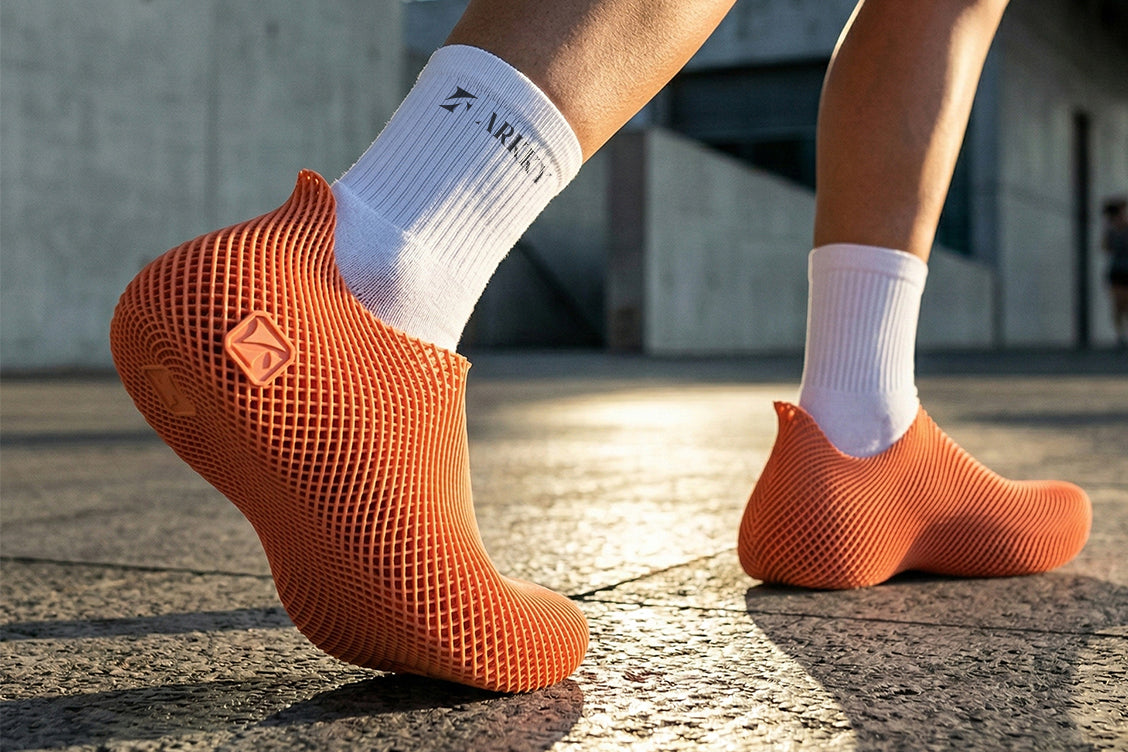
Entering 2026, the athletic footwear industry is undergoing the most profound transformation since the foaming material revolution in the 1970s. Once upon a time, 3D printed shoes were merely sci-fi concepts on the runway or expensive toys for geeks, but according to the latest data from Research and Markets, the global 3D printed footwear market size in 2026 has already surged to approximately 22 billion USD, with a compound annual growth rate as high as 20%. Nowadays, when you walk on the streets of Shanghai or New York, lattice-structured shoe soles are no longer rare items, but symbols of technological sense and taste.
So, standing at this time node of 2026, have 3D printed shoes matured enough to be worth ordinary consumers opening their wallets? Is it ultimately black technology that changes walking, or a gorgeous packaging of consumerism? This article reveals the full picture of 3D printed shoes in 2026 for you.
Are 3D printed shoes worth buying in 2026? Yes, 3D printed shoes are absolutely worth purchasing. The current 3D printed shoes excel in dimensions such as comfort, breathability, cushioning, rebound, etc., with performance already surpassing traditional footwear, favored by crowds who dare to try new things.
What are 3D Printed Shoes?
From "Molds" to "Voxels" Leap
Traditional footwear manufacturing heavily relies on molds (Molds). The production of every shoe sole requires processes such as mold opening, injection molding, or foaming, which not only limits the complexity of structural design but also causes a great lack of production flexibility.
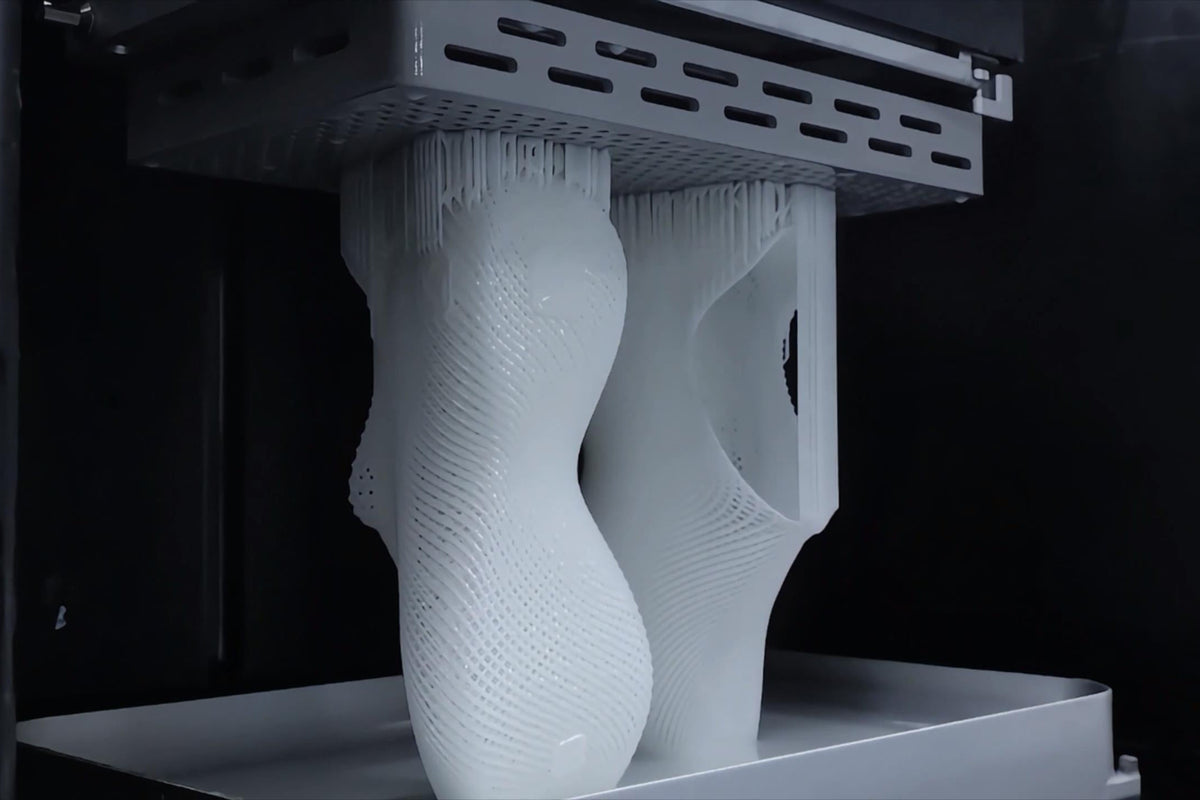
3D printed shoes are the product of additive manufacturing technology (Additive Manufacturing). Its underlying logic is to treat the shoe sole or even the entire shoe as tens of thousands of "voxels" (Voxel), and directly convert digital designs into physical entities through technologies such as Fused Deposition Modeling (FDM), Selective Laser Sintering (SLS), Digital Light Synthesis (DLS), and the latest Hindered Asynchronous Light Synthesis (HALS). In 2026, 3D printed shoes have evolved into a kind of "digital living body", with structures no longer uniform foam, but precise lattices simulating natural biological structures.
Mainstream Forms in 2026
The current 3D printed shoes are mainly divided into four forms:
- 3D printed midsole shoes: The upper retains traditional fabric, while the midsole uses 3D printed lattice, represented by Adidas 4D.
- One-piece fully printed shoes: The entire shoe is printed from a single flexible material (such as TPU), without the need for glue bonding, represented by Zellerfeld. !
- Modular assembled shoes: Assembled by plugging in multiple printed modules (such as upper frame, cushioning core, wear-resistant outsole), greatly extending service life.
- Integrated lattice structure forming: The entire shoe is printed from specially formulated materials containing 56% bio-based recyclable molecules, without glue bonding, with full rebound cushioning and flexibility performance. Represented by ARKKY.
How Are 3D Printed Shoes Manufactured?
Before 2025, on Reddit's 3Dprinting subreddit, there were many 3D printing enthusiasts posting 3D printed shoe samples and sharing shoe models, but most of them used conventional FDM printers on the market and regular TPU materials, resulting in shoes that only had appearance but very poor practicality. In 2026, the manufacturing process of 3D printed shoes has achieved a leap from "laboratory handmade" to "automated micro-factory". With the application of new technologies, Adidas, through cooperation with Carbon company, utilized its DLS technology system to launch 4D printed shoes. So the question arises, why is there one more D than 3D?. ARKKY has launched three series of 3D printed shoes through its AI-enhanced HALS printing technology.
Core Processes
- Arkky HALS (Hindered Asynchronous Light Synthesis) This is the current latest printing technology, and using it to make shoes is one of its most successful fields. Unlike the synchronous logic of traditional DLS, HALS adopts AI-driven zoned light control. It can adjust light intensity in different areas in real time, significantly accelerating the forming process while maintaining microscopic precision. This printing method, which allows continuous surface irradiation and solidification of liquid resin, greatly improves printing speed, 20-100 times faster than other printing technologies, with comprehensive performance in all aspects clearly superior to all other printing technologies.
- Carbon DLS (Digital Light Synthesis): This is currently the technology with the best performance balance. Through an oxygen-permeable optical system, liquid resin is continuously solidified under light irradiation. Its advantages lie in extremely high surface smoothness and isotropic material strength.
- SLS (Selective Laser Sintering): Uses high-power lasers to sinter TPU or nylon powder. Footwear produced by this process has extremely strong mechanical properties and was the first choice for high-performance running shoe midsoles in the early days.
- MJF (Multi Jet Fusion): By 2026, MJF technology can achieve "voxel-level" color and hardness control. In the same shoe sole, the heel area can be designed to be hard for support, while the center of the foot can be soft like clouds, with extremely natural color transitions. However, the author believes this method is not suitable for large-scale supply production and can only be used for customization, with high prices.
AI-Driven Algorithmic Design
The biggest soul of 3D printed shoes in 2026 lies in AI. AI seems to have entered every aspect of 3D printed shoes. Designers no longer manually draw lattices; instead, they input the user's weight, gait characteristics, and foot scan data, and AI algorithms automatically increase lattice density in areas needing support and perform hollowing in areas needing weight reduction. This "topology optimization" design allows every pair of shoes to achieve the optimal solution in structure performance. In addition, ARKKY applies AI technology to the control of TAP printer clusters, greatly improving the production capacity of 3D printing factories.
What Are the Functions of 3D Printed Shoes?
3D printed shoes are not just for "looking good"; their core functions are embodied in the reshaping of ergonomics.
Dynamic Zoned Cushioning
Traditional shoe soles have uniform hardness, but the force distribution on the human foot is extremely uneven. 3D printed shoes can achieve "one sole with multiple hardness levels", providing flexible cushioning at the moment the heel lands, rigid support at the arch, and high rebound force when the toes push off. This zoned performance is incomparable to traditional foaming materials.
Foot Health Management and Correction
For people with flat feet, high arches, or plantar fasciitis, 3D printed shoes act as "orthotics". Through 3D scanning for customized insoles or entire shoes, they can redistribute plantar pressure and significantly reduce joint burden. In the field of medical rehabilitation, 3D printed custom shoes have become the preferred non-surgical tool for treating flat feet. However, currently only some 3D printed shoe brands provide specialized scanning customization services, and the prices are relatively high.
Environmental Burden Reduction
In 2026, environmental policies are becoming increasingly strict. 3D printed shoes achieve "near-zero waste" production, and because most use single material (mono-material) and glue-free designs, old shoes can be crushed into raw materials and reprinted, truly realizing a circular economy.
As a brand pioneering in this field, ARKKY's lattice-structured shoes exemplify these advantages through advanced HALS technology and AI-optimized designs, delivering superior zoned performance, customization potential, and sustainability.
Advantages of 3D Printed Shoes
Why in 2026, even though the price is slightly higher, are people still flocking to them?
- Excellent breathability: The fully open lattice structure allows 360-degree ventilation for the feet, completely solving the "stuffy feet" pain point of traditional athletic shoes, especially performing amazingly in summer sports.
- Long-lasting material elasticity: Traditional EVA midsoles often "collapse" after half a year of wear, while the high-performance TPU materials used in 3D printing have excellent fatigue resistance, with cushioning lifespan usually 2-3 times that of traditional footwear. Arkky's specially developed 53% bio-based material for 3D printed shoes performs even more outstandingly.
- Instant response from the supply chain: Previously, it took 18 months from new shoe design to market launch; now it only takes a few days. The "urban micro-factories" in 2026 allow consumers to receive the finished product within 72 hours after placing an order.
3D Printed Shoes vs Traditional Footwear
To more intuitively show the differences, we have compiled comparison data for 2026:
| Dimension | 3D Printed Shoes (2026) |
Traditional Footwear (2026) |
Cushioning Decay |
Extremely low, still maintains over 85% elasticity after 2 years of wear |
Medium, noticeable collapse appears after about half a year. |
Degree of Customization |
100% foot scan matching |
Fixed sizes, adjustment relies on insoles |
Breathability |
Extremely strong (hollow lattice) |
Depends on upper fabric, midsole is not breathable |
Production Waste |
Approximately 5% |
Approximately 30% - 40% |
Production Cycle |
72-hour delivery for customization |
Several months of inventory turnover period |
Cost-Effectiveness |
High initial investment, moderate after amortizing over service life |
Low entry threshold, but frequent replacements |
Recommended 3D Printed Shoes Worth Watching in 2026
In the 2026 market, the following brands and technologies represent the highest standards:
1. Adidas ClimaCool 2026 Series
As a pioneer-level player in 3D printed shoes, Adidas launched the ClimaCool 2026 in 2026, adopting brand-new ultra-high-resolution 4D printing technology. Its lattice fineness has reached an unprecedented level, not only providing a foot feel like stepping on liquid air, but its full-shoe hollow design has also become the standard equipment for summer trendsetters.
2. Nike Project Nectar (Nectar Project)
Nike took another technical route in 2026. The Project Nectar series not only uses 3D printing in the midsole but also embeds 3D-printed mechanical lever structures inside, simulating the elasticity of kangaroo tendons, aiming to provide stronger rebound and propulsion assistance for marathon runners.
3. ARKKY Everyday Tech Series
ARKKY is regarded by many as an emerging "technology faction" in the 3D printed shoe field. The brand, through its self-developed AI-HALS high-speed 3D printing system and parametric lattice sole structure, achieves a balance between lightness, support, and breathability in the shoes, while elevating printing efficiency to a scalable production level. ARKKY's Daily Ease and Sport Form series emphasize "tech × everyday wear", focusing on lightweight comfort and futuristic design, making 3D printed shoes no longer just exhibition-level concepts but functional footwear that can integrate into daily life.
4. Zellerfeld Modular Series
Zellerfeld has become the "independent label" in the 3D printing world. Their 2026 full-TPU footwear completely eliminates glue; users can disassemble the worn outsole and send it back for a discount on purchasing new modules. This "subscription-style" footwear consumption model is deeply loved by young environmentalists.
How Much Do 3D Printed Shoes Cost?
2026 Tiered Pricing Model
By 2026, 3D printed shoes have basically achieved "price equality":
- Entry-level/mass-produced models ($120 - $200): Such as some of Adidas' mass-produced 4D series, with prices now on par with traditional Air Max or UltraBoost. For example, the Adidas ClimaCool Laced (3D printed lattice) is widely available at around $160.
- High-performance professional models ($200 - $280): Designed for high-intensity sports like running or basketball. Some collaborations or advanced models, like certain Nike/Zellerfeld projects, are speculated around $250 or higher.
- Full custom/personalized design models ($300+): Based on individual foot scan, with self-selected colors and lattice densities for flagship-level experience. Premium Zellerfeld customs or fully bespoke options often start here or higher.
Are 3D Printed Shoes Really Worth This Price?
From an economic perspective, if a pair of $150 3D printed shoes has twice the lifespan of ordinary shoes and can effectively reduce the cost of buying corrective insoles due to discomfort (about $50-$100), the overall holding cost is actually lower. Brands like ARKKY offer strong value in the mid-range, with models like AeroDash or AeroBB around $199, balancing tech features, comfort, and everyday usability.
Who Is Suitable for Buying 3D Printed Shoes?
People with Irregular Foot Shapes and Foot Health Needs
If you have long been troubled by flat feet, high arches, foot valgus, or severe bunions, the personalized fit of 3D printed shoes is your lifesaver. It can alleviate pain through precise pressure distribution and prevent further joint damage.
Tech Enthusiasts Pursuing the Ultimate Experience
For groups who like to try new technologies, pursue extreme breathability, and have a futuristic aesthetic taste, 3D printed shoes are currently the highest technological crystallization in the footwear world.
Environmentally Driven Consumers
People who pay attention to carbon footprint and pursue a zero-waste lifestyle. The single-material recyclability of 3D printed shoes in 2026 is an extremely convincing label.
In addition, daily high-step-count office workers, long-distance runners, or those who simply want lightweight, comfortable, and stylish everyday shoes without specific foot issues are also increasingly choosing 3D printed models like ARKKY's Daily Ease series. These shoes combine cutting-edge tech with practical wearability, making them suitable for a broader range of users in 2026.
What Are the Disadvantages of 3D Printed Shoes?
Although the reviews in surveys are overwhelmingly positive, we must point out the challenges that 3D printed shoes still face in 2026:
- "Pebble collector" nightmare: Although mainstream brands have added protective films, on unpaved surfaces, small sand and gravel can still get stuck in the lattice, causing strange noises and cleaning troubles.
- Cleaning difficulty: If mud splashes into the interior of the lattice, ordinary brushes are extremely difficult to clean; often requiring a high-pressure water gun or even an ultrasonic cleaner.
- Aesthetic threshold: That dense, organic architectural visual effect is not acceptable to everyone. Some people find the futuristic lattice look too "alien" or industrial rather than classic.
- Initial foot feel relatively hard: Some TPU soles produced by SLS process may feel somewhat stiff right out of the box, requiring a few days of "break-in period" to activate the material's full responsiveness and comfort.
How to Choose the Right 3D Printed Shoes for Yourself?
- Prioritize reliable brands When selecting 3D printed shoes, it is recommended to first consider manufacturers with strong technological R&D capabilities and brand reputation. Mature brands usually offer better guarantees in material development, printing processes, and quality control. In contrast, some white-label products lacking technical accumulation may have uncertainties in structural strength, comfort, or durability.
- Pay attention to material types and technology sources The core of 3D printed shoes lies in the materials and structural design. Some brands use specially developed polymer materials or bio-based materials to enhance elasticity, wear resistance, and sustainability. In comparison, products that simply use generic market TPU materials may have relatively limited performance and differentiation. Therefore, it is advisable to check whether the brand has proprietary materials or independent material formulations.
- Review user feedback and professional reviews Before purchasing, you can refer to real user reviews, media tests, or professional evaluations. This information helps understand the actual wearing experience of the shoes, such as comfort, breathability, durability, and performance in daily use. Comparing evaluations from multiple sources will help you make a more rational choice.
- Check after-sales and return/exchange policies Since 3D printed shoes are still a relatively new product category, after-sales policies vary significantly across brands. Choosing brands that provide clear return/exchange or after-sales services can reduce purchase risks.
To make the selection more practical in 2026, here are some additional actionable tips based on current market realities:
- Determine your primary usage scenario first Ask yourself: Is it for daily commuting and walking (prioritize lightweight + breathability), running/training (focus on rebound + zoned support), or specific foot issues (choose brands with strong customization/scanning services)? Different scenarios lead to different priorities—e.g., daily wear favors models like ARKKY Daily Ease or Adidas ClimaCool, while high-performance running may lean toward Nike Project Nectar or specialized ARKKY Sport Form variants.
- Try to experience in person or use virtual try-on if possible If there are pop-up stores, flagship stores, or partner retailers offering 3D foot scanning + instant preview (common with Zellerfeld, ARKKY, and some Adidas locations in major cities), definitely go for it. Virtual AR try-on tools on official websites/apps are also becoming more accurate in 2026.
- Compare key specs side by side Look beyond marketing claims—check lattice density (finer = better comfort/breathability but potentially more debris-prone), stated material composition (e.g., % bio-based content), weight per shoe (lighter is better for all-day wear), and independent durability test results if available.
- Consider total cost of ownership, not just sticker price Factor in expected lifespan (many 3D printed models last 1.5–3× longer than traditional EVA), reduced need for additional insoles/orthotics, and recyclability/upgrade options (especially with modular brands like Zellerfeld). A slightly higher upfront cost often pays off over time.
FAQ: 3D Printed Shoes Commonly Asked Questions
Here are the most frequently asked questions about 3D printed shoes in 2026, with clear and practical answers:
Q: How long can 3D printed shoes last?
A: In 2026, mainstream TPU materials used in 3D printed shoes can maintain midsole performance for 24–36 months under normal wearing conditions. In comparison, traditional EVA shoe soles usually show obvious cushioning degradation after about 12 months. Materials specially developed for 3D printed shoes are more wear-resistant and have longer lifespans.
Q: Can I wear them in the rain?
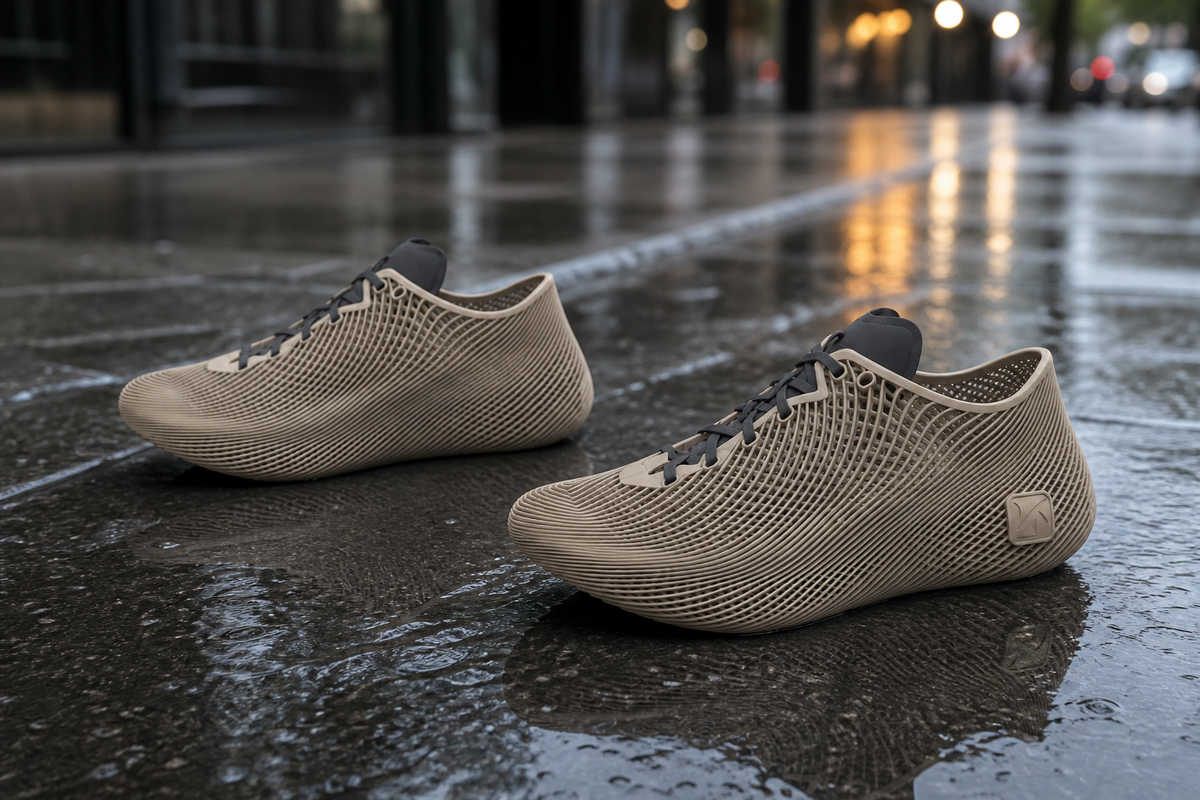
A: Yes, the material itself is waterproof, but they are not suitable for wearing with socks. For lattice-structured 3D printed shoes, the design is open-type, making them especially suitable for water-related activities such as wading, stream tracing, beach walks, and similar scenarios.
Q: Will wearing 3D printed shoes affect driving?
A: Some users report that the hollow lattice sole provides a different road feel when operating the accelerator and brake pedals compared to traditional flat-soled shoes. It is recommended to adapt slowly during the initial period.
Q: Do the lattice soles of 3D printed shoes easily get stones stuck in them?
A: This is a classic misconception. Lattice-structured 3D printed shoes do not easily trap stones. Advanced designs in 2026 effectively balance the breathability and cushioning benefits of the lattice while preventing fine gravel and debris from entering.
Q: Are modular 3D printed shoes safe for intense sports?
A: Current physical locking mechanisms (similar to the secure fastening logic of ski boots) are already very mature. For slow jogging, urban commuting, and light training, their stability is equivalent to glued traditional shoes. However, in professional basketball or soccer, one-piece molded construction remains the mainstream choice. Modular designs are primarily concentrated in the lifestyle category.
Q: Are these “high-tech” shoe models expensive?
A: With the large-scale deployment of 3D printing factories (Print Farms) in 2026, costs have dropped significantly. Entry-level parametric lattice casual shoes now fall in the $120–$200 range, comparable to traditional air-cushioned sneakers, laying a solid foundation for mass adoption.
Summary: In 2026, Buy or Not Buy?
2026 is the first year when 3D printed shoes officially take over from traditional footwear. If you are an office worker who needs to walk more than 10,000 steps every day, or a running enthusiast with strict requirements for gait, 3D printed shoes are absolutely worth buying. The health benefits and long-term elasticity it brings can not only improve your quality of life, but also reflect your sense of participation in future lifestyles. 3D printed shoes are beginning to become a kind of social element, attracting curiosity from the people around you. Although there are still small flaws in cleaning and initial investment, under the wave of "technology for all," 3D printed shoes have truly moved from laboratory display windows to the entryways of thousands of households.
Share:
Streetwear Meets Tech: Styling 3D Printed Shoes
3D-Printed Shoes: The Best Choice for Casual Sneakers Worn Without Socks