

1. Introduction: The 2025 Manufacturing Singularity
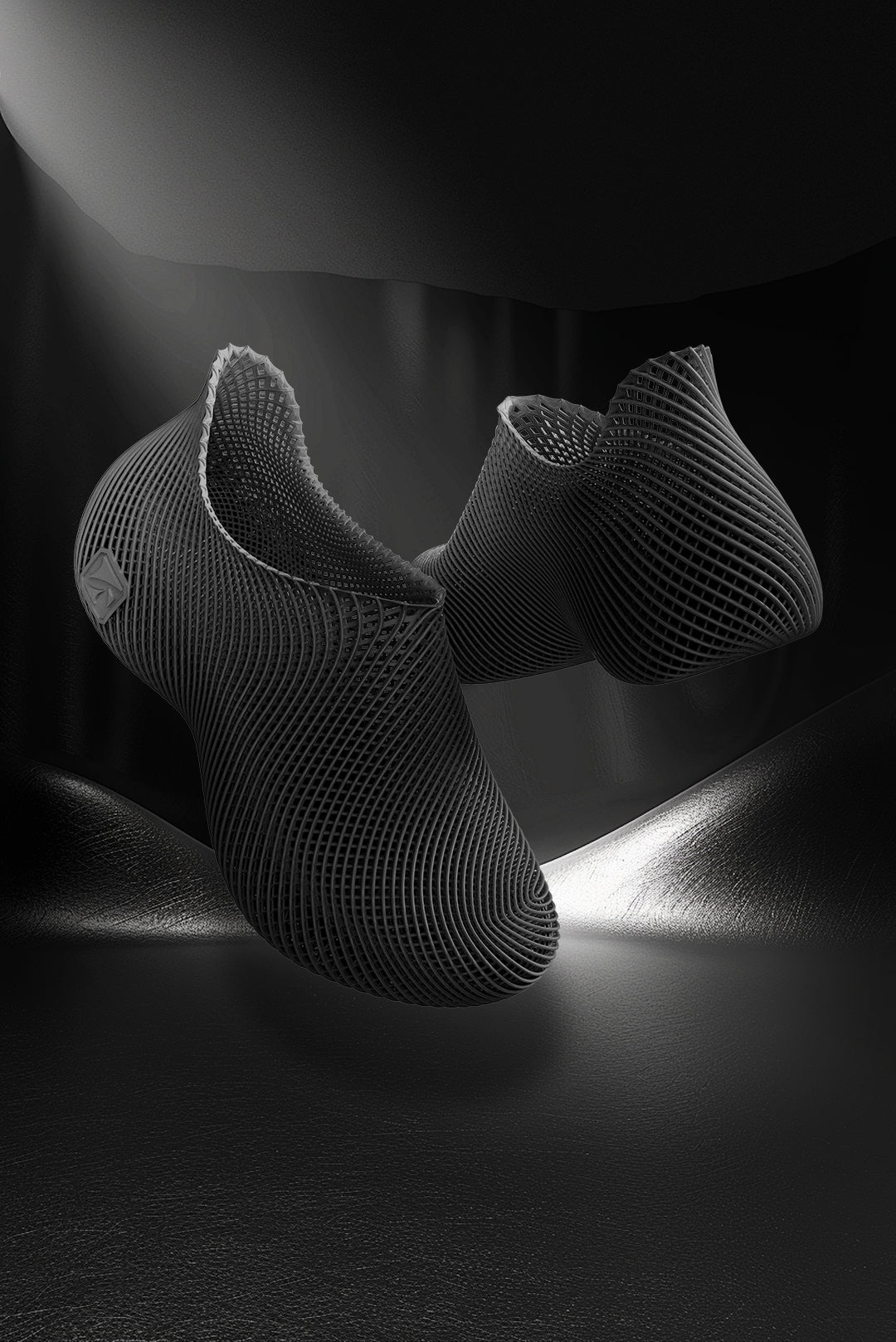
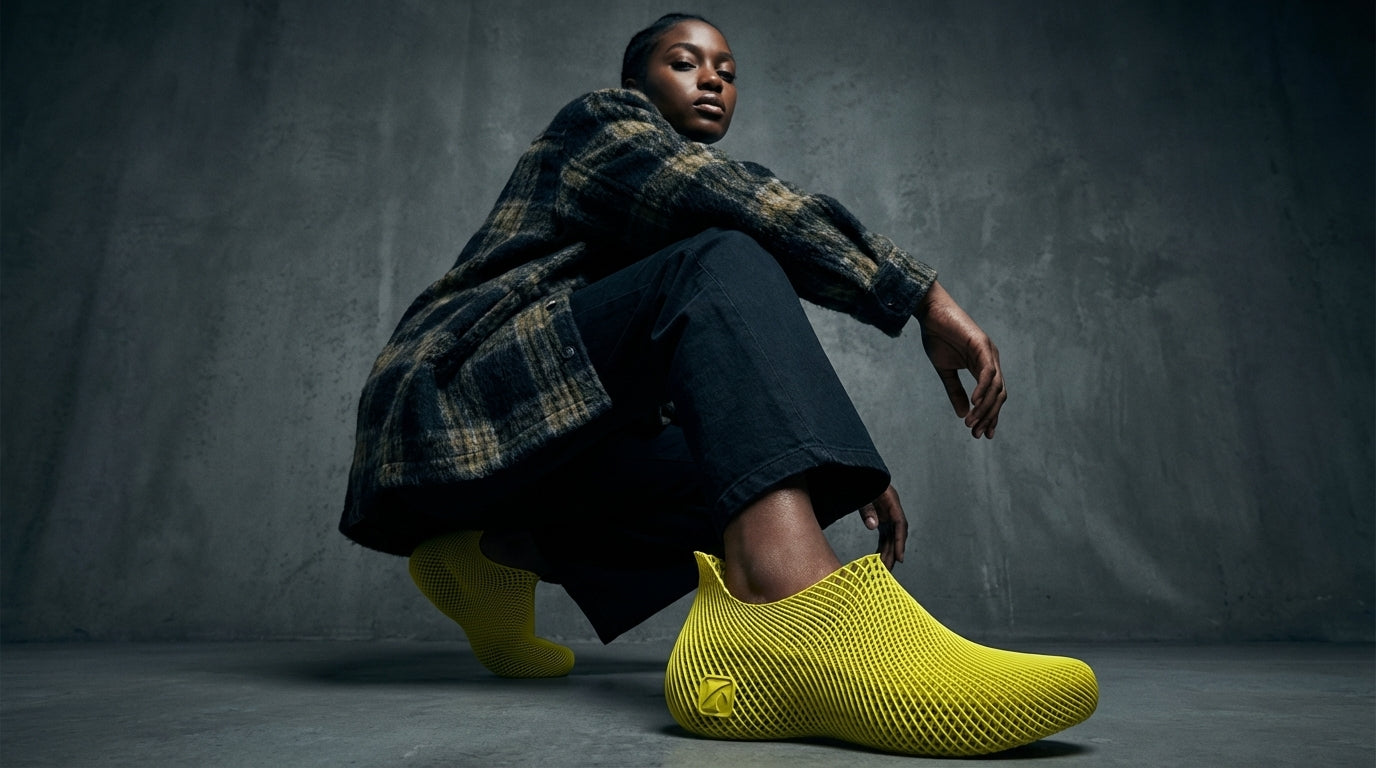
For over a decade, 3D printed shoes were often dismissed as expensive novelties—visually striking but impractical for daily wear. However, 2025 marks a definitive turning point . The industry has moved beyond the "experimental phase" into the "mass production phase," driven by a singular technological breakthrough: AIHALS .
This year, we are witnessing a paradigm shift where 3D printing is no longer just about making prototypes; it is about rewriting the rules of shoemaking. From the early powder-based sintering to today's liquid interface artificial intelligence, the technology has matured to a point where it now objectively outperforms traditional EVA foam injection molding in durability, comfort, and sustainability.
2. The Evolution of Footwear Printing: From Powder to AI
To appreciate the massive leap in 2025, we must understand the journey. The evolution of 3D printed shoes is defined by four distinct eras of technology, each solving a specific problem of the last.
Era 1: SLS (Selective Laser Sintering) – The Durable Foundation
- Representative Brand: Peak (China), Various Orthotic Labs
- The Technology: SLS is a powder-bed fusion technology. A high-power laser traces the cross-section of the shoe sole onto a bed of polymer powder (typically Nylon PA11 or PA12). As the laser heats the powder, the particles fuse together.
Pros:
- No Support Structures: The unsintered powder surrounds the part, supporting it during the print. This allows for incredibly complex, interlocking geometries that other methods cannot achieve.
- Extreme Durability: Nylon is tough. It resists abrasion and fatigue better than almost any other printable material.
Cons:
- Surface Finish: The resulting parts have a "sugary" or grainy texture.
- Post-Processing: Excavating the shoe from the powder cake is messy and labor-intensive.
- Color Limitations: Most prints are white/grey and must be dyed.

Era 2: FDM (Fused Deposition Modeling) – The Circular Pioneer
- Representative Brand: Zellerfeld
- The Technology: This is the most recognizable form of 3D printing. A nozzle heats thermoplastic filament and extrudes it layer by layer onto a build plate. Zellerfeld revolutionized this by optimizing it for flexible TPU (Thermoplastic Polyurethane).
Pros:
- Mono-Material Construction: Unlike traditional shoes that glue different materials together, FDM shoes are printed as one single chunk of material. This makes them 100% recyclable .
- Custom Fit: It is the easiest technology to scale for "scan-to-print" custom sizes because machines are cheaper.
Cons:
- Layer Lines: Visible horizontal lines are inevitable, affecting the aesthetic smoothness.
- Speed: It is inherently slow. Printing a full shoe can take 10-20 hours.
- Watertight Issues: Early FDM shoes struggled with being waterproof due to microscopic gaps between layers.


Era 3: DLS (Digital Light Synthesis) – The Speed Catalyst
- Representative Brand: Adidas (Futurecraft 4D)
- The Technology: Developed by Carbon, DLS uses digital light projection, oxygen-permeable optics, and programmable liquid resins. It projects a UV image of the layer into a pool of resin, curing it instantly.
Pros:
- Surface Quality: Produces injection-mold quality surface finishes.
- Speed: significantly faster than FDM and SLS.
Cons:
- Cost: The machines and resins are astronomically expensive, keeping shoe prices high.
- Anisotropy: While better than FDM, Z-axis strength is still often weaker than X/Y capability.

3. The 2025 Revolution: AIHALS Technology
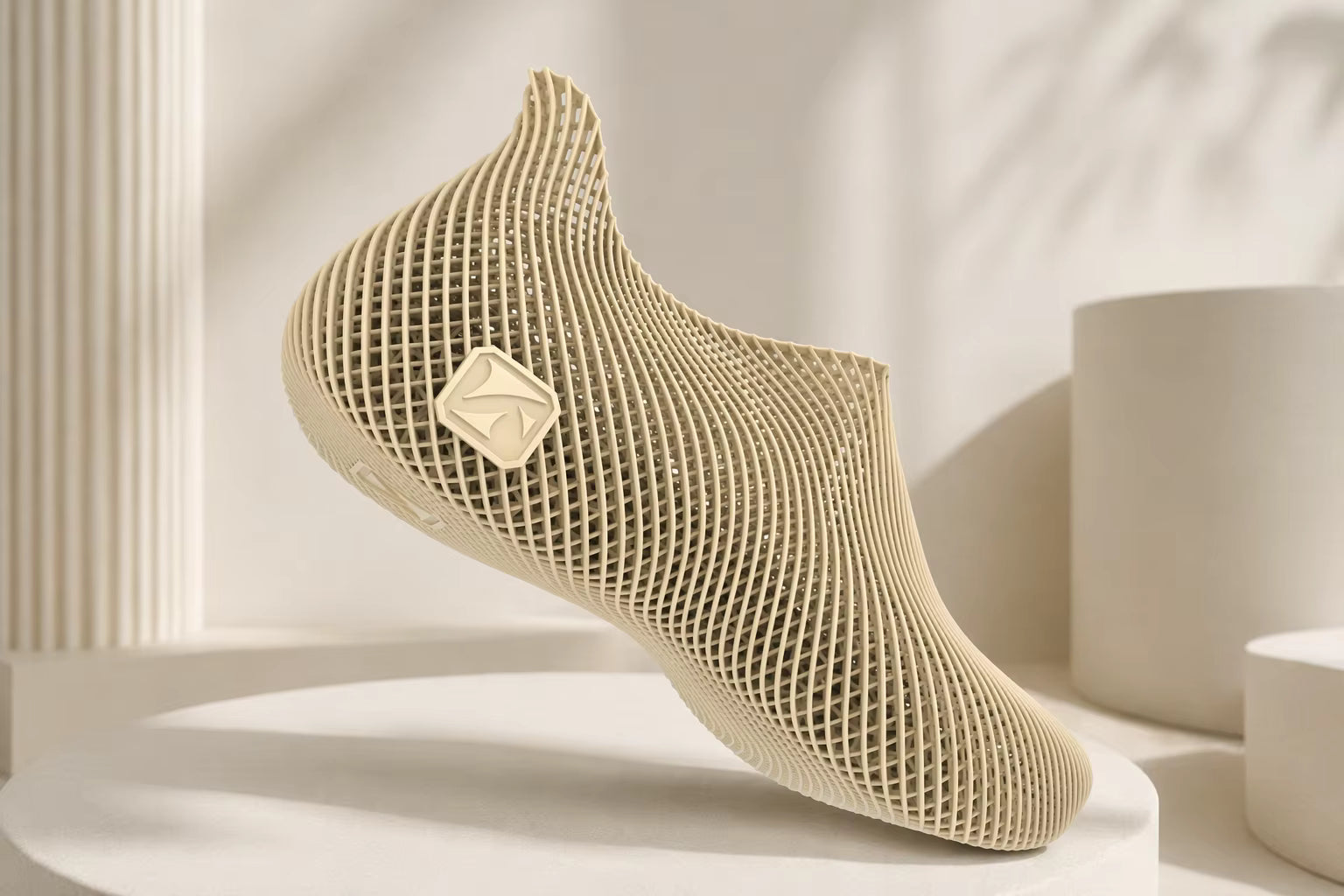
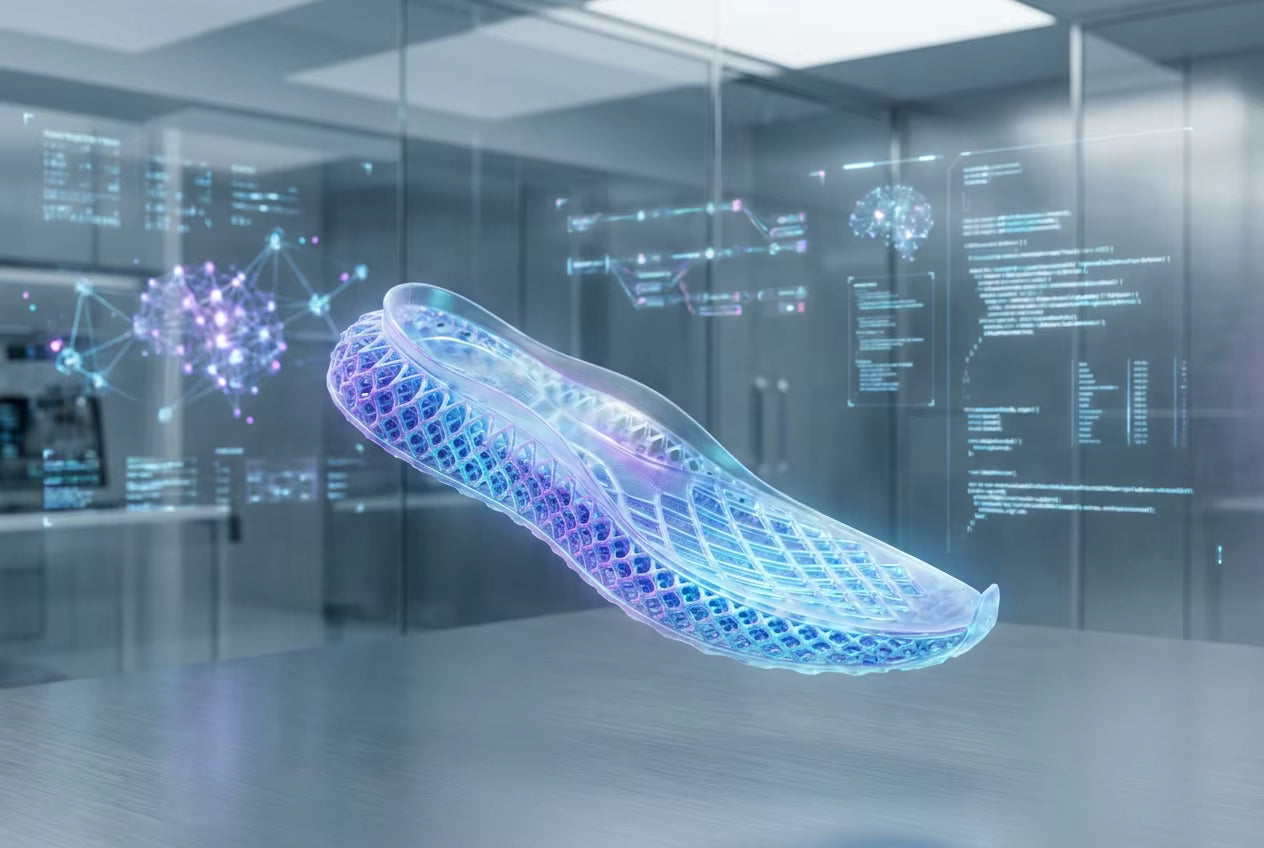
The reason 2025 is cited as a year of "huge innovation" is the commercial scaling of AI HALS (AI Hindered Asynchronous Light Synthesis) , championed by brands like ARKKY .
What is AIHALS?
Unlike traditional photocuring which relies on mechanical peeling steps (lifting the print plate to separate it from the film), AI HALS combines Artificial Intelligence algorithms with a high-speed oxygen inhibition layer .
- The Process: AI monitors the curing interface in real-time, adjusting light intensity and resin flow millisecond by millisecond. This allows the shoe to be pulled continuously from the liquid resin, similar to growing a plant.
Why It Changes Everything
- Hypersonic Speed: AIHALS increases printing speed by 20 to 100 times compared to traditional methods. What used to take hours now takes minutes, making mass production economically viable.
- Isotropy (The Holy Grail): Traditional 3D prints are weak between layers. AIHALS prints are isotropic , meaning they are equally strong in all directions (vertical and horizontal). This solves the "delamination" issue that plagued early 3D printed shoes.
- Material Innovation: Brands like ARKKY utilize Bio-Elastic 53 , a material with 53% bio-based content that offers skin-like touch and high rebound, far surpassing the stiff plastics of the past.


4. Comparative Analysis: 2025 Tech vs. The Past
|
Feature |
AI HALS |
DLS |
SLS |
FDM |
|
Primary Brand |
ARKKY |
Adidas |
Peak |
Zellerfeld |
|
Speed |
★★★★★ (Minutes) |
★★★★☆ (Fast) |
★★☆☆☆ (Slow) |
★☆☆☆☆ (Very Slow) |
|
Surface Finish |
★★★★★ (Smooth/Skin-like) |
★★★★☆ (Smooth) |
★★☆☆☆ (Powdery) |
★★☆☆☆ (Layer Lines) |
|
Strength |
Isotropic (Uniform) |
Anisotropic |
Isotropic (Porous) |
Anisotropic (Weak Z-axis) |
|
Sustainability |
High (Bio-materials) |
Medium |
Medium (Powder waste) |
Very High (Recyclable) |
|
Main Drawback |
New to market |
High machine cost |
Rough texture |
Slow speed |
5. Why 3D Printed Shoes Have Surpassed Traditional Footwear
The skepticism surrounding 3D printed shoes often stems from price, but in terms of performance, the crossover happened in 2025.
A. The Physics of Lattice Structures
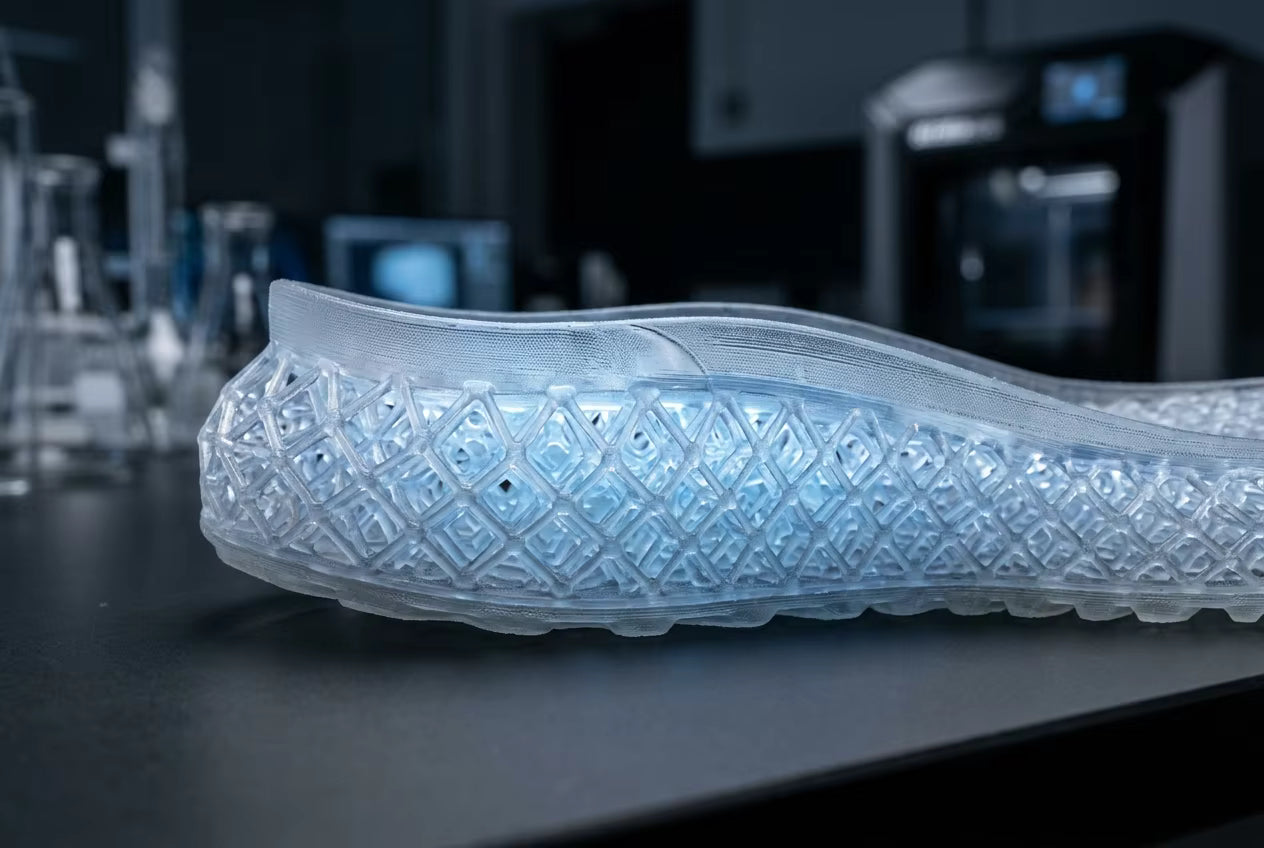
Traditional shoes use EVA foam, which is a "closed-cell" structure with uniform density. It’s a compromise—if you make it soft for cushioning, you lose stability. 3D printing uses Lattice Structures (open-cell matrices).
- Zoned Performance: Brands like ARKKY and Adidas can program a single midsole to be soft in the heel (shock absorption), rigid in the arch (torsion control), and springy in the forefoot (energy return). Traditional molds physically cannot achieve this level of complexity.
B. Breathability and Hygiene
The open lattice structure allows for active airflow. Every step pumps air in and out of the sole, solving the overheating issues of foam shoes. Furthermore, materials used in AI HALS (like TPU) are non-absorbent and machine washable, offering superior hygiene compared to sweat-absorbing foams.
C. True Sustainability
Traditional shoe manufacturing is wasteful, involving cutting dies, glue, and excess scrap. 3D printing is an additive process —you only use the material needed for the shoe. With the advent of closed-loop recycling (where old shoes are ground down to print new ones), 3D printing is the only path to a truly circular footwear economy.
6. Recommendation and Conclusion
We strongly recommend consumers try 3D printed footwear in 2025. The technology has graduated from "gimmick" to "essential gear."
- For Daily Comfort: Look for AI HALS footwear (e.g., ARKKY ). The speed of production has brought prices down, and the bio-based materials offer a comfort level that rivals premium foam slides.
- For Performance: Lattice structures provide a mechanical advantage in running and recovery that foam simply cannot replicate.
The era of mass-produced, one-size-fits-all foam blocks is ending. The future is algorithmic, printed, and personalized.
Share:
3D-Printed Footwear: A Revolution Underfoot — From “Picking a Size” to “Made Just for You”
3D Printed Shoes: The Digital Key to Solving Traditional Footwear Pain Points