

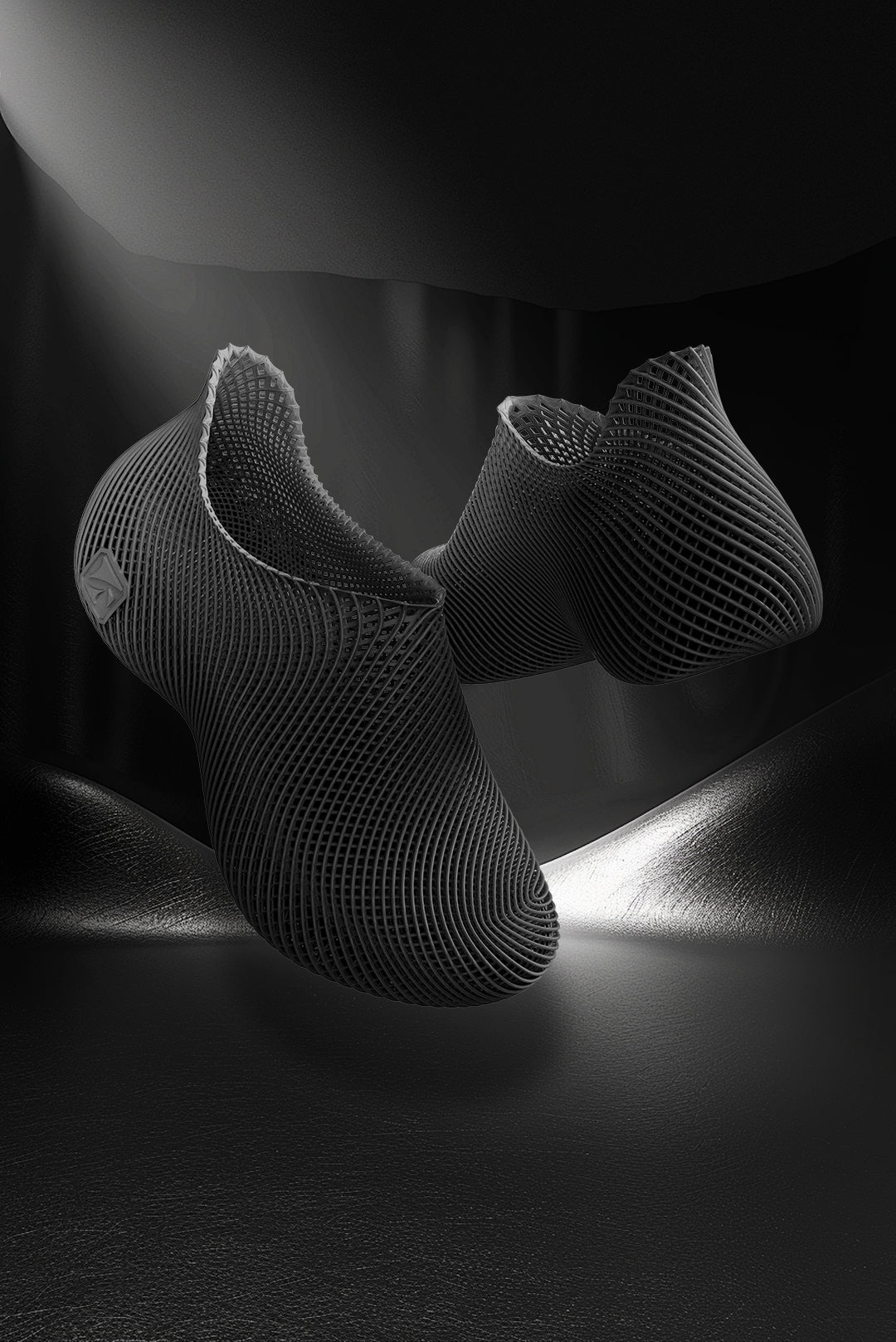
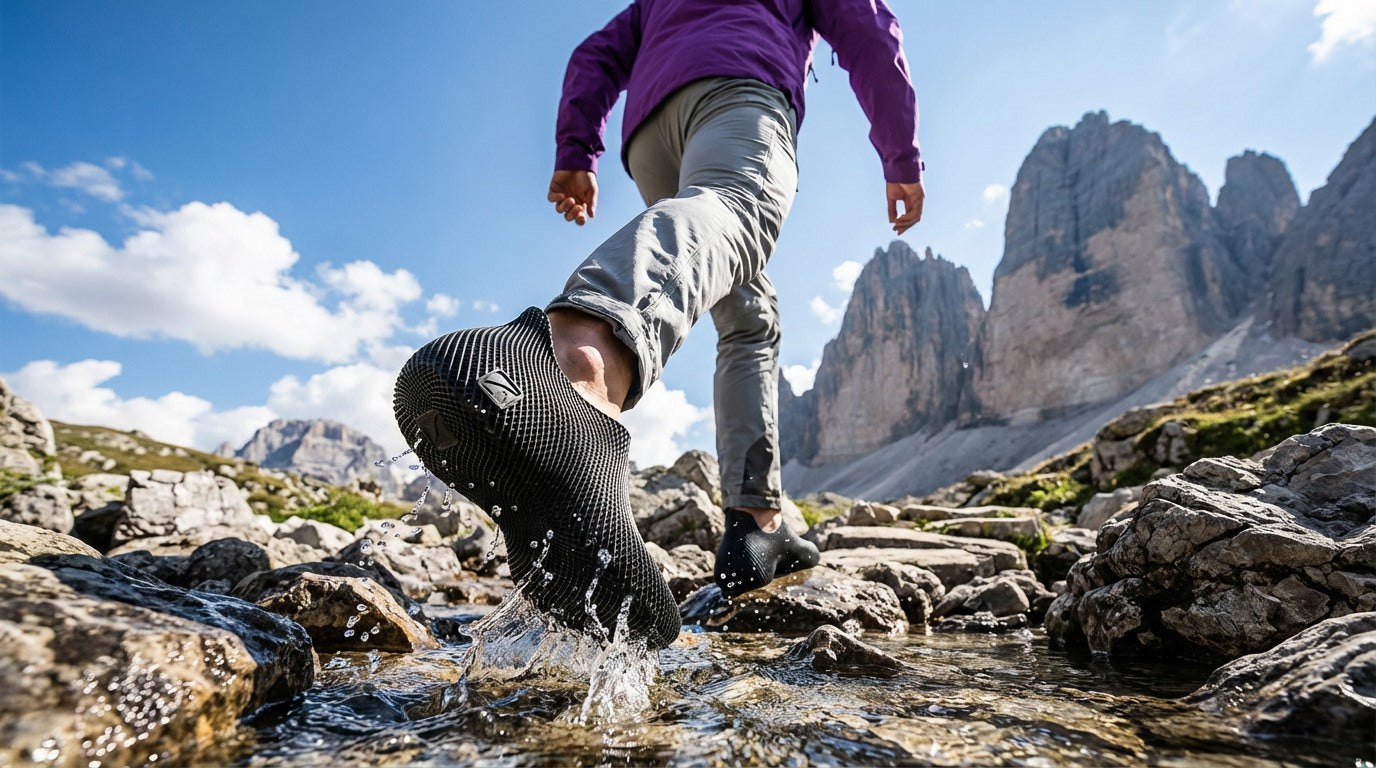
3D printed lattice shoes can be used in water, but they are not a replacement for proper water shoes due to grip and protection limitations.
In the long evolution of sneaker technology, 3D printing is undoubtedly one of the most futuristic chapters. From the expensive prototypes once seen only in laboratories, to the adidas 4D series now entering the mass market, and to the rise of emerging brands such as ARKKY and Zellerfeld, 3D-printed shoes have evolved from a gimmick into technology-equipped footwear with real practical value.
Among the many application scenarios, one frequently mentioned yet controversial question has gradually come to the surface: can lattice-structure 3D-printed shoes really be used as water shoes?
If you have ever worn traditional fabric or rubber water shoes that feel heavy, become slippery after absorbing water, and take a very long time to dry, you will definitely be fascinated by the futuristic “lattice structure” full of holes in 3D-printed shoes. Just imagine: the moment water enters the shoe, it drains out from all sides; the shoe body does not absorb a single drop of water; and the shoes dry as soon as you come ashore. It sounds like the ultimate solution for water sports.
However, is the reality really that simple? This article will reveal the answer from four dimensions—materials science, structural engineering, actual user experience, and an in-depth comparison with traditional water shoes.
The Technical Core: The Science of Lattice Structures and Materials
To answer this question, we first need to understand the core technologies behind 3D-printed shoes: lattice structures and the polymer materials used to make them.

Lattice Structure: A Natural Drainage System
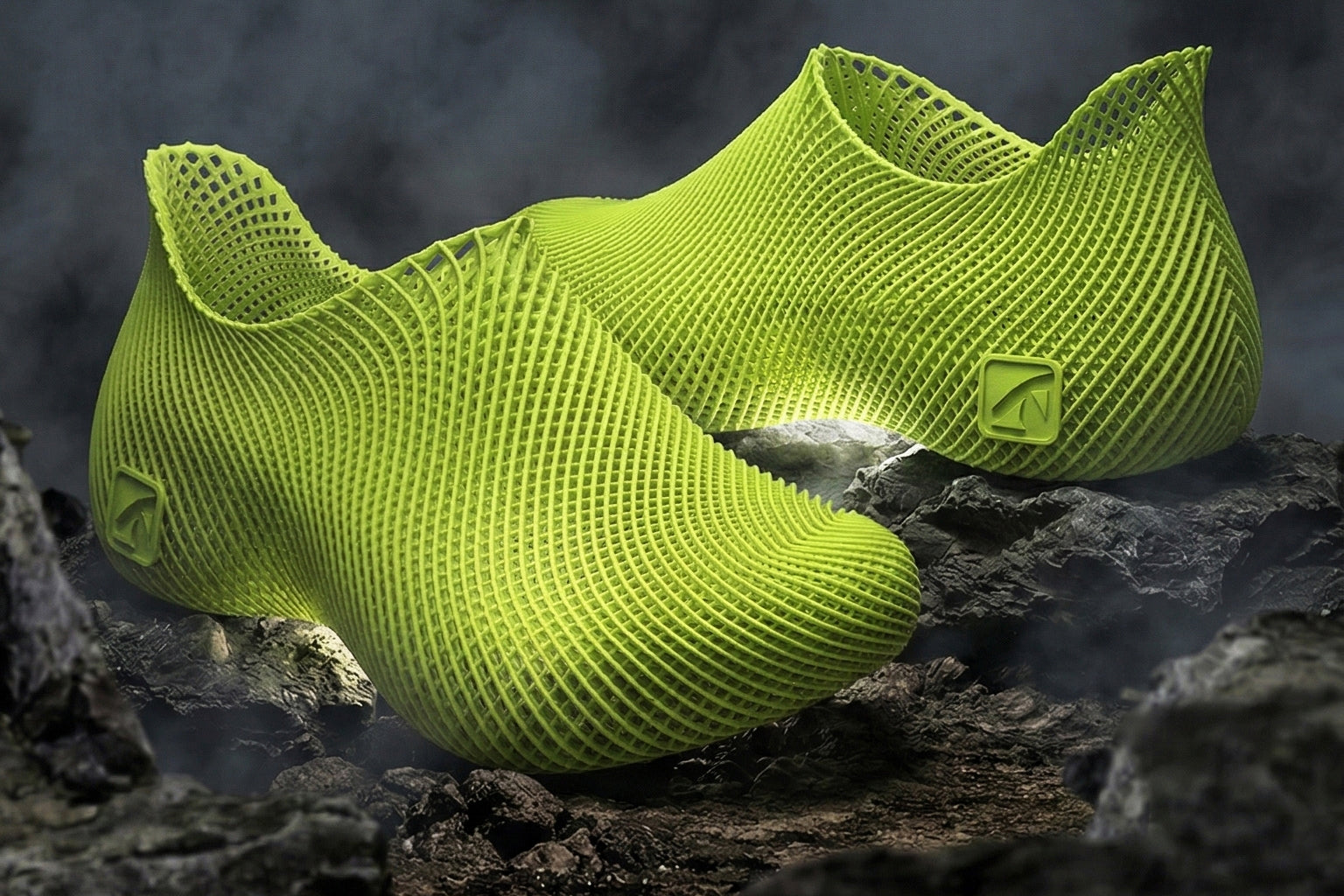
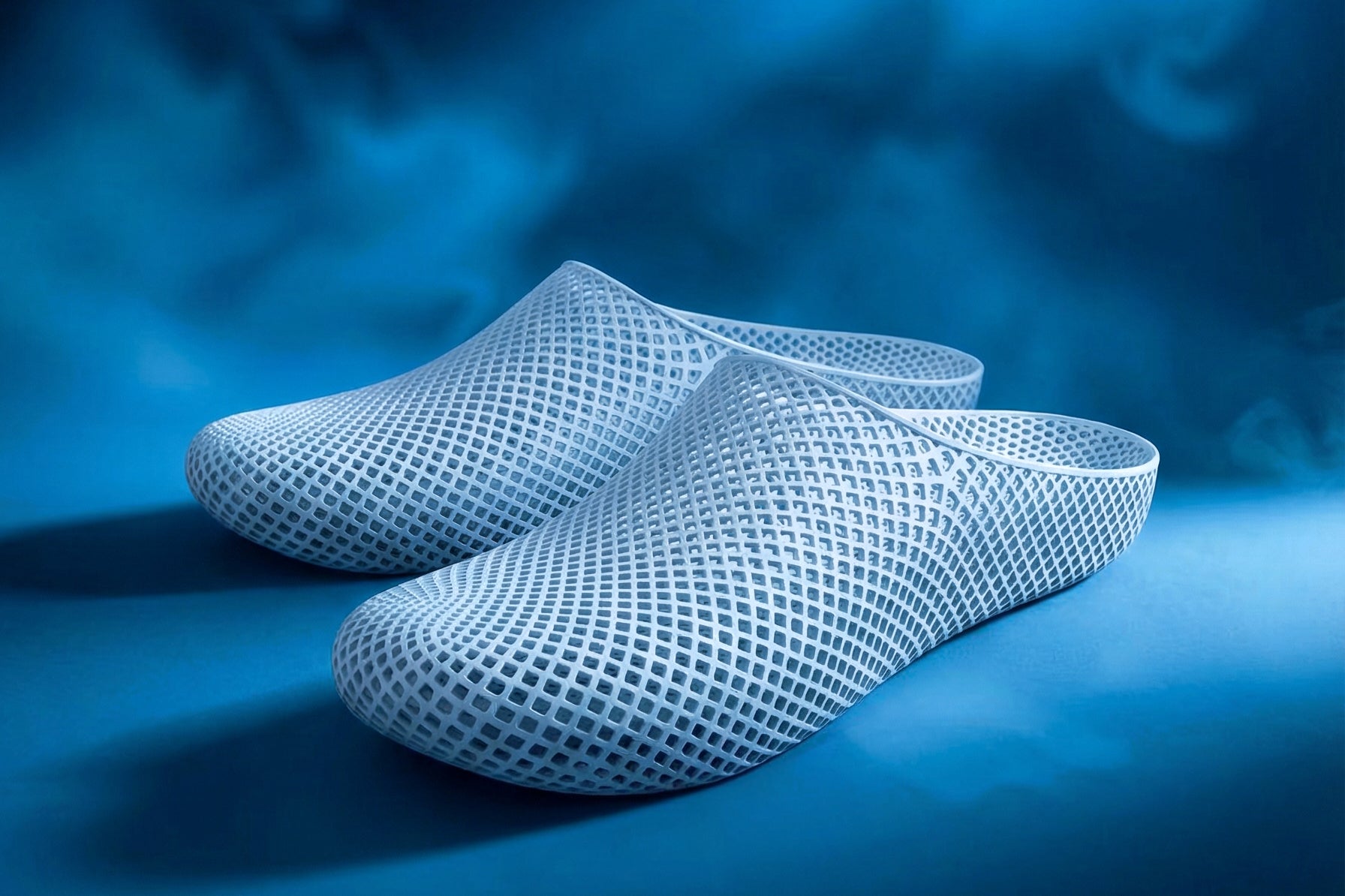
3D-printed shoes, especially styles with integrated midsoles and uppers, are usually made up of thousands of geometric lattice units. Through parametric design, these units form complex spatial networks such as the “Water Cube” or “DODE” structure.
The uniqueness of this structure lies in its extremely high porosity. Traditional footwear provides support through enclosed materials, while lattice shoes provide elasticity through structural geometry. This means the entire shoe is essentially a fully open framework. When water enters the shoe, it is not trapped in any gaps, but is quickly discharged from almost any angle at the bottom under gravity and movement pressure. This is fundamentally different from traditional water shoes, which rely only on a few small drainage holes in the outsole.
Material Properties: Non-Absorbency Is the Hard Truth
Traditional water shoes are often made of neoprene or mesh fabric. Although these materials are water-resistant, the gaps between fibers absorb and retain moisture, making the shoes heavy in water.
By contrast, 3D-printed shoes mainly use elastomer polymers such as TPU and TPE, or high-performance photosensitive resins. At the molecular level, these materials do not absorb water. Even if the entire pair of shoes is completely submerged, the material itself will not gain weight. Some brands such as ARKKY even use blended materials containing 53% bio-based content, which not only provide strong rebound performance, but are also more environmentally friendly.
Integrated Molding: Water Resistance Without Adhesives
The most fragile part of traditional footwear in wet environments is the glue. Moisture and heat accelerate the degradation of adhesives, leading to sole separation. In contrast, 3D-printed shoes usually adopt full-shoe or large-area integrated molding technology, with no stitching and no adhesive bonding points. This structure is far more durable in water immersion than shoes made with traditional manufacturing processes.
Performance in Real Use: Four Major Advantages as Water Shoes
Based on the technical features above, lattice-structure 3D-printed shoes show advantages as water shoes that traditional water shoes can hardly match.

1. Exceptional Drainage Efficiency
During shallow-water hiking or stream crossing, water trapped inside the shoes is one of the main causes of swollen feet and bacterial growth. The drainage holes in traditional water shoes are easily blocked by fine sand. By contrast, the open lattice of 3D-printed shoes works like a huge filter, and the speed of water drainage is almost synchronized with the speed at which water enters. User feedback from Reddit’s English-speaking communities has mentioned that when walking on the beach in ARKKY AeroDash, there is almost no noticeable feeling of water being trapped inside the shoes.
2. Amazing Drying Speed
Drying speed is a key indicator of whether a water shoe is good or not. One user of the ASICS Actibreeze 3D-printed slides shared an extreme example: after getting out of the pool and taking a shower, the shoes had already dried to the point where socks could be worn with them again. This is because the material has low surface tension, and the fully open structure allows air to circulate in all directions, greatly accelerating the evaporation of moisture.
3. “Zero-Friction” Comfort and Fit
Traditional water shoes, once wet, often cause strong friction between damp fabric and the skin, which easily leads to blisters. Through precise parametric design, 3D-printed shoes can achieve a fit similar to a “second skin.” Since there are no seams or joints, the interior of the shoe is extremely smooth, eliminating the common pressure and rubbing points.
4. Lightweight Feel and Energy Return
While reducing weight, the 3D-printed lattice still retains excellent cushioning performance. Compared with traditional water shoes with flat rubber soles, 3D-printed shoes can provide more noticeable energy return when running on the beach or walking on slippery decks, thereby reducing foot fatigue.
Real-World Pain Points: Why Is It Still Not Perfect?
Although 3D-printed shoes score full marks in drainage and quick drying, they still face several critical weaknesses in complex water environments.

1. A “Cleaning Nightmare”: Sand and Small Stones
This is the biggest challenge faced by lattice structures in beach environments. The original purpose of the lattice openings is drainage and breathability, but at the same time, they also become traps for sand, tiny shell fragments, and small stones.
On the Chinese social platform Rednote, some users reported that after walking on fine sand beaches in lattice shoes, sand could get stuck in the dead corners of the lattice. Because the internal structure of the lattice is complex and interwoven, simply rinsing with water often cannot clean it thoroughly. Sometimes users may even need a high-pressure water gun or an ultrasonic cleaner. For outdoor lovers who seek convenience, this creates a considerable mental and physical burden.
The above are some online discussions about 3D-printed shoes, but one point needs to be corrected here. Many people who joined the discussion may never have actually worn lattice-type 3D-printed shoes, and may subconsciously assume that any shoe with holes will trap stones. In fact, due to the combined force distribution within the lattice structure, stones do not get stuck as easily as people imagine. The only thing really worth worrying about is stepping in dog poop while wearing them.
2. Concerns About Grip in Complex Wet Terrain
Although TPU material itself has a certain degree of slip resistance, professional water hiking shoes usually come with specially designed sticky rubber outsoles, such as Vibram Megagrip.
At present, the outsoles of most 3D-printed shoes are also made of lattice structures. This kind of point-contact or mesh-like contact surface may not provide grip as stable as a large, flat rubber outsole on moss-covered wet rocks. Although some 3D-printed shoe brands have tried to add anti-slip textures to the bottom of the lattice, their reliability in extreme professional stream-tracing environments still needs further verification.
3. Price Barrier and Premium
At present, the price of a mature pair of 3D-printed lattice shoes generally ranges from USD 90 to USD 230. By comparison, a pair of high-performance traditional water shoes often costs only USD 20 to USD 60. For most consumers, whether it is worth paying several times more just for faster drainage remains a factor that must be carefully considered.
4. Sensitivity to Fine Particles
In addition to sand, tiny algae, microorganisms, or mud in the water may also remain deep inside the lattice structure. If they are not cleaned in time, they may not only create odor, but may also cause chemical deterioration of the material.
Comprehensive Comparison: 3D-Printed Shoes vs. Traditional Water Shoes

To show the differences more clearly, we have prepared the following table:
|
Performance Dimension |
Lattice-Structure 3D-Printed Shoes |
Traditional Water Shoes (Neoprene/Mesh) |
|
Drainage Ability |
Excellent (fully open structure) |
Moderate (localized drainage holes) |
|
Drying Speed |
Very fast (non-absorbent polymers) |
Slow (fabric fibers retain water) |
|
Weight When Wet |
Very light (material does not gain weight) |
Heavier (significant water absorption) |
|
Wearing Comfort |
Very high (customized, no seams) |
Average (easy to rub the feet, sticky when wet) |
|
Ease of Cleaning |
Difficult (sand and stones may get trapped, structure is complex) |
Easy (smooth surface or large-hole mesh) |
|
Professional Grip |
Average to moderate |
Excellent (specialized rubber compounds) |
|
Cost/Price |
High (Premium) |
Low (Budget-friendly) |
From this comparison, it can be seen that 3D-printed shoes are in a leading position in terms of in-water performance and dry comfort, but still lag behind in practicality and cost-effectiveness.
Different Perspectives
In the discussion about using 3D-printed shoes as water shoes, different countries have shown completely different yet complementary concerns.
Reddit Discussions
In sneaker and outdoor-related sections on Reddit, Western users tend to start from technical parameters. They pay close attention to the chemical resistance of materials, such as their stability in salt water and chlorinated pool water.
In addition, they show strong enthusiasm for the concept of closed-loop recycling. The idea promoted by brands such as ARKKY—recycling old shoes and printing them again—fits well with the environmental values of Western consumers. In their view, if water shoes are consumable products, then recyclable 3D-printed shoes are more attractive in the long run than traditional synthetic rubber shoes that are not degradable.
China: Aesthetics, Foot Feel, and the Pioneer Spirit of “Guochao”
On Chinese social media platforms such as Rednote and Bilibili, 3D-printed shoes are more often labeled as “fashionable,” “black technology,” and “the ceiling of foot feel.”
Chinese consumers pay particularly high attention to attempts made by local brands such as PEAK in 3D printing. PEAK’s “Future” series and its “Water Cube” lattice midsoles are regarded as representatives of domestic brands entering cutting-edge technology. Chinese users are more inclined to use such shoes in everyday urban commuting, rainy-day travel, or vacation scenarios, treating them as trendy items that combine practicality with social value. At the same time, “recovery shoes” such as the ASICS Actibreeze are also very popular among fitness lovers in China, and their performance in bathhouse and poolside scenarios is a hot topic of discussion.
Conclusion:
After in-depth research and analysis, we can draw the following reliable conclusion:
Lattice-structure 3D-printed shoes are fully capable of serving as water shoes, but they are not a universal solution suitable for every water-related scenario.
When Are They Most Suitable for You?
- Light water-related leisure, such as walking by the pool, on a private yacht, or on flat beaches. They can provide an excellent dry and comfortable experience.
- Urban commuting on rainy days. As an alternative to rain shoes, they are more breathable than heavy rain boots and dry quickly once out of the water.
- Post-water-sport recovery, such as after surfing or diving. Wearing them can quickly drain water and relieve pressure on the feet.
When Should You Choose Traditional Water Shoes?
- Professional stream tracing and rock climbing, when you need top-level wet-terrain grip to ensure safety.
- Budget-sensitive purchases, if you only occasionally need a pair of shoes for use in water.
Final analysis, lattice-structure 3D-printed shoes represent a dimensional upgrade in the field of water shoes. They completely overturn traditional logic in both materials and drainage design. Although they are still limited by cleaning difficulty and price at present, as printing precision improves and material costs are optimized, they are very likely to become a mainstream solution for high-end water-related gear in the coming years.
If you pursue avant-garde design and are willing to pay a premium for that dry, refreshing feeling the moment you come ashore, then this pair of futuristic lattice shoes is definitely worth trying.

Share:
The Best Everyday Shoes for Extra Wide Feet in 2026
2026 Beginner Running Shoe Buying Guide: How Novice Runners Can Choose the Right Entry-Level Shoes (Unisex)