

How is the lifespan of running shoes defined?
No universally binding or legally codified definition exists that determines the exact moment at which a pair of running shoes must be considered at the end of its service life. Within the field of running footwear research, a relatively consistent industrial and clinical evaluation framework has been formed, according to which lifespan is assessed through four principal indicators including mileage, outsole abrasion, midsole degradation, and subjective wearing feedback rather than the mere passage of time since purchase. Recommendations frequently cited by the American Academy of Podiatric Sports Medicine (AAPSM) indicate that a typical pair of running shoes should be considered for replacement after approximately 350–500 miles of use, while brands such as Arkky propose a similar interval of 300–500 miles or roughly four to six months of regular activity.
A more precise interpretation defines the lifespan of footwear as the period during which the shoe is still capable of delivering the cushioning, support, stability, and traction for which it was originally engineered, which differs from the simplistic assumption that the shoe remains usable as long as no visible damage appears. Evidence reported in experimental studies demonstrates that EVA running shoes show a clear reduction in shock absorption after approximately 500 km of use, while another investigation observed that runners with a rear-foot strike pattern experienced a decline of 16%–33% in heel-region cushioning after about 480 km, a change that many participants were unable to perceive subjectively.
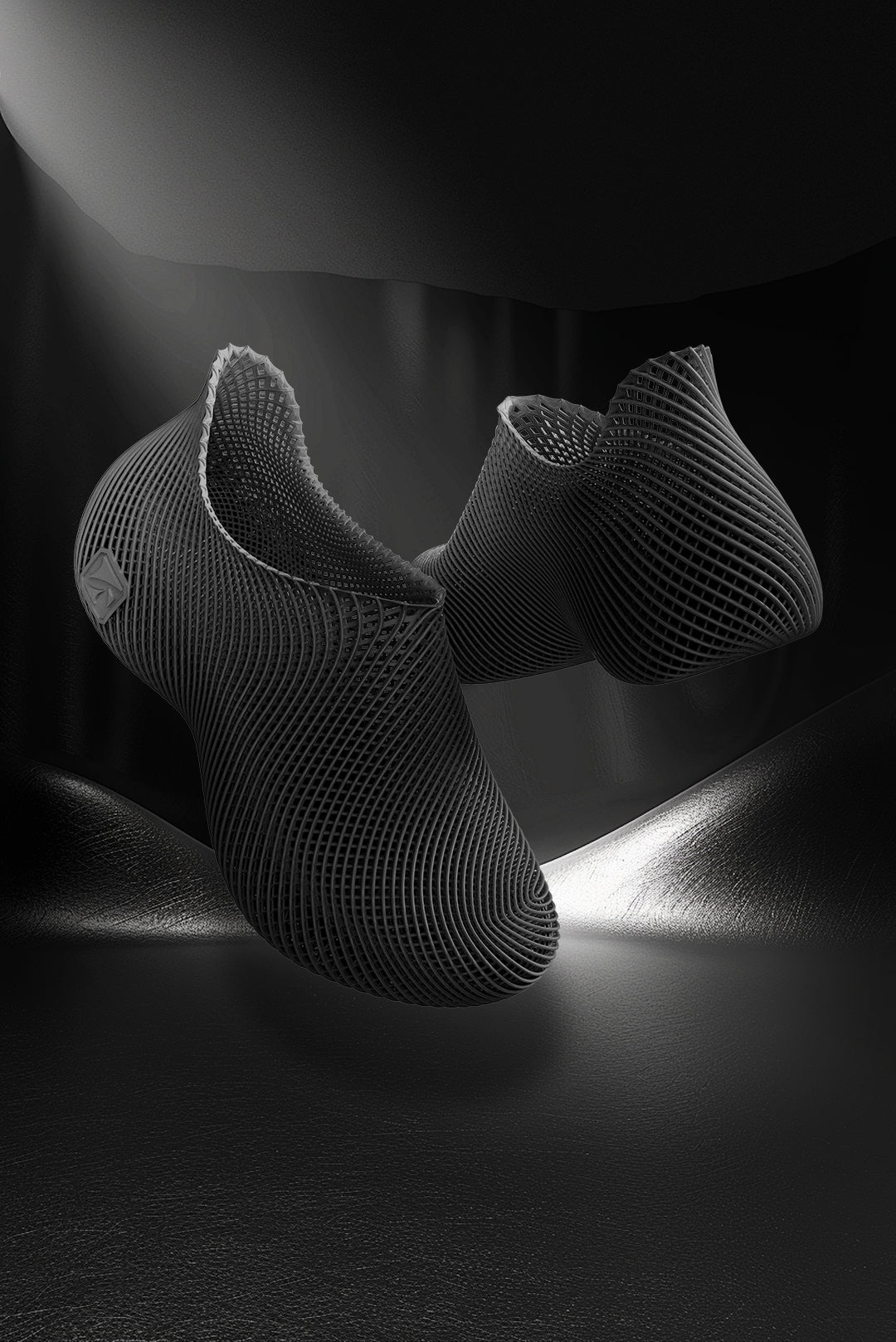
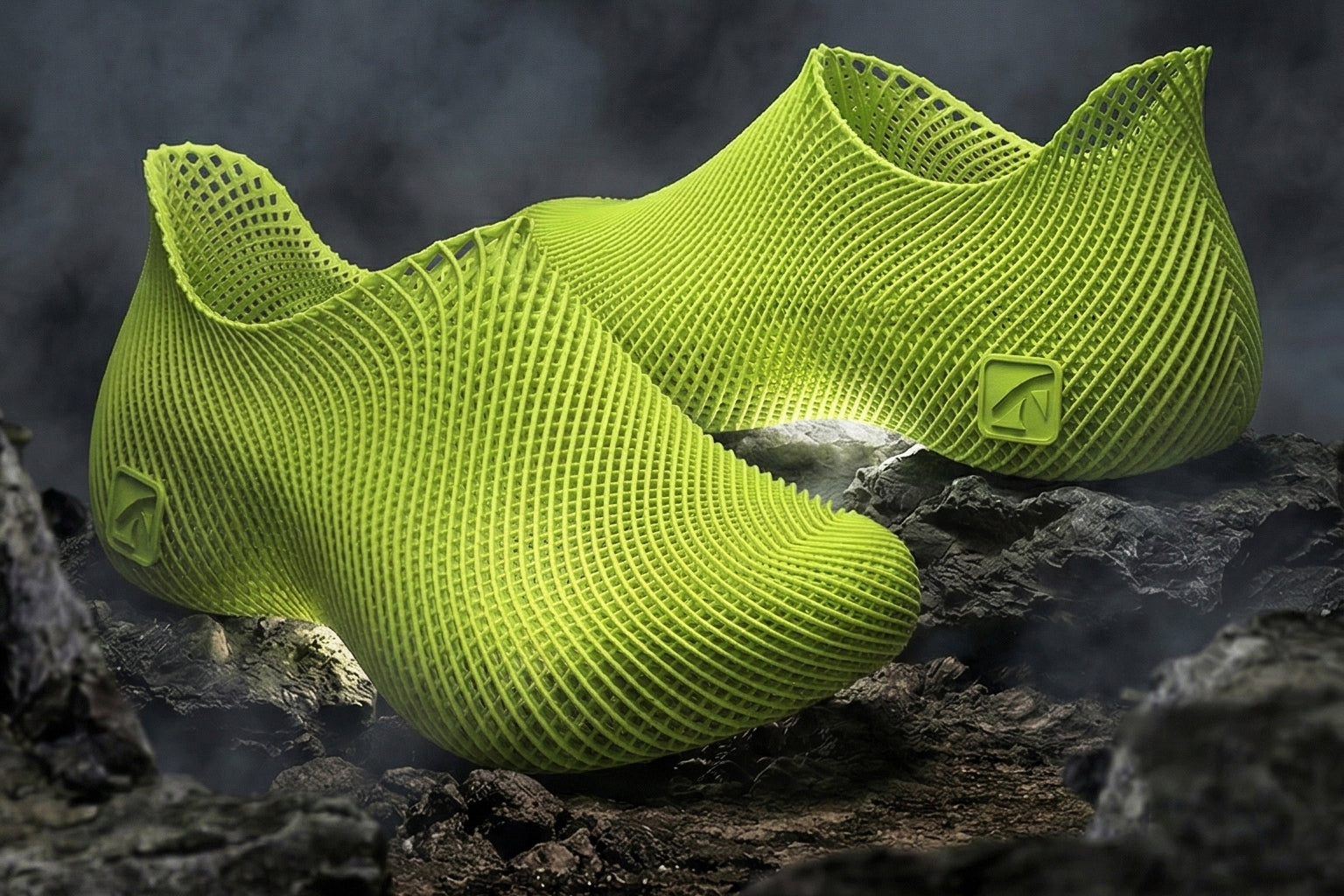
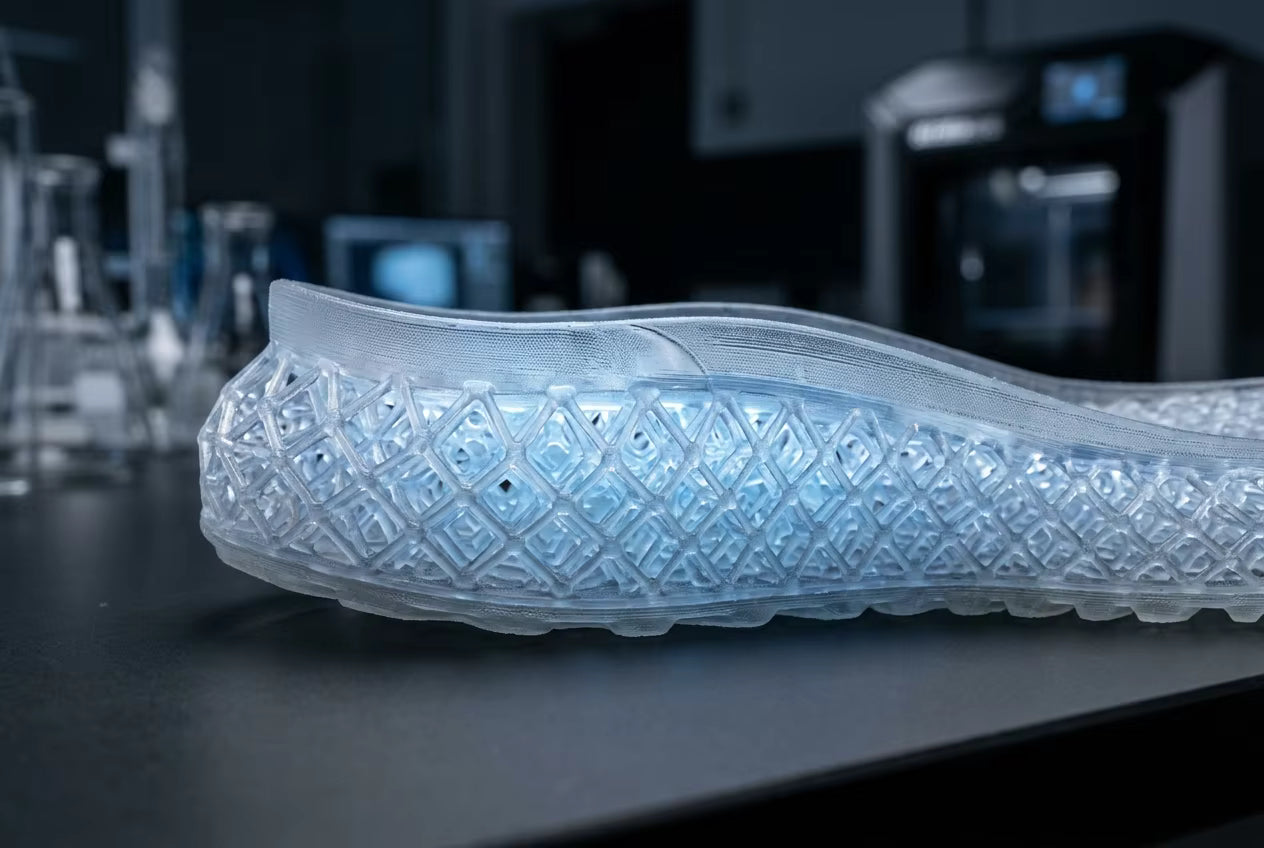
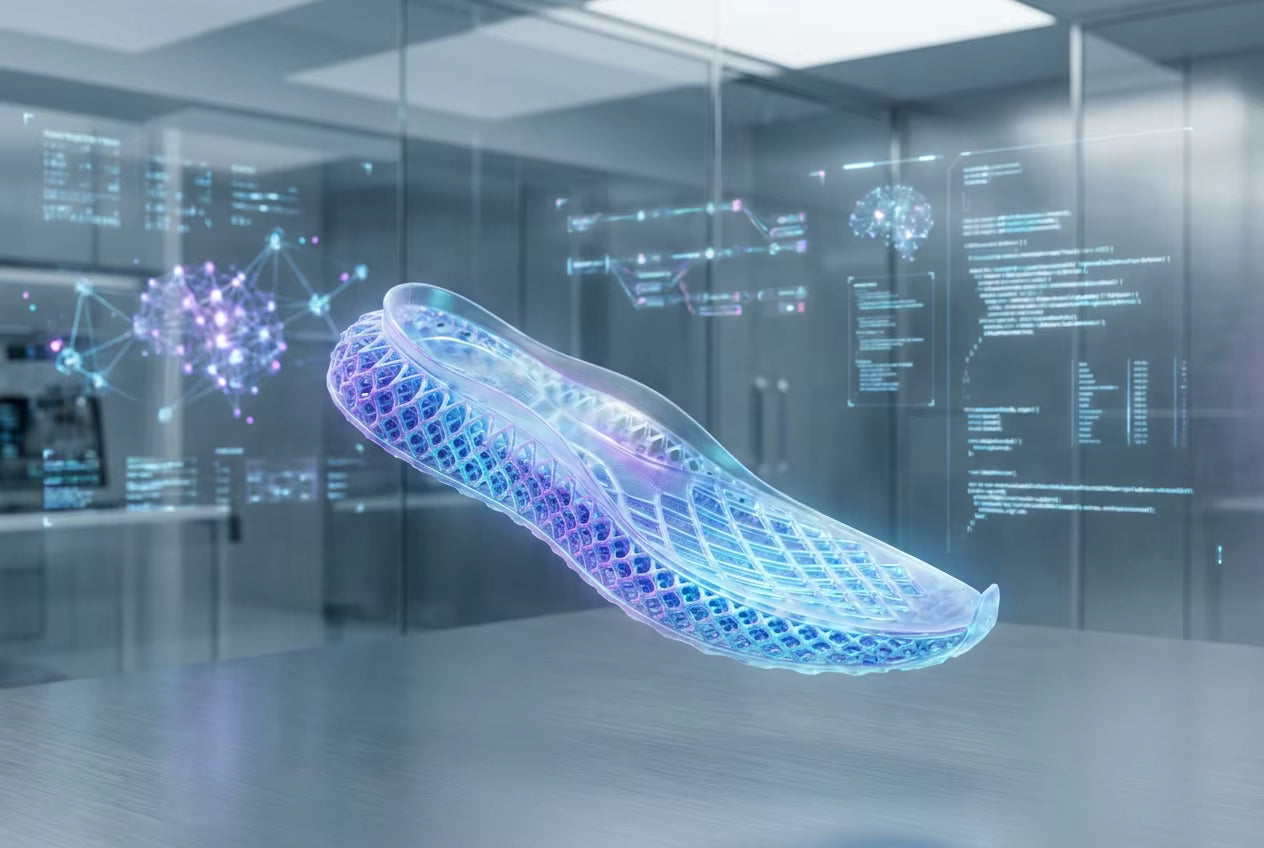
Improvements introduced through 3D printed footwear, especially through the use of bio-based TPU materials, increase resistance to abrasion, while the lattice structure allows the midsole cushioning performance to remain largely stable until structural failure of the shoe itself occurs.
Physicochemical Properties and Decay Patterns
The functional lifespan of traditional running shoes is primarily determined by the polymer midsole, which serves as the core energy-absorbing component. Current industrial production relies mainly on three material systems, namely EVA, TPU, and PEBA, each of which exhibits distinct mechanical behavior under repeated loading. EVA (ethylene-vinyl acetate), formed through physical foaming that produces numerous microscopic air cells, follows a degradation pattern known as permanent compression deformation, during which the gradual rupture of cell walls leads to progressive stiffening as usage accumulates. TPU (thermoplastic polyurethane), exemplified by Adidas Boost technology, is manufactured through expanded bead processing, and the molecular chains of this material possess strong fatigue resistance, allowing service distances of approximately 800–1000 kilometers while remaining largely insensitive to temperature variation. PEBA (polyether block amide), which has become the standard material in elite racing shoes, represents a form of structural trade-off in which energy return exceeding 85% can be achieved, yet the chemical bonds within the polymer are more prone to fracture under high-frequency tensile stress. Experimental findings indicate that after roughly 450 kilometers of cyclic mechanical loading, the performance advantage of a PEBA midsole in terms of running economy declines markedly, at which point its behavior approaches that of conventional training footwear.
How do you determine the lifespan of running shoes?
During running, deformation of the midsole material functions to absorb impact forces that may reach three to five times the runner’s body weight at ground contact. Public understanding of shoe lifespan often lags behind scientific knowledge, since many users assume that the moment when the outsole is visibly worn through represents the true end of usability. Functional deterioration in fact occurs long before obvious visual damage appears. Once microscopic fatigue within the midsole structure reduces elasticity, or when supporting components undergo subtle deformation that cannot easily be detected by the naked eye, the shoe no longer operates as an effective shock absorber but instead behaves as an unstable mechanical lever, a condition that may fail to protect the joints and may even promote improper gait mechanics, under which circumstances the lifespan of the running shoe should be regarded as concluded.
How long do running shoes last?
This question represents a matter of considerable practical and economic significance. No single answer can be applied universally, yet a broad consensus has emerged among specialists as well as among manufacturers such as ASICS, Brooks, Salomon, and Saucony, all of whom recognize several commonly accepted reference guidelines.
The 300–500 mile principle
For most standard running shoes, the expected functional lifespan generally falls between 300 and 500 miles, which corresponds to approximately 500 to 800 kilometers of use. More specific ranges are often distinguished according to shoe category, within which different structural designs and material compositions lead to different durability characteristics.
Lightweight / racing shoes → 250–300 miles
Daily training shoes → 300–500 miles
Trail running shoes → 300–500 miles, with variation depending on terrain conditions
Based on current empirical observations, footwear produced through 3D printed construction tends to show a somewhat broader durability interval, within which lightweight or racing-oriented models are commonly estimated to remain functional for approximately 250–500 miles.
What factors affect the lifespan of running shoes?
Not all shoes, including running shoes, exhibit identical durability characteristics, since multiple variables influence whether a pair deteriorates rapidly or maintains functionality over a longer period of use.
1. Your running surface
This factor appears self-evident, yet many individuals choose to wear the same running shoes across different terrains, including roads, trail paths, athletic tracks, and competitive courses, even though footwear is originally engineered for a specific environment in which particular materials, traction patterns, and structural technologies are optimized for that surface. When shoes are worn primarily on the terrain for which they were designed, both performance stability and service lifespan are more likely to remain consistent.
Situations in which road running shoes are used on unpaved ground often result in accelerated abrasion or structural damage, since irregular surfaces and elevated temperatures impose additional mechanical stress, which makes it advisable, whenever possible, to run on the same type of surface for which the shoes were purchased while avoiding rough, uneven, or excessively hot conditions that may hasten material degradation.
- Road running → The surface gradually wears the shoe, although the abrasion is usually distributed in a relatively uniform manner.
- Trail running → Mud, rocks, and exposed roots can erode the shoe rapidly because of repeated impact and friction.
- Treadmill running → The environment is comparatively gentle on footwear, which may allow the shoes to remain usable for a longer duration.
2. Your running style
No single running posture can be regarded as absolutely correct, because individual biomechanics vary, yet awareness of personal movement patterns helps ensure that the selected running shoes correspond more closely to one’s gait characteristics, which reduces the likelihood of unnecessary injury while improving comfort and performance.
The manner in which the foot contacts the ground directly affects the location and rate of wear, a pattern that becomes visible when the outsole of an older pair is examined, since the most severely abraded areas typically indicate the primary point of impact during each stride.
Wear concentrated beneath the big toe or along the outer forefoot suggests a forefoot strike pattern, which is frequently observed among sprinters and mountain runners, a condition that often leads to rapid outsole erosion that may expose the midsole layer, whereas impact centered in the midfoot produces similar deterioration in the front region. Long-distance road runners more commonly exhibit heel wear, and excessive abrasion in the heel can reduce structural support even when the rest of the shoe remains intact, a change that may increase the probability of ankle instability.
- Heel strikers → The heel area usually shows the earliest signs of wear.
- Forefoot / midfoot strikers → Abrasion is concentrated near the toe region.
- Over-pronators → The inner edge may deteriorate more severely because of inward rolling motion.
3. Your body weight and build
Most running shoes are designed around the proportions of an average runner, which means that individuals whose body mass or stature exceeds that reference level often experience faster material fatigue, a condition that requires more frequent replacement, while footwear with stronger support structures is generally recommended for such users in order to maintain adequate protection and comfort across different terrains.
4. Shoe construction
Minimalist models → Reduced cushioning leads to faster mechanical wear because less material is available to absorb impact.
Max-cushion shoes → Larger volumes of foam are used, yet polymer cushioning materials still undergo gradual aging over time.
5. Frequency and intensity of use
Daily runners → Continuous loading causes the shoes to deteriorate more quickly.
Occasional runners → The usable lifespan may appear longer, although foam components continue to age even during periods of limited use.
How to Track Your Running Shoe Mileage
Tracking the mileage accumulated by a pair of running shoes has become easier than at any previous time, since digital tools and simple recording methods allow runners to monitor usage with considerable precision.
- Using running applications → Strava, Nike Run Club, and Runkeeper provide functions through which each run can be assigned to a specific pair of shoes, a feature that enables accurate mileage calculation, while reminder settings included in most applications allow users to define distance limits that trigger notifications when replacement should be considered.
- Manual recording → A traditional approach that remains highly effective involves writing the purchase date inside the shoe or keeping a written log in a notebook, which creates a clear reference for estimating total use over time.
- Shoe rotation → Runners who own multiple pairs should track each pair separately, because individual records prevent confusion and make it possible to evaluate wear patterns with greater reliability.
How to Extend the Life of Running Shoes?
Keeping your running shoes active on the track can save money. It also helps the environment. The longer a pair lasts, the less waste goes to landfills. Below are several simple tips. These steps help keep running shoes in good shape. They also help you get more value from each pair.
- Wear running shoes only for running
If you often wear running shoes to the store or while picking up kids from school, wear will appear faster. Running shoes are built for road runs, trail runs, or races. If they are used for daily tasks, the “empty mileage” increases. Key impact areas will wear out sooner.
- Always loosen laces before putting shoes on
Pulling shoes on or off without loosening the laces can damage the heel area. The shape of the shoe may also change over time. It is better to untie the laces first. Then lace them again after the shoe is on your foot. Wrong lacing can increase pressure on certain parts. This speeds up wear. Try different lacing styles during runs. Choose the method that fits you best.
- Keep shoes clean
After each run, check the shoes. Remove small stones from the grooves of the outsole. If the shoes are dirty, clean them with a sponge plus mild soap water. Let them air dry. If you need to wear them soon, place newspaper inside the shoes. This helps absorb moisture.
- Wear proper socks
Shoes receive protection mainly from the outside. However, socks still affect the inside lining. If socks are not made for running or if the quality is poor, the inner fabric may wear faster. Low-cut socks may also increase friction inside the shoe. For running, longer socks are often a better choice. This can help extend the life of the shoe lining.
- Rotate between multiple pairs
As mentioned earlier, having two pairs offers several benefits. It lowers the use rate of a single pair. A newer pair can also help you notice wear on an older pair. With a second pair available, you can choose shoes that fit the run that day. If one pair becomes wet, switch to the other pair. Allow the first pair to dry fully. Rotation also reduces repeated stress on one shoe.
Proper care can greatly extend the life of running shoes. A common expert tip is the “Shoe Rotation” method. Midsole foam needs time to recover after compression. Research shows that a 24–48 hour gap allows the foam structure to rebound. This helps restore its original stiffness. Daily use of the same pair can create a “fatigue build-up” state. Lifespan may drop by about 15–20%.
- Other tips
Avoid high heat exposure. Heat, such as heater drying or hot car sunlight, can damage polymer chains. EVA may become brittle. TPU may lose flexibility. Proper cleaning should use cold water with gentle hand brushing. Remove the insoles during drying. Let them air dry in shade. This step reduces odor. It also lowers fabric damage caused by mold. As a result, the service life of running shoes can increase both inside & outside.
Key Factors That Affect the Lifespan of Running Shoes
Mileage is only one factor in shoe wear. The real lifespan depends on several dynamic variables. One key factor is load intensity. Higher body weight increases pressure on the midsole foam. Studies show that a 20% rise in body weight may reduce effective cushioning distance by about 30%. Another factor is running biomechanics. Runners with lower cadence often create stronger landing force, also called Peak Impact Force. This creates stronger compression on shoe materials. Environmental conditions also matter. Hard concrete surfaces cause far more outsole wear than rubber tracks. Temperature also plays an important role. High heat speeds up polymer oxidation plus softening. Extremely low temperatures make EVA foam brittle. This raises the risk of micro-structure cracks. Storage conditions also affect durability. High humidity can trigger hydrolysis in TPU materials. In rare cases, shoes stored for many years may slowly break down or “crumble” even without use.
The Scientific Logic of “Functional Retirement” in Running Shoes
“Functional retirement” describes a state where a shoe still looks intact. No glue failure appears. No holes appear either. However, the core protection ability drops below a safe level. In research, this state is often defined through loss of elastic modulus. When the midsole can no longer absorb at least 60% of its original impact energy, extra force travels upward. This force moves through the ankle toward the knee plus hip joints. Another signal is called geometric instability. Long-term uneven wear may cause this effect. Overpronation often leads to inner-side collapse. This changes the geometric base of the shoe. The outsole then forms a tilted plane. Such hidden imbalance forces the runner to create constant muscle compensation during each landing step. Energy meant for forward motion becomes energy used for balance control. In simple terms, functional retirement means loss of protection efficiency plus loss of biomechanical neutrality, not only visible damage.
Biomechanics & Injury Risk: Breakdown of the Kinetic Chain
Running shoes act as an extension of the body’s natural shock absorption system. When a pair becomes overly worn, cushioning performance fades. The entire kinetic chain may suffer. The first risk appears in the foot. A failed midsole can overstretch the plantar fascia. This may trigger plantar fasciitis. Force may also move upward through the joints. Research shows that worn shoes increase the Vertical Loading Rate at the knee. This raises the chance of patellofemoral pain syndrome, often felt as pain at the front of the knee. A deeper issue involves proprioception. Uneven outsole wear can mislead the brain about ground feedback. This may disturb neuromuscular control. The risk of ankle sprains may rise as a result. For this reason, replacing running shoes on time is not only about comfort. It is also a key step in preventing chronic overuse injuries caused by worn equipment.
The Hidden Loss in Running Economy (RE): The 450 km Turning Point
For competitive runners, the real end of a shoe’s life often appears when running economy (Running Economy, RE) begins to drop. RE measures how efficiently a runner uses oxygen at a fixed effort level. Research on PEBA-based super shoes shows that midsole materials lose energy return over time. This happens because hysteresis loss increases as mileage grows. A new pair may improve performance by about 4–5%. After roughly 450 kilometers, rebound efficiency may fall by nearly half. Test results show that runners often need a higher heart rate to hold the same pace. Oxygen consumption may also rise. This means the shoe may still look fine from the outside, yet its performance advantage has faded. This type of “hidden loss” matters greatly in long races such as the marathon. Even a 1% drop in efficiency may lead to several minutes of time difference over a full race distance.
Sustainability & Environmental Considerations: The Final Stage of Running Shoes
The short life cycle of running shoes creates serious environmental pressure. Research from MIT reports that producing one pair may generate up to 14 kilograms of carbon emissions. Recycling remains difficult because a single pair may contain as many as 65 different components. Many brands now explore circular production models. On developed the Cyclon program, which uses castor-oil–based materials designed for full recycling. Nike introduced the Grind program, where old midsoles are shredded then reused as sports surface material. Runners should recognize the balance between injury protection plus environmental impact. Replacing shoes too often protects joints but also increases waste. A more balanced approach can help. After peak race performance fades, shoes may still work well for easy training runs. When cushioning drops further, the pair may serve as casual walking shoes. At the final stage, sending worn pairs to brand recycling programs can reduce the large number of shoes entering landfills each year.
Conclusion
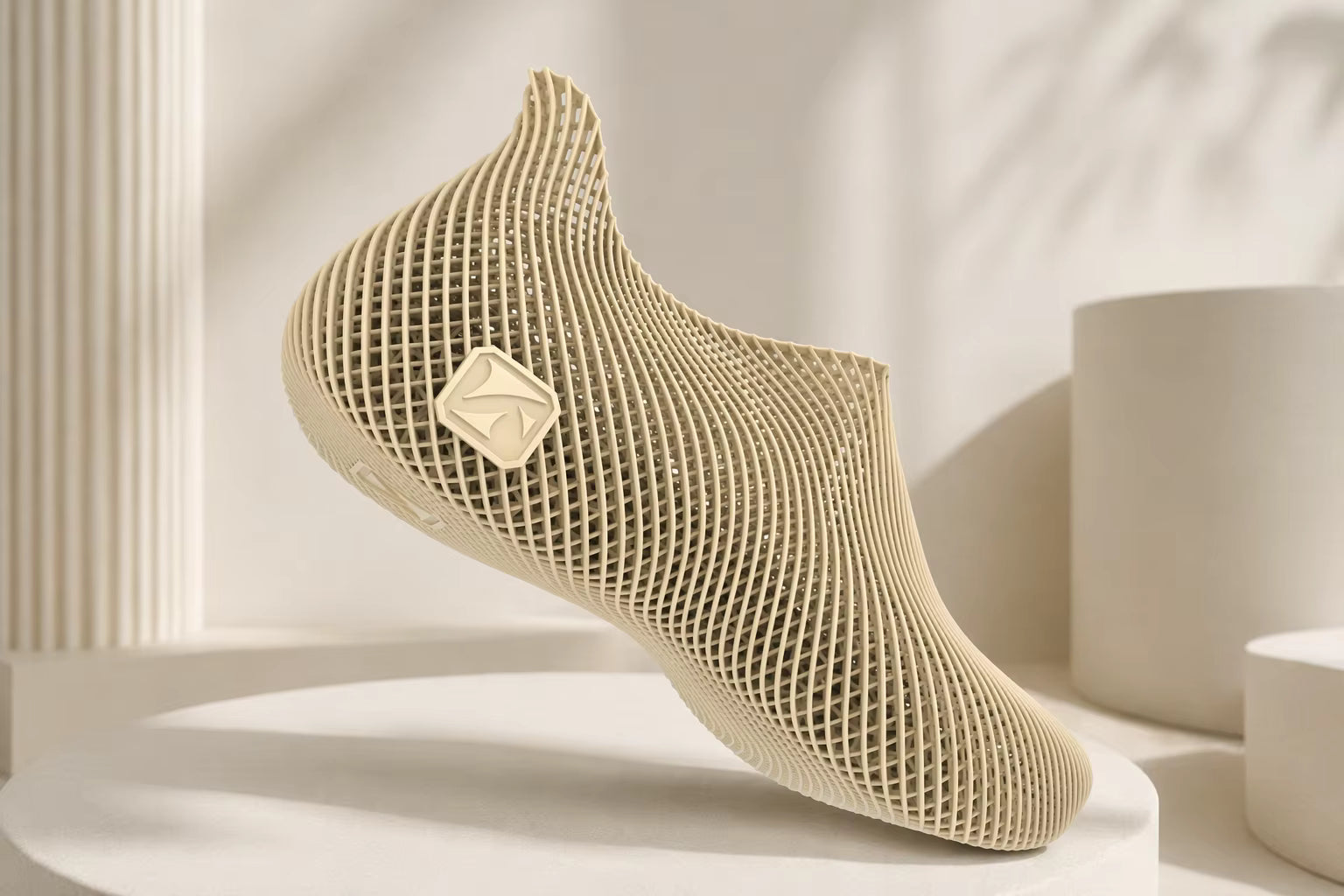
The lifespan of running shoes sits at the intersection of material science, biomechanics, plus personal habits. New technology may change this in the future. One example is the use of 3D-printed lattice midsoles. These structures rely on geometric elasticity instead of chemical foam materials that age over time. Such designs may offer longer durability cycles. Until that future becomes common, runners benefit from a simple approach. Track total mileage, often within a 400–800 kilometer range. Notice physical signals such as unusual knee discomfort or foot fatigue. Combine this awareness with visual checks of shoe wear. A retired pair is not simply waste. It represents equipment that completed its purpose. Replacing shoes at the right time supports better performance. It also protects the body, often called a runner’s most valuable asset. Careful use plus timely replacement form an important foundation for long-term healthy running.
Share:
What is the Difference Between HALS and DLS?
Do 3D Printed Shoes Last Longer? 1,000-Mile Durability Test Results