


When Street Culture Meets Future Footwear Tech
From "Concept" to "Daily Driver" Once upon a time, 3D printed shoes existed solely in the glass cabinets of high-end fashion shows or the labs of geeks, regarded as fragile "art pieces" meant for display, not wear. However, with the rise of brands like ARKKY, this stereotype is being thoroughly shattered. When we first slide our feet into 3D printed models like the AeroDash or AeroBB, the most immediate feedback isn't the "coldness of hard tech," but an astonishingly stunning sensation of lightweight agility & dynamic rebound.

Unlike traditional EVA foam midsoles that develop a "collapsed" feel after long-distance walking, the 3D printed Lattice Structure demonstrates surprising linear support. This experience doesn't come from the stacking of materials themselves, but from the structural dividends brought by Topology Optimization—every step is not just downward pressure, but energy feedback generated by structural deformation. Experimental data indicates that the rebound performance of TPU lattices is more durable than traditional EVA foam under long-term load, with a significantly lower compression set rate.
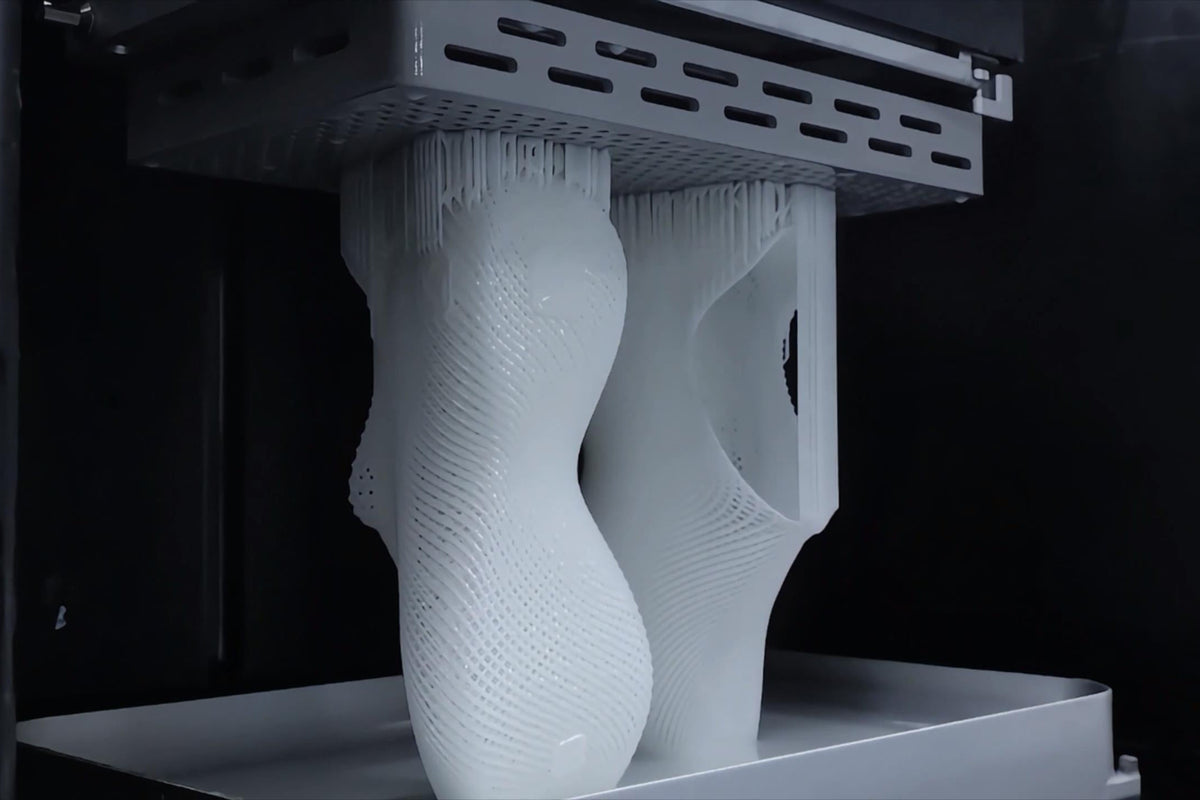
Authority Endorsement & Mass Production Breakthrough This trend isn't just a consumer sensation; it's doubly validated by the industry. From avant-garde design exhibitions at Fashion Week to professional running communities, 3D printed shoes are becoming the new focal point. ARKKY, a disruptor in this field, has achieved a breakthrough of producing over 200 pairs per day via its proprietary AIHALS technology, democratizing technology that once belonged only to "limited edition collections" for the mass consumer market. This shift from "scarce experimental products" to "high-performance mass-produced footwear" marks the official entry of 3D printed shoes into the realm of reshaping street trends.
The Essential Fit Between 3D Printed Shoes & Street Style
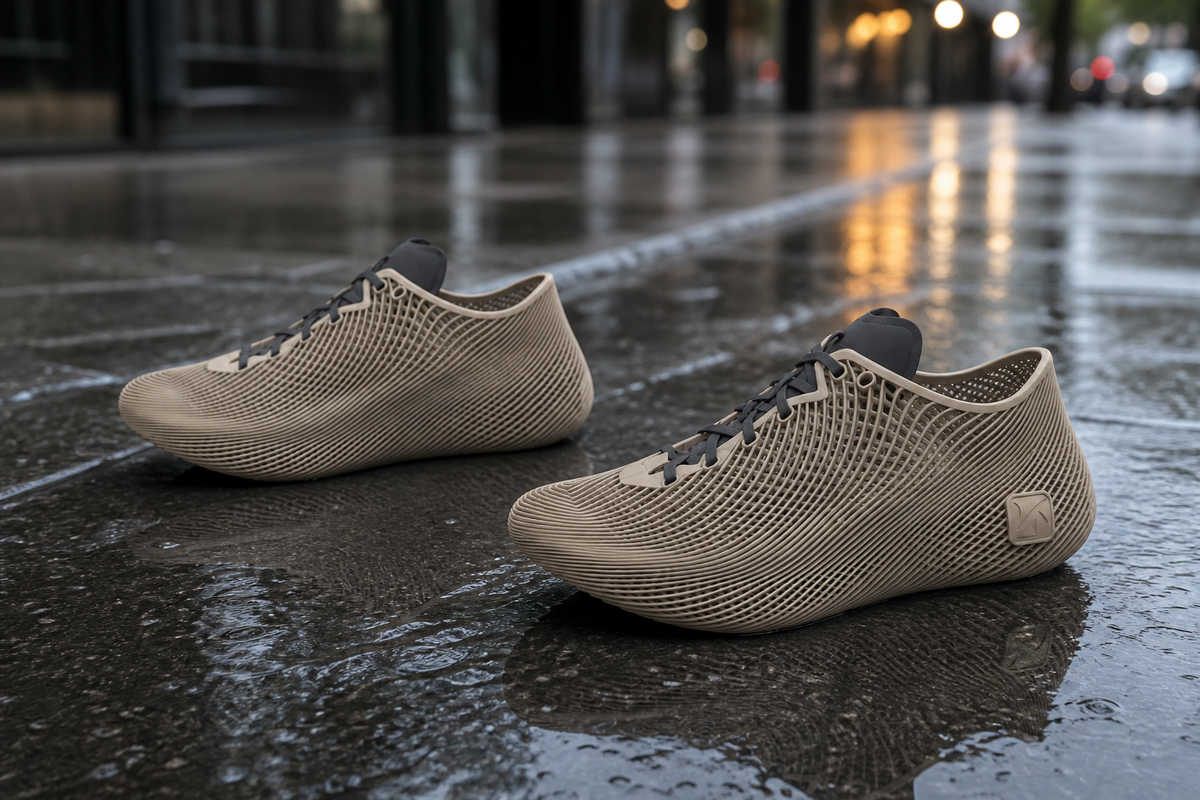
Real Styling Observation: Structure is Texture The core of Streetwear lies in breaking conventions and creating visual impact. The inherent Exposed Structure and geometric cutouts of 3D printed shoes cater perfectly to the currently trending aesthetics of Techwear, Y2K, and Cyberpunk.

Shift in Visual Dominance: In the past, the visual center of gravity in street styling often relied on massive brand logos (like the Swoosh or Three Stripes). With 3D printed shoes, the complex parametric structure itself becomes the visual symbol. A shoe featuring a complex lattice midsole, even without any logo, can instantly grab the attention of passersby with its "non-naturally generated" industrial beauty.
Silhouette Logic: Oversized silhouettes require voluminous footwear to balance the center of gravity. The chunky outsoles and three-dimensional uppers typically found in 3D printed shoes align perfectly with loose-fitting trousers, avoiding the "top-heavy" awkwardness in styling.
Trend Data Evidence The wind vane of the sneaker market is undergoing a subtle shift:
- From "Limited Collabs" to "Structural Innovation": Consumers are experiencing aesthetic fatigue with simple Colorway Swaps, turning instead to pursue fundamental breakthroughs in materials and engineering structures.
- Consumer Profile: The new generation (Gen Z & Alpha) focuses more on Authenticity—whether the shoe's styling is determined by its functional logic rather than mere decoration.
Why 3D Printed Shoes are the Next Streetwear Icon
- Trust Based on Visible Tech Unlike traditional sneakers that encapsulate technology inside foam materials, 3D printed shoes follow the principle of Visible Tech.
- Visible: Complex lattice structures are directly exposed to the line of sight; the connection of every strut is clearly visible.
- Tangible: Pressing the sole with a finger allows one to directly feel the varying rebound damping caused by changes in structure density across different zones (heel, arch, forefoot).
- Transparent Attributes: Publicized material properties, such as the high rebound, anti-bacterial, and breathable characteristics of Bio-based TPU, allow consumer trust to be built on physical facts rather than marketing spiel.
Industry Corroboration Currently, 3D printed shoes are no longer a solo act for tech media; the runways of Fashion Week and tech exhibitions like CES have formed a rare "dual-track recognition." This cross-border consensus establishes their status as the "next generation trend totem."
Styling Guide: How to Wear 3D Shoes with Street Cred
To perfectly integrate this tech item into daily life, we have summarized four verified styling formulas:
Table 1: 3D Printed Footwear Styling Matrix
|
Style |
Key Items |
Visual Focus |
Role of Shoes |
|
Techwear |
Functional jackets (Acronym style), articulated cargo pants, tactical gear |
★ Black/Grey/Olive Drab, emphasizing functionality and futurism |
Core Soul. The lattice structure echoes the complex texture of tactical fabrics, reinforcing the "Cyber Soldier" visual. |
|
Street Oversized |
Drop-shoulder heavy tees, Cargo Shorts, Crew socks |
★ Wide Silhouette, relaxed fit from top to bottom |
Visual Anchor. 3D shoes typically possess significant volume (Chunky), effectively holding up loose pant hems and balancing proportions. |
|
Minimal Futurism |
One-tone sets, deconstructed trench coats |
★ White/Ice Blue/Concrete Grey, cool color palette |
Sole Focus. Against a clean background, the "parametric texture" of the sole becomes the only complex element, exuding high-class sophistication. |
|
Athleisure |
Soft sweatsuits, tight Leggings |
★ Comfort & Streamline, lifestyle scenarios |
Aesthetic Endorsement. Visible cushioning structure instantly signals "I know sports tech," elevating the professionalism of casual wear. |
Fundamental Differences in Wearing Experience
Styling is not just visual; it is an extension of the body. In all-weather street roaming, 3D printed shoes provide feedback distinct from traditional footwear:
- Breathability Revolution: Traditional sneakers (especially retro leather ones) are often "steamers." 3D printed models from brands like ARKKY feature fully hollowed-out designs in both upper and midsole, allowing air to pass freely through the sole structure. This physical "breeze underfoot" experience is unmatched by any mesh fabric.
- Dynamic Adaptation: While standing static, the lattice structure provides stable support; during walking or running, the structure deforms to absorb shock. This "adaptive" foot feel allows street walkers to maintain vitality longer during City Walks.
Visual Language: Monochrome & Cyber Aesthetics
- Victory of Minimalism: Since the 3D printed structure itself is sufficiently complex, the most successful color schemes are often Monochrome. Triple Black or Triple White designs maximize the play of light and shadow on the lattice, showcasing a beauty akin to architectural sculpture.
- Cyber Hues: To highlight the futuristic feel, cool tones like Glacier Blue, Liquid Silver, and Neon Green have become popular choices. Under night lights, these colors form a strong contrast with the shadows of the 3D structure, appearing as if they have a built-in filter.
- Bottom-Heavy Focus: Traditional sneaker design focuses on the Upper, while 3D printed shoes shift the visual center of gravity down to the Midsole. This design language of "complex chassis" offers a brand-new balance point for styling.
Material Reliability and Tech Credibility
For street players, Durability is a hard metric.
- Reduced Delamination Risk: Traditional sneakers rely on glue to bond the midsole and outsole, which easily separates upon aging. Advanced 3D printed shoes (using AIHALS, SLS, or CLIP tech) often employ one-piece molding or minimal component assembly, physically circumventing the issue of "sole separation."
- Toughness of Bio-based TPU: Mainstream TPU powder or resin materials possess excellent abrasion resistance, UV resistance (anti-yellowing), and anti-bacterial properties. Experimental data shows the rebound life of TPU lattices is far higher than traditional EVA foam bases, maintaining initial elasticity even after tens of thousands of flexes.
- Authoritative Support: These complex sole structures are not drawn just to "look good"; they are generated based on engineering-grade topology optimization algorithms. This biomimetic logic, derived from aerospace and industrial design, ensures the strongest structural strength at the lightest weight.
Why Street Culture Needs 3D Printed Shoes
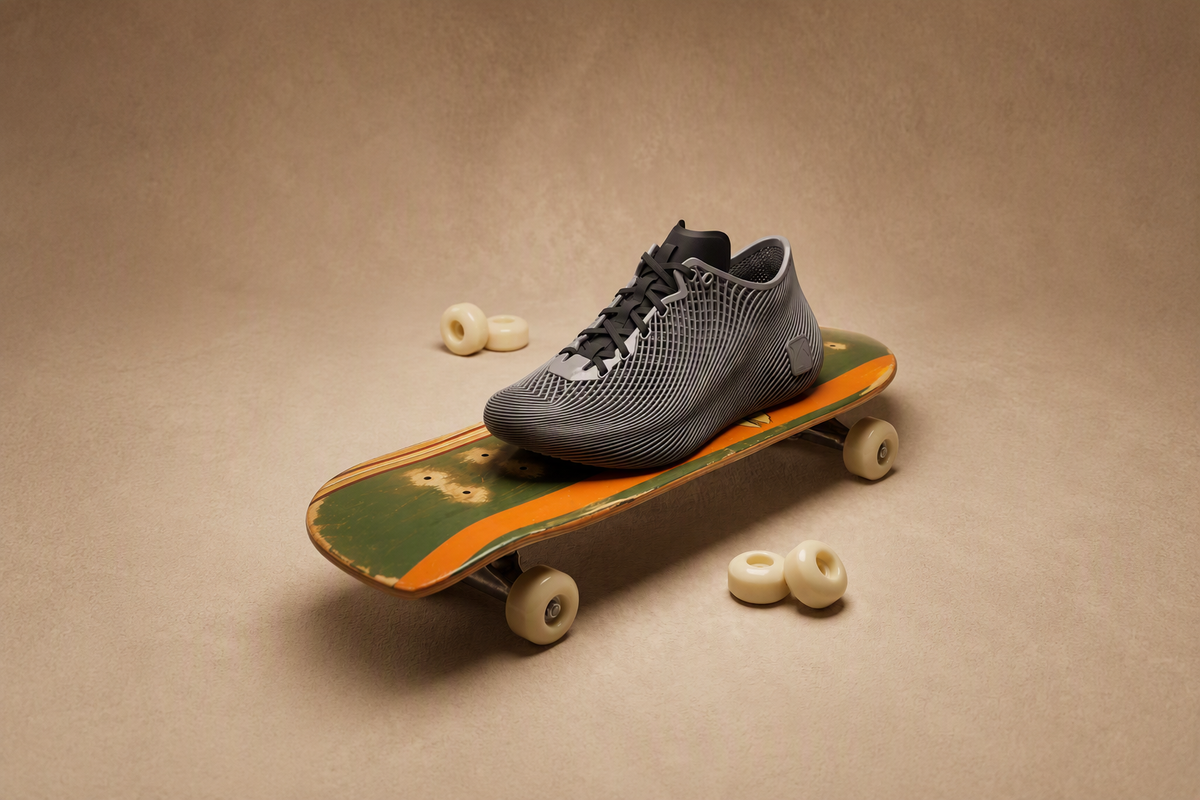
- Cultural Angle: Evolution of Vocabulary Street culture never stops evolving. From early skateboard wear (DIY destruction) to the mid-era limited colorways (Hype), it is now moving towards Structural Innovation.
- Weakening of Sneaker Economy: When everyone can buy a retro reissue AJ, its unique expressive value is diluted.
- Desire for Self-Expression: Crowds are seeking sharper, more futuristic self-expression. 3D printed shoes, with their "non-traditional manufacturing" scarcity and tech feel, fill this psychological void.
- Aesthetic Trend: Form is Function In the "Styling First" era, Form, Function, and Tech have finally achieved unity in 3D printed shoes. The shoe is no longer just a tool to protect the foot, but a functional carrier displaying the wearer's cognition of cutting-edge technology.
Future Outlook: From Item to Structural Expression

Looking ahead to 2025-2030, we predict:
- Lattice as Standard: Lattice soles will no longer be exclusive to concept cars but will become a regular street styling skeletal element, much like Air or Boost.
- New Fashion Language: Visualized physical structures will form a new fashion language. Street style will no longer overly rely on brand Logo endorsements but will turn to appreciating Material Engineering Aesthetics.
Conclusion
3D printed shoes are not here to "replace" traditional canvas or leather sneakers; they are an evolution of the footwear industry. They represent a profound shift in Streetwear from mere trend-chasing to the landing of engineering aesthetics.
For today's street players, choosing a 3D printed shoe like the AeroDash is not just for a more comfortable, breathable walking experience—it is a declaration of attitude: I embrace the future, and I wear technology on my feet. When the street meets technology, we see not only various possibilities of styling but a brand-new definition of how humanity moves.
Share:
Is 3D Printed Shoes Worth Buying?