

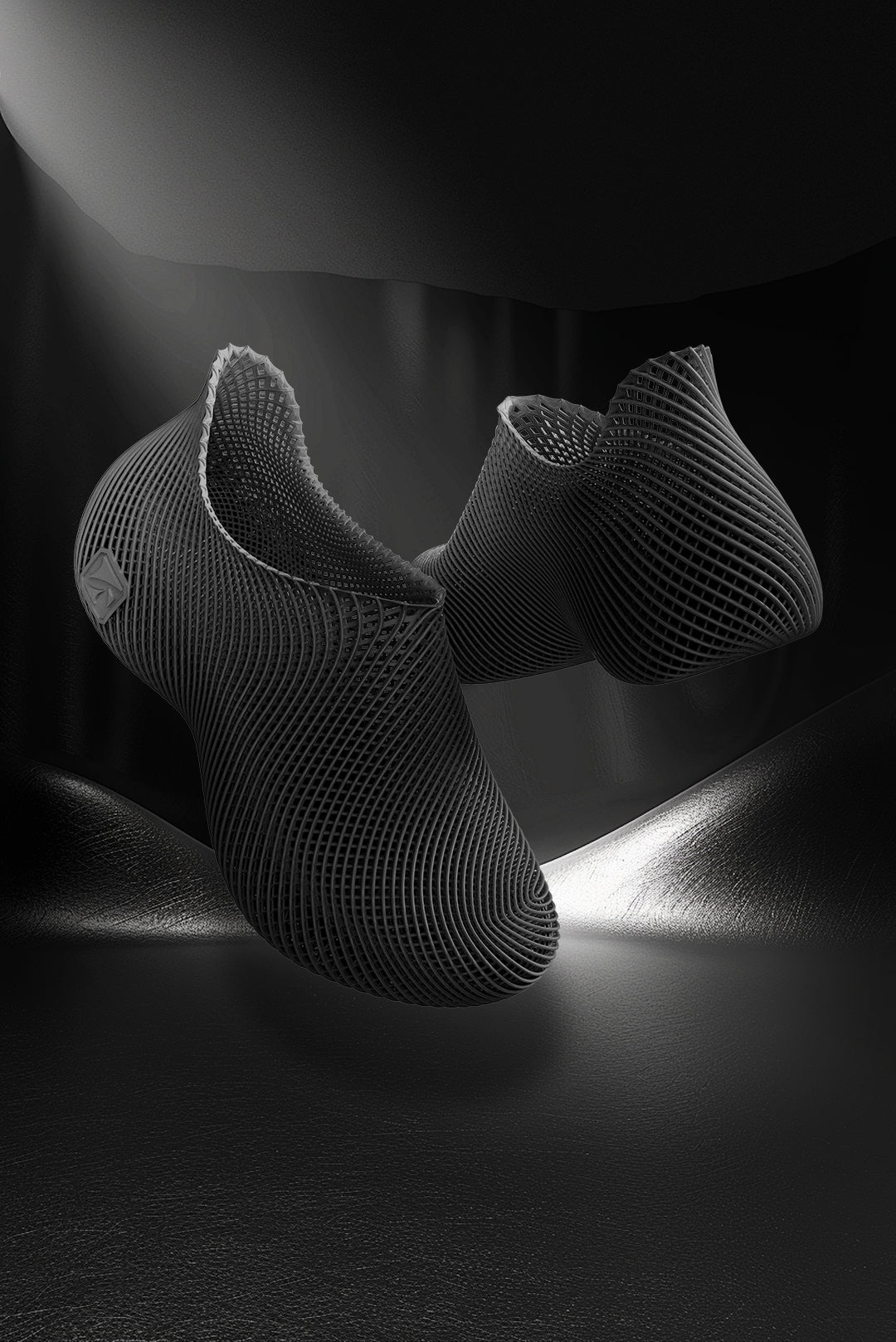

Across the long timeline of sneaker innovation, 3D printing stands out as one of the most futuristic chapters. Early versions existed as costly lab prototypes. That phase has shifted. Products like Adidas 4D entered broader markets. New players such as ARKKY & Zellerfeld continue to push this space forward. What once felt like a gimmick now functions as real performance gear.
A recurring question keeps surfacing. It also sparks debate. Can lattice-structured 3D printed shoes realistically serve as “water shoes”?
Anyone who has worn traditional fabric or rubber water shoes likely remembers the drawbacks. They feel heavy. They soak up water. They become slippery. Drying takes a long time. In contrast, 3D printed shoes feature porous, futuristic lattice structures. This design invites a different kind of thinking. Water could enter, then exit almost instantly. The material might not retain moisture at all. Drying could happen right after stepping onto land. This concept sounds like an ideal solution for water activities.
The reality is more complex. This article approaches the topic from multiple angles. It looks at material science. It considers structural engineering. It reflects on real user experience. It also compares these shoes with traditional water footwear. The goal is to unpack what truly works here.
Technical Core: Lattice Structures and Materials Science
Before reaching any conclusion, a clear grasp of the underlying technology becomes necessary. The focus centers on lattice structures, along with the polymer systems used to produce them in 3D printed footwear.

Lattice Structure: A Natural Drainage System
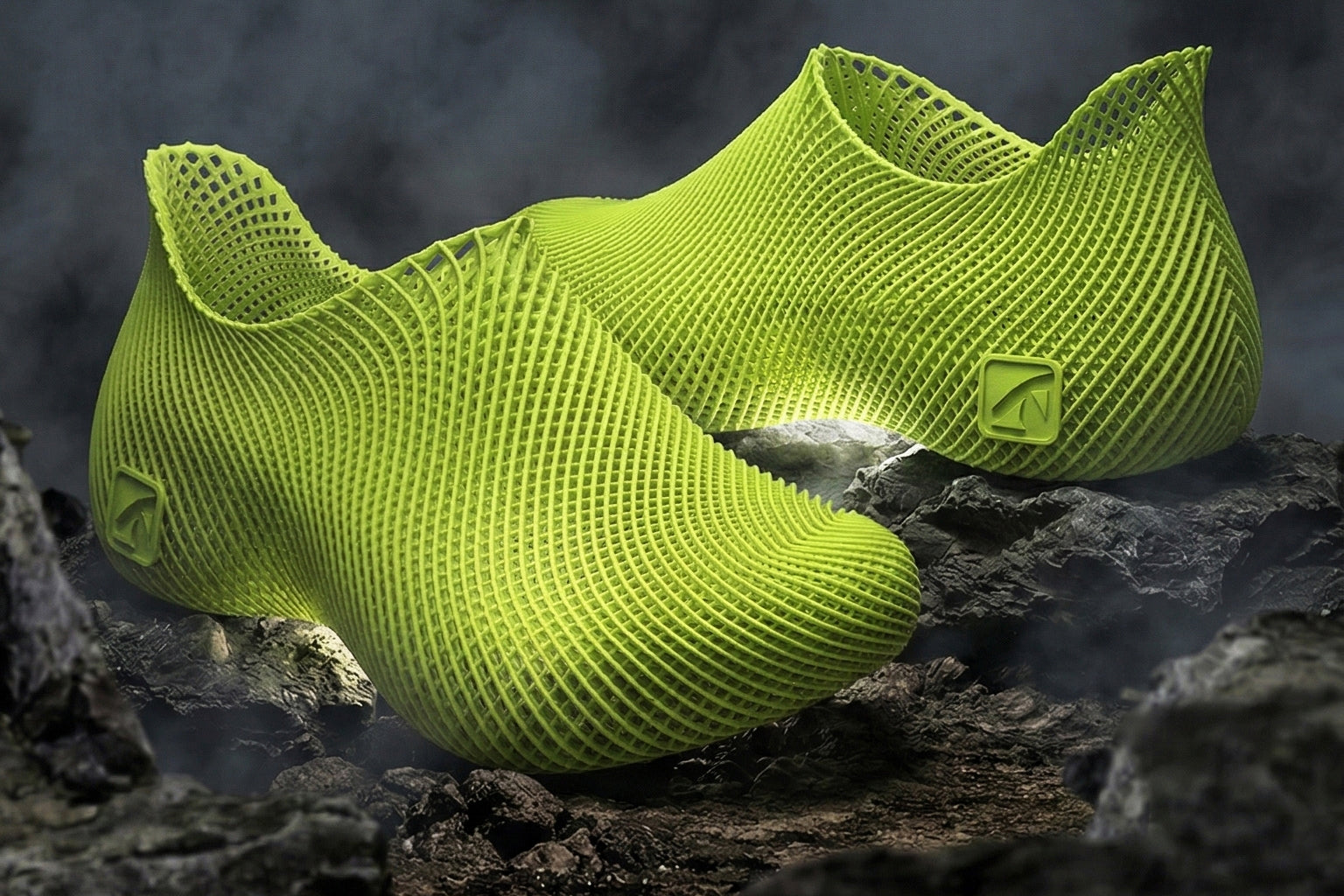
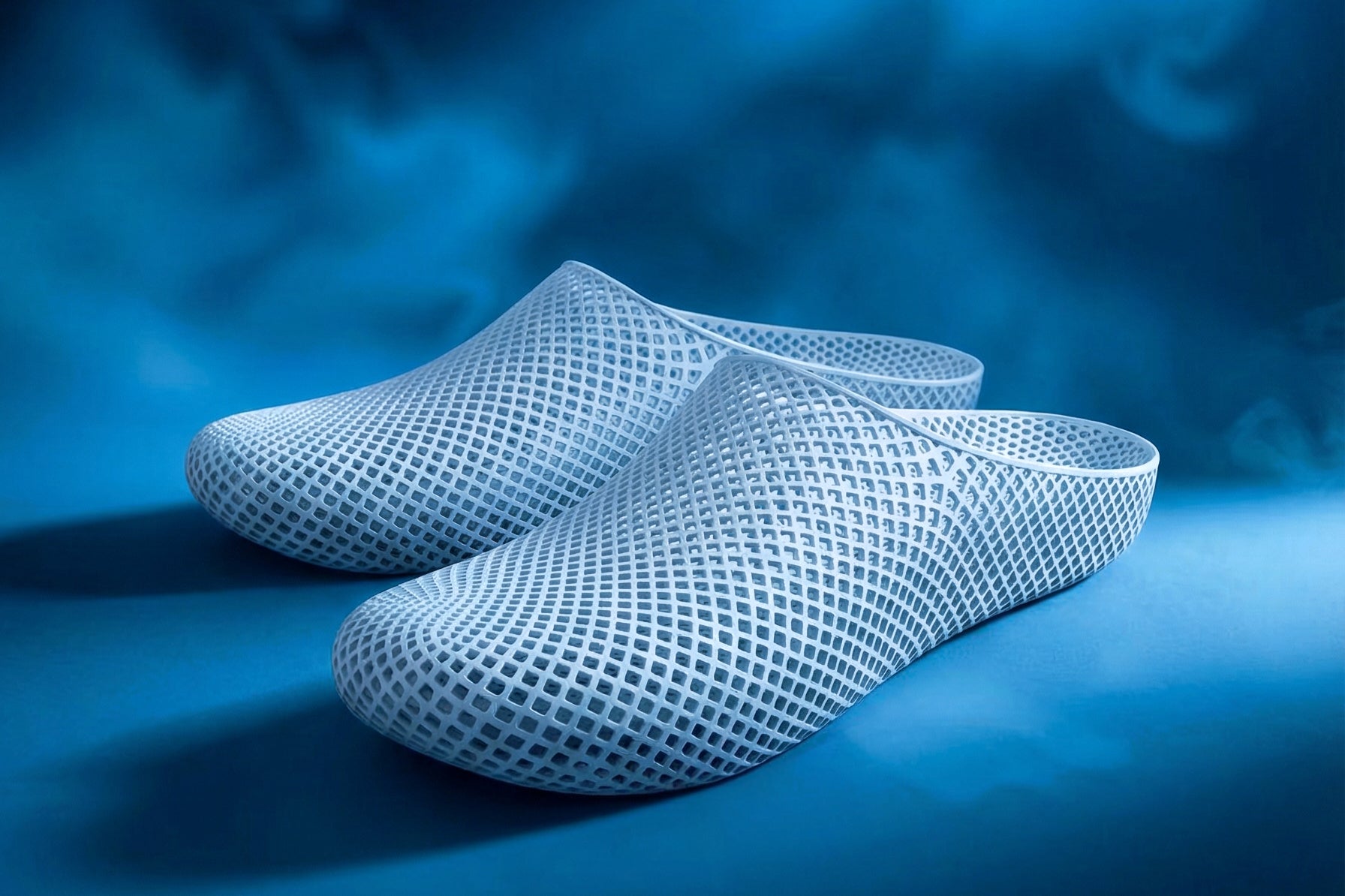
Most 3D printed shoes, especially versions with unified midsoles & uppers, consist of thousands of repeating lattice geometries. These elements are generated through parametric design logic. The outcome forms intricate spatial frameworks, often resembling structures like the “Water Cube” or “DODE.”
A defining trait emerges from extremely high porosity. Traditional footwear depends on enclosed materials to provide support. Lattice-based designs rely on geometric form to deliver elasticity. The entire shoe behaves as a fully open framework. Once water enters, it does not remain trapped. Liquid exits quickly through multiple pathways. Gravity plays a role. Motion-induced pressure contributes as well. This behavior stands in sharp contrast to conventional water shoes, which depend on a few small drainage holes located in the outsole.
Material Properties: Non-absorbency is the absolute essential.
Conventional water shoes often use neoprene or mesh textiles. These materials resist external water exposure. Internal fiber gaps still absorb moisture. Retained water increases overall weight during use.
3D printed models typically rely on elastomeric polymers such as TPU or TPE, along with advanced photopolymer resins. At the molecular scale, these substances do not absorb water. Full immersion does not result in added mass. Some brands, including ARKKKY, apply blends containing 53% bio-based inputs. Strong rebound performance is maintained. Environmental impact is also reduced.
Integrated Molding: Binder-free Water Resistance
Within traditional footwear construction, adhesives represent a key point of failure under wet conditions. Exposure to moisture & heat accelerates breakdown. Separation becomes more likely over time. 3D printed shoes address this issue through integrated manufacturing. Many designs feature single-piece or large-area unified construction. Stitching is absent. Glue joints do not exist. This structural approach offers greater durability during prolonged water exposure compared to conventionally assembled shoes.
Performance Testing: Four Key Advantages as Water Shoes
Based on these technical traits, lattice-structured 3D printed shoes show performance advantages when used as water footwear. Traditional options rarely reach the same level.
1. Exceptional Drainage Efficiency
During water hikes or stream crossings, trapped water inside shoes often leads to swelling & bacterial growth. Standard water shoes rely on small drainage holes. Sand can easily block them. Lattice-based designs function more like large-scale filters. Water exits at nearly the same rate it enters. Feedback from users on Reddit highlights this effect. Some reports mention that wearing ARKKY AeroDash on the beach produces almost no sense of water retention.
2. Remarkable Drying Speed
Drying speed serves as a key benchmark for water footwear. Users of ASICS Actibreeze 3D printed slides have described extreme cases. After leaving a pool, the time needed for a quick shower was enough for the shoes to dry completely. Socks could be worn right after. Low surface tension contributes to this effect. The fully open structure allows air to circulate freely in all directions. Moisture evaporates much faster as a result.
3. “Near-Zero Friction” Comfort Fit
Traditional water shoes often cause friction when wet. Damp fabric rubs against skin. Blisters may develop. 3D printed footwear approaches fit differently. Parametric design enables a “second-skin” feel. Internal surfaces remain smooth. Seams & joints are absent. Common pressure points are reduced or eliminated.
4. Lightweight Build & Energy Return
Lattice structures reduce overall weight while preserving cushioning performance. Compared to flat rubber soles found in typical water shoes, these designs provide stronger energy return. Movement on sand or wet decks feels more responsive. Foot fatigue may decrease over extended use.
Real-World Pain Points: Why Is It Still Imperfect?
Even with top-tier drainage & rapid drying performance, real-world aquatic environments expose several critical limitations in 3D printed shoes.
1. “Cleaning Nightmare”: Sand & Small Debris
The largest issue in beach settings comes from the lattice itself. Open-cell geometry supports airflow & drainage. The same structure can trap sand, shell fragments, or tiny stones.
User feedback on Rednote highlights this concern. After walking on fine sand, particles may lodge deep within lattice intersections. Internal pathways are complex. Simple rinsing often fails to remove everything. In some cases, high-pressure water or even ultrasonic cleaning becomes necessary. This creates extra effort. Convenience drops for outdoor users.
Some online discussions around 3D printed shoes require clarification. Many participants have never worn lattice designs. Assumptions often suggest holes automatically trap stones. Actual usage tells a different story. Under combined structural forces, stones rarely get stuck. A more realistic concern might be stepping into dog waste while wearing them.
2. Grip Concerns on Complex Wet Terrain
TPU materials provide a degree of slip resistance. Professional water shoes usually feature specialized rubber outsoles such as Vibram Megagrip.
Most 3D printed shoes use lattice-based outsoles. Contact points appear as dispersed nodes or mesh patterns. On algae-covered rocks or slick surfaces, grip may fall short compared to full-contact rubber soles. Some brands attempt to enhance traction by adding textures beneath the lattice. Performance under extreme conditions still lacks full validation.
3. Price Barrier & Premium Positioning
Pricing remains a noticeable hurdle. Mature 3D printed lattice shoes often range from $90 to $230. High-performance traditional water shoes usually cost between $20 & $60. For many buyers, paying several times more for faster drainage raises questions about value.
4. Sensitivity to Fine Particles
Beyond sand, smaller elements like algae, microorganisms, or mud may remain embedded inside lattice structures. Delayed cleaning can lead to odor buildup. Material degradation may also occur over time due to chemical interactions.
Comprehensive Comparison: 3D-Printed Shoes vs. Traditional Rain Boots
A clearer comparison emerges through the table below.
|
Performance Metric |
Lattice-Structured 3D Printed Shoes |
Traditional Water Shoes (Neoprene/Mesh) |
|
Drainage Performance |
Extreme (fully open structure) |
Moderate (localized drainage holes) |
|
Drying Speed |
Very fast (non-absorptive polymers) |
Slow (fabric fibers retain moisture) |
|
Weight When Wet |
Very light (no added mass) |
Heavier (water absorption increases weight) |
|
Wearing Comfort |
High (custom fit, seamless build) |
Average (friction, sticky feel when wet) |
|
Cleaning Difficulty |
Challenging (sand may lodge, complex structure) |
Easy (smooth surfaces or large mesh openings) |
|
Professional Grip |
Average to moderate |
Strong (specialized rubber compounds) |
|
Cost / Price |
High (premium tier) |
Low (budget-friendly) |
From this comparison, lattice-based 3D printed shoes lead in underwater performance & dry comfort. Gaps remain in practical usability & overall value.
Clash of Perspectives
Discussions around using 3D printed shoes as water footwear reveal distinct perspectives across regions. Different priorities emerge. These viewpoints also complement each other.
Reddit Discussions
Within Reddit sneaker & outdoor communities, Western users often approach the topic through a technical lens. Focus tends to center on material properties. Chemical resistance receives strong attention, especially stability in saltwater or chlorinated pool environments.
Interest in “closed-loop recycling” also stands out. Brands like ARKKY promote concepts such as reprocessing worn shoes into new prints. This idea aligns with sustainability values common among Western consumers. If water shoes function as consumables, recyclable 3D printed options may offer stronger long-term appeal compared to traditional synthetic rubber footwear.
China: Aesthetics, Comfort & “Guochao” Momentum
On Chinese platforms such as Rednote & Bilibili, 3D printed shoes carry different labels. Terms like “trend-driven,” “black tech,” & “top-tier comfort” appear frequently.
Local brands such as Peak receive significant attention for their 3D printing efforts. The “Future” series & “Water Cube” lattice midsoles are often viewed as symbols of domestic innovation in advanced footwear tech. Usage scenarios differ as well. Many consumers in China prefer these shoes for daily commuting, rainy conditions, or travel settings. The product serves both functional needs & social expression as a fashion item. Models like ASICS Actibreeze, positioned as recovery footwear, also gain traction among fitness-focused users. Performance in shower or pool environments remains a recurring topic of discussion.
Conclusion:
After detailed research & layered analysis, a clear takeaway emerges.
Lattice-structured 3D printed shoes can function as water shoes. Limitations still exist. They do not serve as a universal solution for every aquatic scenario.
When does it suit you best?
- Light water exposure settings: poolside use, private yacht decks, or flat sandy beaches. A consistently dry wearing experience stands out.
- Rainy urban commuting: acts as an alternative to rain boots. Breathability improves. Drying occurs almost instantly after leaving wet ground.
- Post-water activity recovery: after surfing or diving sessions, these shoes help expel water quickly. Foot pressure may also feel reduced.
When should you choose traditional water shoes?
- Technical river tracing or rock climbing: maximum wet-surface grip becomes critical for safety.
- Budget-focused purchases: occasional water use does not justify higher pricing.
A final perspective can be drawn. Lattice-based 3D printed shoes represent a disruptive shift within the water footwear category. Material behavior & drainage logic depart entirely from traditional designs. Current drawbacks remain tied to cleaning complexity & pricing levels. Future improvements may address these limits. Higher print precision could reduce sand intrusion. Material costs may decline over time.
Those who value forward-looking design & are willing to accept a premium for instant-dry performance may find this option compelling. This lattice-driven concept feels like a product pulled straight from the near future.

Share:
The Best Everyday Shoes for Extra Wide Feet in 2026
2026 Beginner Running Shoe Buying Guide: How Novice Runners Can Choose the Right Entry-Level Shoes (Unisex)