

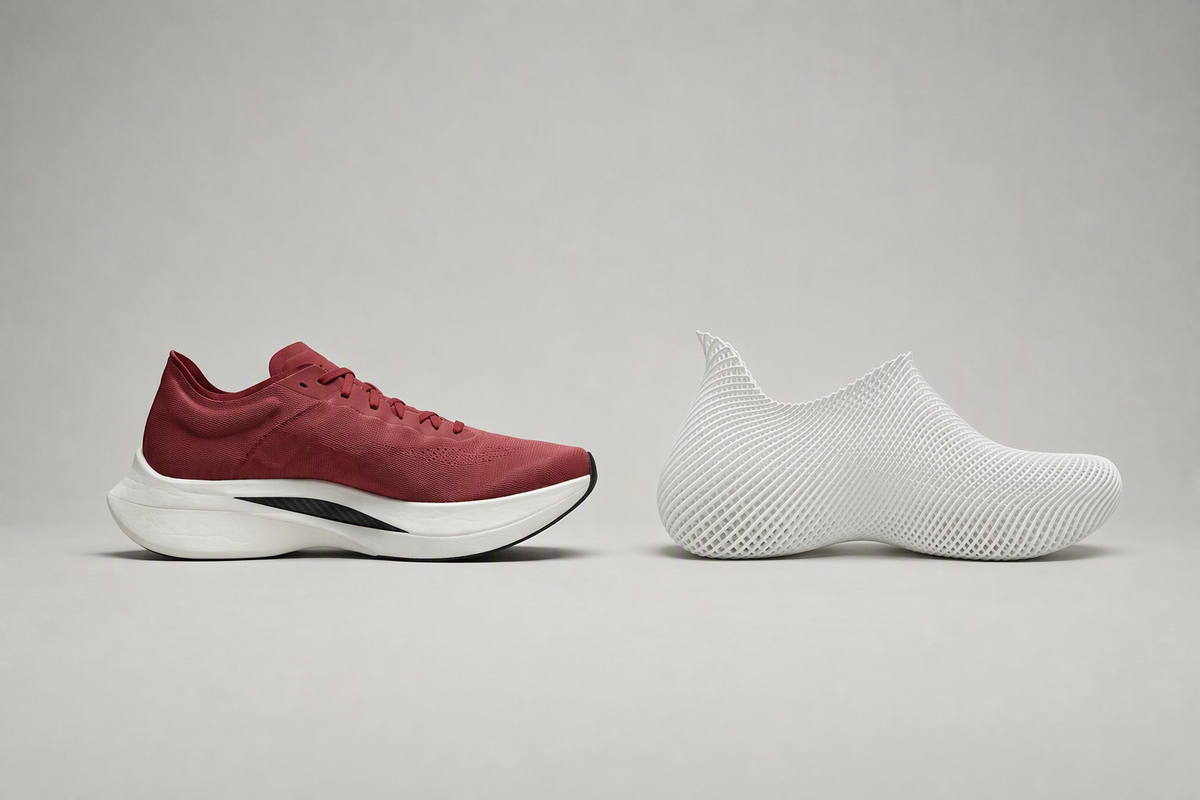

Ask a runner what they want from their next pair and you will usually hear one of two answers. Half the room wants to go faster and assumes the shoe is the shortcut. The other half wants to run more often without their feet, knees, or wallet complaining — and quietly suspects the shoe industry is selling them something they do not need. Both instincts deserve respect, because both are pointing at something real. The carbon-plated racing shoe is the most scrutinized piece of running equipment ever made: governing bodies had to write rules for it, and World Athletics now caps the sole of competition shoes at 40mm and permits no more than one rigid embedded plate. The reason for all that attention is that these shoes genuinely work — a 2026 systematic review and meta-analysis of crossover trials found that carbon-plated footwear lowers the metabolic cost of submaximal running by roughly two to three percent on average (mean 2.75%, with individual studies ranging from about one to four and a half percent) compared with identical non-plated shoes (Frontiers in Sports and Active Living, 2026).
Two to three percent may not sound like a revolution, but in a marathon it can translate to minutes. Yet the same review is careful about what causes the effect — and that caution matters more than the headline number. We are Arkky, a company that prints running and walking shoes out of open lattice rather than assembling them from foam and carbon, and we get asked constantly whether a printed shoe can compete with a carbon-plated racer. The honest answer is that the question is wrong, and this article is about why. Racing shoes and daily shoes solve different problems, and the only way to buy sensibly is to stop comparing them on a single axis of "speed" and start asking what a shoe is for: which runs, at which pace, how often, and for how many months. By the end you will know which of the two belongs in your rotation — and, just as important, which one does not.
Two very different answers to the same question
Before comparing brands or models, compare the engineering briefs. A carbon-plated racing shoe and an everyday training shoe are not two versions of the same product with different price tags; they are two products designed for opposite constraints.
The race-day shoe — the "super shoe" — is an instrument for one to four hours of maximum effort. Everything about it is sacrificed to that job. Its midsole stacks close to the 40mm ceiling that World Athletics allows, using soft, highly resilient foams that return energy on every foot strike. Embedded in that foam is a curved carbon-fiber plate whose job is often misunderstood: the plate is not a spring that "launches" you. Biomechanically, it stiffens the shoe longitudinally, changes the lever under your forefoot, and — critically — braces the very soft foam so that it does not simply collapse sideways under load. The foam provides the rebound; the plate turns that rebound into forward motion instead of wasted wobble. A thick rockered sole completes the system by rolling you through the gait cycle. The whole package is the most efficient running machine that current rules allow.
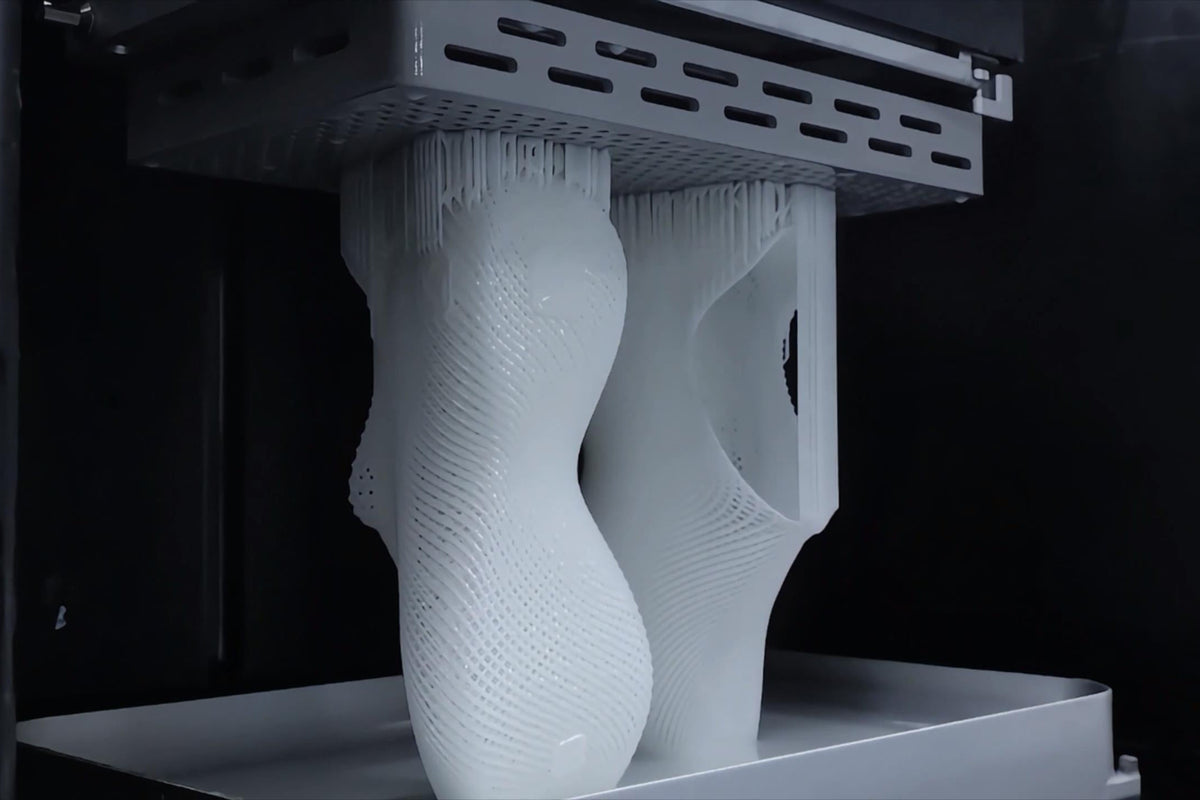
The daily trainer has the opposite brief: it must feel good for the ninety-plus percent of runs that are easy, long, or slow, hold up for hundreds of miles, and not punish you when you are tired. Daily trainers use firmer, more durable foams, moderate stack heights, no plate or a flexible one, and generous fit. They are not trying to squeeze two extra percent out of you; they are trying to disappear under you for a year of training. Into this second camp falls a newer and smaller family of shoes built differently again: lattice-printed shoes, where the midsole (and sometimes the whole shoe) is one continuous open structure rather than a slab of foam. We build these at Arkky, so we will declare the bias and let the engineering speak for itself. A printed lattice controls how it deforms through geometry — cell size, wall thickness, and where density sits — instead of through the chemistry of a foam compound. It is durable by design, breathes through its structure, and weighs little; it is not, and we do not claim it is, a carbon-plated racer. It belongs to the "run more, comfortably, for longer" half of the argument.
The mechanism behind the race-day shoe

Understanding why super shoes work is what separates useful advice from marketing. The 2026 meta-analysis that pooled fourteen crossover studies concluded that plated shoes reduce metabolic demand by roughly two to three percent, but its authors were explicit that the plate alone is not the whole story: the benefit appears to come from the interaction between a stiffened plate and the energy-returning foam around it, and studies that manipulate only one element at a time find much smaller effects. In practical terms, a carbon plate in a firm, ordinary midsole does little; a soft super-foam without a plate squanders its rebound through instability. They are a system.
Two further findings from the same body of research are worth knowing. First, curved plates appear to produce larger gains than flat ones, and shoe curvature changes how the forefoot loads — which is why the current generation of racers all share that aggressive, rockered silhouette rather than just a slab of plate. Second, the metabolic advantage is measured at the speeds researchers can test on a treadmill, and the relevant trials lean heavily on trained and competitive runners moving at ten to sixteen kilometers per hour — that is, roughly six-minute miles or faster. The science does not say the shoes stop working at slower paces; it says the evidence is strongest for runners who are already moving quickly. That gap between "proven for fast runners" and "assumed for everyone" is where most carbon-plate confusion is born.
What the evidence says about speed — and what it does not

Here is the part that gets buried under the race photos: two to three percent is real but bounded. It is not the difference between a hobby jogger and an Olympian; it is the difference between two otherwise identical race efforts on the same day. Studies also show the effect depends on the runner. Faster runners with efficient mechanics tend to extract more from the system, partly because the plate's lever action is designed around forefoot loading at speed, and partly because softer, taller shoes reward runners whose muscles can handle the added instability. For a runner whose easy pace is nine or ten minutes per mile, the tall soft stack and aggressive rocker can feel less like a machine and more like walking on a mattress with a ruler inside.
None of this is an argument that carbon shoes are a scam. They are among the best-documented performance products in the history of sport, and the governing-body rules exist precisely because they demonstrably help. The argument is about fit between product and purpose: the benefit is optimized for a narrow window of high-intensity, race-like running, and the shoe's design compromises — durability, stability at easy paces, cost — are the price of that window. If most of your running happens outside that window, you are paying the full price for a benefit you rarely collect.
Where carbon-plated shoes disappoint
The compromises are not theoretical; they show up in the three places runners complain about most.
Durability. The soft, resilient foams that make super shoes fast also make them short-lived. The long-standing rule of thumb for regular running shoes is replacement somewhere between 300 and 500 miles, but racers are commonly retired far sooner — many runners report the "super" feel fading well before 300 miles as the foam loses its rebound. When a shoe costs as much as a month of groceries, a 200-mile lifespan means every race is expensive even before the entry fee.
Stability at everyday paces. A tall, soft, rockered sole is less stable than a low, firm one, and stability matters most when you are tired, running slowly, or carrying extra load — exactly the conditions of most training runs. Podiatrists and physical therapists who write about super shoes consistently note that the tall stack and aggressive geometry place higher demands on ankle control and calf strength, and advise against using them as daily trainers.
Cost. Flagship carbon racers from the major brands list at roughly $250 to $285 at release (models like Nike's Alphafly and Vaporfly lines, the ASICS Metaspeed series, adidas's Adios Pro, and Saucony's Endorphin Elite all sit in that band). That is not an unreasonable price for a purpose-built race instrument; it is an unreasonable price for a shoe you jog three miles in twice a week.
One more, rarely discussed: they make you faster by making you different. A racer changes your gait — the rocker and lever shift how your foot lands and pushes off. On race day, that is the point. Every day, that is a variable you are training in that you will not race in, and coaches increasingly question whether training in shoes that alter mechanics is good preparation. The emerging consensus among experts who work with everyday runners: keep the racers for race day, and train in shoes that behave like shoes.
Where a printed lattice shoe fits

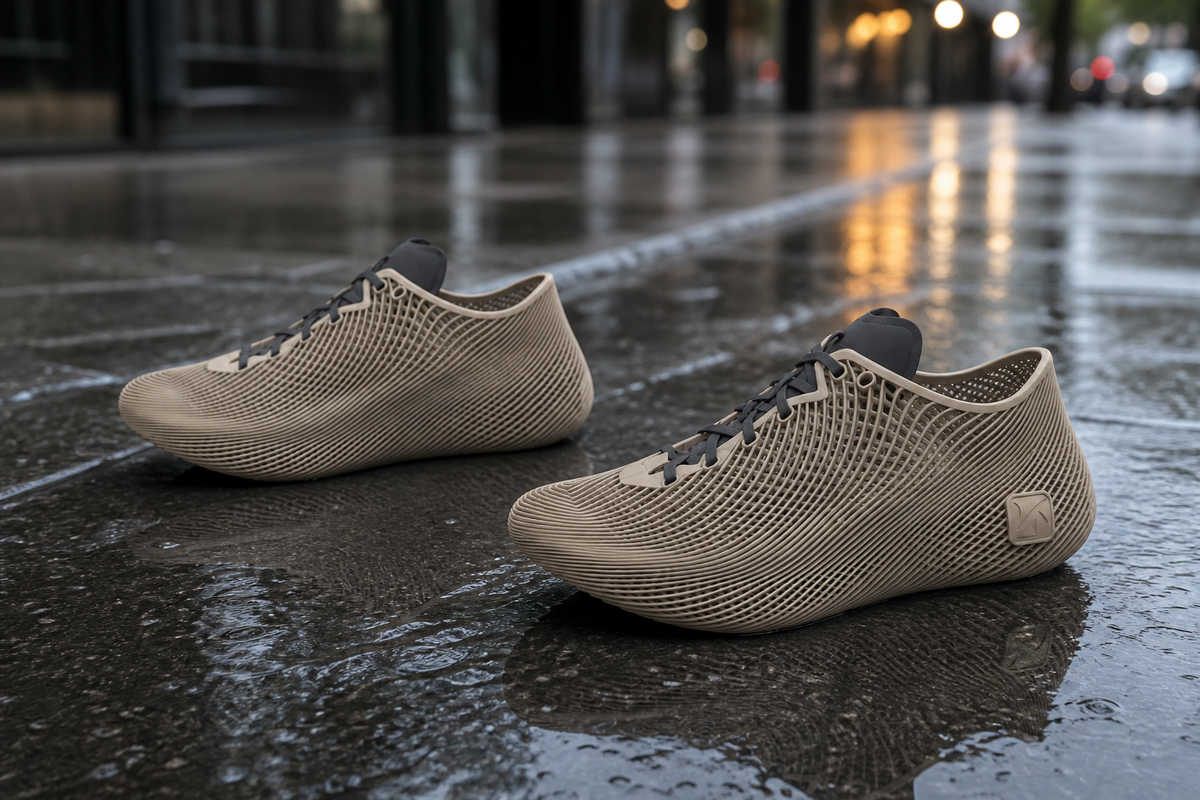
If the carbon racer is a race instrument and the foam trainer is a workhorse, the printed lattice shoe is a third category that most runners have not yet tried: a daily shoe whose structure is designed rather than compounded. Because the midsole is printed as a continuous open lattice, its mechanical behavior is tunable zone by zone — firmer where the foot needs support, more open where it needs cushioning or airflow — and because there is no foam to lose its bounce and no glued layers to separate, the structure does not degrade the way foam does. The same open cells that give it its ride also make it breathable and quick-drying, and the single-piece construction removes the seams and adhesives that usually fail first.
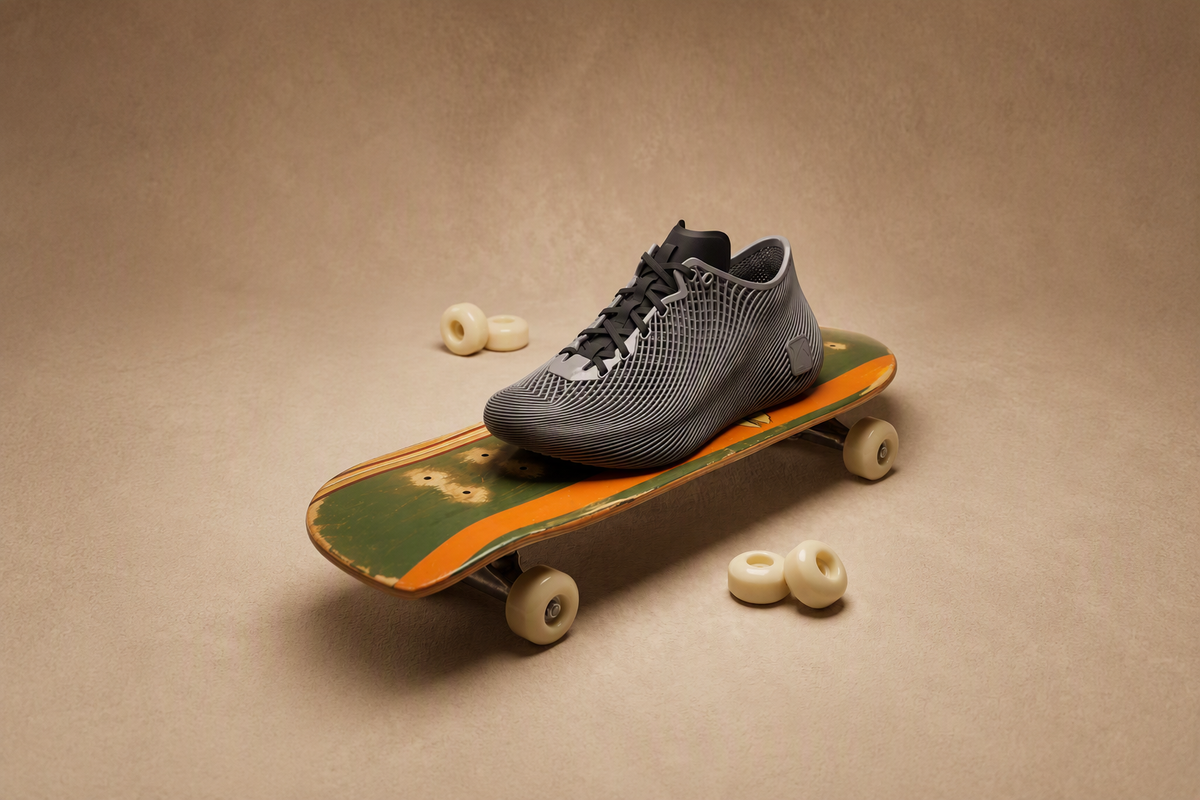
We make these shoes at Arkky, and the AeroDash, our flagship printed model, is priced from $199 — below the racing flagships and squarely in daily-trainer territory — while the AeroBB carries the same printed construction into a street-style silhouette. What neither of them is: a racing shoe. We do not claim the printed lattice delivers a carbon plate's race-day economy, because it does not, and no honest company would pretend otherwise. What the lattice does is deliver on the daily side of the equation: a durable, breathable, comfortable shoe for the miles that make up almost all of your running and walking, at a price that does not require amortizing a race-day asset across a few hundred miles.
A side-by-side comparison
To keep the differences visible, here is the same question — "what will this shoe do for me?" — answered for the three categories that dominate the conversation:
| Carbon-plated racer | Plated or standard daily trainer | Printed lattice daily shoe (e.g., Arkky AeroDash) | |
|---|---|---|---|
| Built for | Race day and fast workouts (tempo, intervals) | Daily miles, long runs, easy runs | Daily miles, commuting, walking, easy running |
| Core mechanism | Soft high-rebound foam + curved carbon plate + rocker | Durable foam; plate optional | One-piece printed lattice tuned by geometry |
| Proven metabolic benefit | ~2–3% vs non-plated shoes (at tested running speeds) | Not designed for this | Not claimed |
| Typical lifespan | Often retired before 300 miles | 300–500 miles | Foam-free structure; no midsole foam to lose rebound |
| Typical price | ~$250–285 (flagships) | ~$130–180 | $199 |
| Stability at easy pace | Reduced (tall, soft, rockered) | Good | Good (geometry-tunable) |
| Watch out for | High cost per mile; instability when tired; gait change | Choose fit and foam you trust | Young category — inspect the density map and fit |
The table is deliberately blunt because the categories are different jobs. The interesting column is the middle one, because that is where most runners actually live — and where the printed lattice shoe competes not with the racer, but with the foam trainer.
Which one is for you?
There is a clean decision rule hiding in everything above, and it comes down to pace, purpose, and frequency:
If you race and you run fast — genuinely fast, meaning your hard efforts are in the range where the research was done — buy or rent a dedicated carbon racer for race day and a few tune-up workouts. Use it as the instrument it is, keep it away from easy days, and treat its lifespan as part of the cost of racing.
If you train seriously but race occasionally — the reality for most runners who care about times — build a two-shoe rotation: a solid daily trainer for the miles and a plated racer only when a goal race is close. This is the pattern most coaches and shoe experts recommend, and it protects both your legs and your budget.
If you run for health, commute on foot, walk a lot, or are new to running — the majority of people reading this — you do not need a carbon plate at all. What you need is a comfortable, stable, durable shoe you will actually wear for hundreds of miles. Whether that shoe is a traditional foam trainer or a printed lattice shoe is now a preference question about fit, feel, breathability, and durability — not a speed question.

And if your "race" is a local 5K at a pace you could hold in conversation, be honest about the window. The racer's benefit is engineered around fast, race-like efforts. For everything else, the daily shoe is the better instrument, and the racer is an expensive way to make your easy runs less comfortable.
What to check before you buy anything
Whichever direction you lean, run through the same checklist in the store:
- Plate or no plate, and why. Ask what the plate is doing in the shoe you are holding. If the answer is "it makes you faster," walk on; if it is "race-day stiffness and stability for this soft foam," that is an honest product.
- Stack height. Hold the shoe sideways and eyeball the midsole against the 40mm competition ceiling; a racer will sit near it, a daily trainer lower. Taller is not better for daily miles.
- The bounce test. Press into the heel foam or lattice with your thumb. A racer feels almost liquid-soft; a daily shoe should feel firm-but-responsive. That firmness is what lasts 400 miles.
- The stability test. Stand in the shoe and shift your weight side to side. If the shoe rocks under a standing body, imagine it at mile eight of an easy run — that wobble is the price of the racer's height.
- Your own calendar. Count your races this year. If the number is under three, ask yourself whether a $250 race-day asset is the right purchase, or whether a $199 shoe you can wear every day is the smarter one.
Recommendations: matching the shoe to the runner
Mechanism-based again, and written with full disclosure that we make one of the products discussed.
A dedicated carbon-plated racer, if you race seriously and run fast workouts. Who it is for: runners chasing times in 5K through marathon who can sustain the paces the research tested. Why: the ~2–3% metabolic reduction is the best-documented performance gain in modern running, and on race day minutes matter. What to look for: a curved plate with high-rebound foam, a fit that does not compress your toes at mile twenty, and a return policy that lets you test them on a real run first — the flagships from Nike, ASICS, adidas, and Saucony all deserve a trial, and none of them is "the best" until it fits your foot. Watch out for: cost per mile, and the urge to train in them. Consider renting a pair for race day before paying full price.
A proven daily trainer, if your weeks are full of easy and long miles. Who it is for: essentially every runner with a training routine. Why: durability, stability, and comfort at easy paces are the properties that keep you running consistently, and consistency beats a two-percent shoe on race day. What to look for: a moderate stack, firm-but-compliant foam, and a fit you forget you are wearing; the reputable running magazines and lab-testing sites publish honest comparisons every season, and their measurement of cushioning durability beats any logo. Watch out for: buying last season's racer because it is discounted — a discounted race shoe is still a race shoe.
A printed lattice shoe, if your daily life is the point. Who it is for: runners and walkers who want one durable, breathable, comfortable shoe for daily miles, commutes, and travel — and who like the idea of owning something engineered rather than assembled. Why: the foam-free structure removes the midsole degradation that ends a trainer's life, the open lattice breathes and drains in a way mesh-and-foam cannot, and at $199 the AeroDash undercuts the flagships by a margin that buys your next pair of socks for a year. What to look for: check the density map on the specific model — a lattice shoe is only as good as its zones — and confirm the fit works for your foot shape, since printed shoes fit differently from foam ones. Watch out for: our own bias, which we have declared, and the category's youth — printed shoes are improving quickly, and the model you try today may not represent the model you would buy next year. If you want to compare current models, browse our full line of daily trainer options and take your time with the fit.
And if your budget is tight or you are just starting, skip the technology debate entirely. A simple, well-fitted neutral trainer from any reputable brand will serve a beginning runner better than either a racer or a novelty shoe, because the beginner's problem is consistency, not marginal efficiency.
Common questions about carbon plates and printed shoes
Do carbon plates actually make you faster?
On race day, measurably: the pooled research shows roughly two to three percent lower metabolic cost in plated shoes versus non-plated shoes at the running speeds tested. Two to three percent of a marathon is minutes. The nuance is that the benefit comes from the plate working together with high-rebound foam and a rockered sole, it is strongest at faster paces, and it does nothing for the 350 other days of the year you are not racing.
Are carbon-plated shoes bad for daily runs?
Not "bad" so much as misapplied. They are tall, soft, and rockered — less stable at easy paces, quick to lose their performance edge, and expensive per mile. Coaches and clinicians who work with everyday runners consistently recommend saving them for race day and fast workouts, and training in shoes that do not change your mechanics.
Can a beginner wear carbon-plated racers?
They can, but they should not need to. The performance benefit is engineered for runners moving at race-like speeds, and the tall unstable stack adds demands on ankle control that a developing runner does not need. A beginner's money is better spent on a durable daily shoe and on consistent training.
How long do carbon-plated shoes last?
The long-standing guidance for regular running shoes is replacement between 300 and 500 miles, but racers are commonly retired well before 300 miles as their soft foams lose rebound. Treat a racer's lifespan — and its ~$250–285 price tag — as part of the true cost of racing.
What is a printed lattice shoe, and is it a carbon-plate competitor?
A printed lattice shoe is one whose midsole is a single 3D-printed open structure, tuned for support and cushioning through geometry rather than foam chemistry. It is not a carbon-plate competitor: it does not claim race-day economy, and it is built for the daily side of running and walking. Arkky's AeroDash and AeroBB are printed this way, and neither contains or claims a carbon plate.
How do I choose between a racer and a daily shoe?
Count your races, measure your easy pace, and look at the table above. Fast efforts plus a goal race point to a racer for those specific days; the rest of the calendar points to a daily shoe. For most people the correct answer is not "either/or" but "both, used correctly" — or, for the majority of runners, simply the daily shoe.
The takeaway
The carbon-plated racer and the everyday trainer are not rivals; they are answers to different questions, and the industry's mistake is letting the glamour of the first drown out the importance of the second. The research is clear that super shoes work, and equally clear about the narrow window they are built for. The printed lattice shoe we make at Arkky does not pretend to be that window — it is built for the miles outside it: durable, breathable, comfortable, and priced for daily use. So the honest answer to "ARKKY or carbon plates?" is: buy the carbon racer if and when you race fast, and buy a great daily shoe for everything else. Your race day will take care of itself; your training days are where the real decision lives.
Disclosure: this article appears on the Arkky blog, and Arkky products are discussed above. The mechanism-based comparisons rely on peer-reviewed research, most directly a 2026 systematic review and meta-analysis in Frontiers in Sports and Active Living and World Athletics' competition-shoe regulations, both linked in the opening. Price and lifespan figures are typical market values as of September 2026 and will vary by model and retailer. This article is for general information and is not medical or coaching advice.
Share:
Best Shoes for Standing All Day: A Professional Guide to Bio-Mechanical Support
Why You Should Switch from Traditional Sneakers Today