

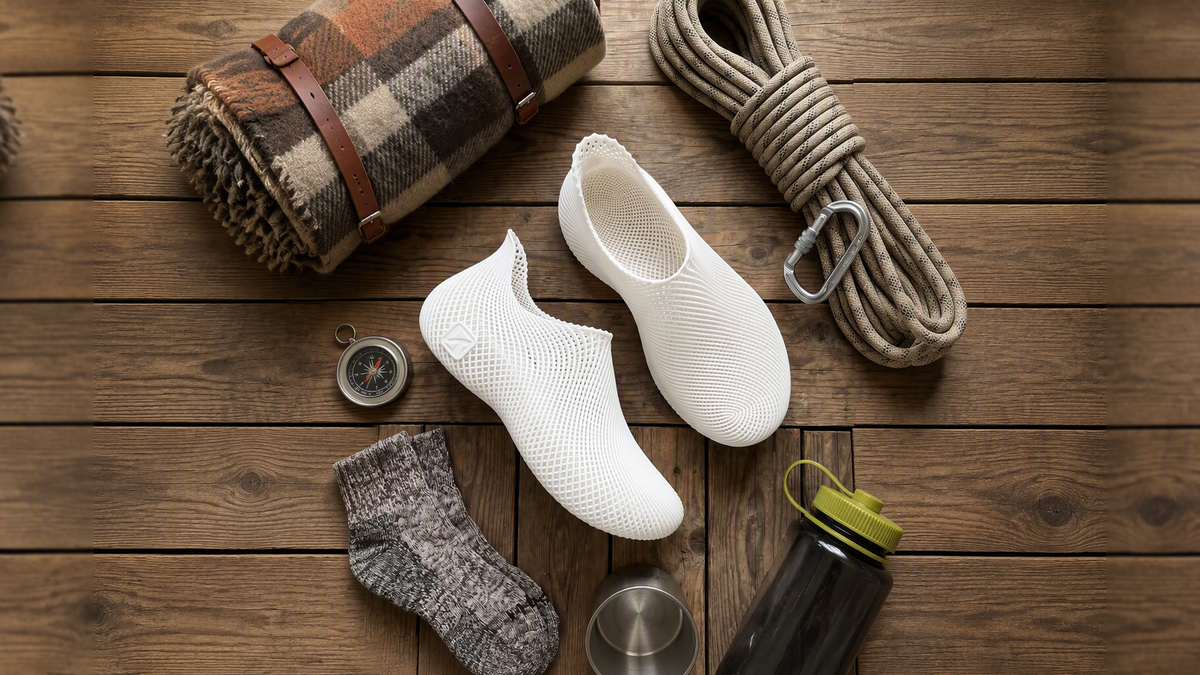

Most of us buy shoes exactly the way our grandparents did: we try on a number invented in the nineteenth century — a size tied to a "last" (the wooden or plastic mold that shapes a shoe), which represents one manufacturer's idea of an "average foot." The evidence that this system fails us is not anecdotal. A systematic review of the footwear-fit literature found that 63% to 72% of people in the studies wore shoes that could not accommodate the width or length of their own feet, and poor fit is associated with foot pain and problems such as calluses, corns, and toe deformities (Buldt & Menz, Journal of Foot and Ankle Research, 2018). Meanwhile, the way these ill-fitting shoes are made carries an environmental bill we almost never see on the box: MIT's life-cycle assessment found that a typical running shoe emits about 13.6 kg of CO₂ at the manufacturing stage (SGS summary of that assessment). Digital manufacturing's potential in foot products already has clinical evidence: a 2025 systematic review found that, compared with conventionally made products, 3D-printed orthoses improved comfort, fit, gait, and functional performance (PMC systematic review, 2025). But be precise about what that evidence covers: orthoses are devices made one at a time to an individual's measurements. 3D-printed shoes sold by standard size do not scan your foot and are not customized foot by foot. Their payoff lies in manufacturing and structure — exactly what the rest of this article walks through.
We make 3D printed shoes at Arkky, so let's be upfront: this article is not neutral — but it is evidence-driven and honest about trade-offs. The question it answers is not "Is 3D printing cool?" but whether the technology has reached the point where switching is practically reasonable for the average consumer: less waste, structures foam cannot deliver, and a product that differs from everything you've worn since childhood in how it lasts and how you care for it. Below are the four reasons the shift is happening, then what you'll give up, how to switch without regret, and what to look for when buying.
A Manufacturing Method That Stops Treating Waste as Normal
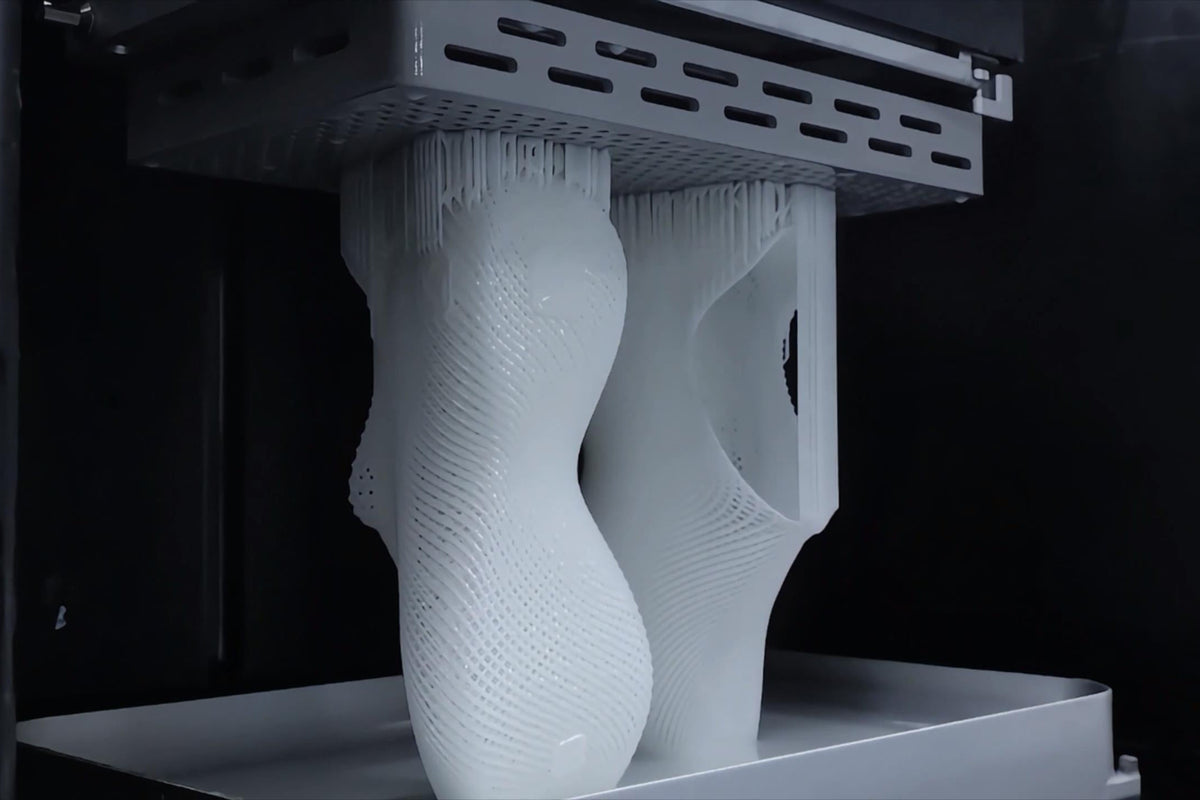
Traditional shoemaking is subtractive: fabric and leather are cut from full sheets, and whatever isn't used is thrown away. Analyses of the footwear and leather industries estimate that the cutting stage alone can waste 20% to 45% of material. Additive manufacturing — placing material only where it's needed, layer by layer — is widely regarded, including by the U.S. Department of Energy, as capable of reducing material waste by up to 90% compared with subtractive processes. Add the carbon ledger — per the MIT assessment cited above, a typical shoe emits about 13.6 kg of CO₂ in production — and the case for printing is both environmental and commercial.
What takes this beyond a factory improvement is what happens at the end of a shoe's life. A conventional sneaker is an assembly of a dozen materials — foam midsole, rubber outsole, textile upper, and the adhesives holding them together — which makes it almost impossible to recycle economically: it ends up in landfill as one inseparable lump. A single-material printed shoe has a different end-of-life story: no glue layers to separate, just one polymer that can, in principle, be ground up and reprinted. Arkky describes its own production in one sentence — "manufactured responsibly from start to finish — zero waste, fully recyclable" — and that claim rests on printed shoes' single-material, glue-free design, not marketing gloss. As with any recyclability claim, its real value depends on whether an actual take-back program exists — so treat "recyclable" as a product attribute and ask the brand how the loop actually closes.
Structure You Can Tune by Zone — Foam Makes You Choose
Foam is excellent material — with a ceiling. Once a manufacturer commits to a formula, density, rebound, and firmness are fixed across the whole midsole; to make one region stiffer, the only option is to glue in a different material. A printed lattice midsole is a different kind of thing: an open-cell structure whose mechanics are set by geometry — cell size, strut thickness, where density sits — so one continuous piece can feel soft under the heel and firm exactly where support is needed. This is not untested theory. A 2025 study in Scientific Reports fitted running shoes with 3D-printed biomimetic lattice midsoles and measured significant changes in heel rotation and medial-lateral foot balance during walking, running, and jumping depending on the lattice pattern (Li, Jung & Lee, Scientific Reports, 2025). Research on the in-shoe microclimate similarly shows that open, more breathable constructions measurably lower temperature and humidity inside the shoe compared with closed constructions (Journal of Thermal Biology, 2024). In other words: with printing, what you feel underfoot becomes a design decision rather than a chemical constraint — which is why a printed shoe and a foam shoe can feel clearly different even at the same manufacturing cost.
Durability and Care That Fit Real Life
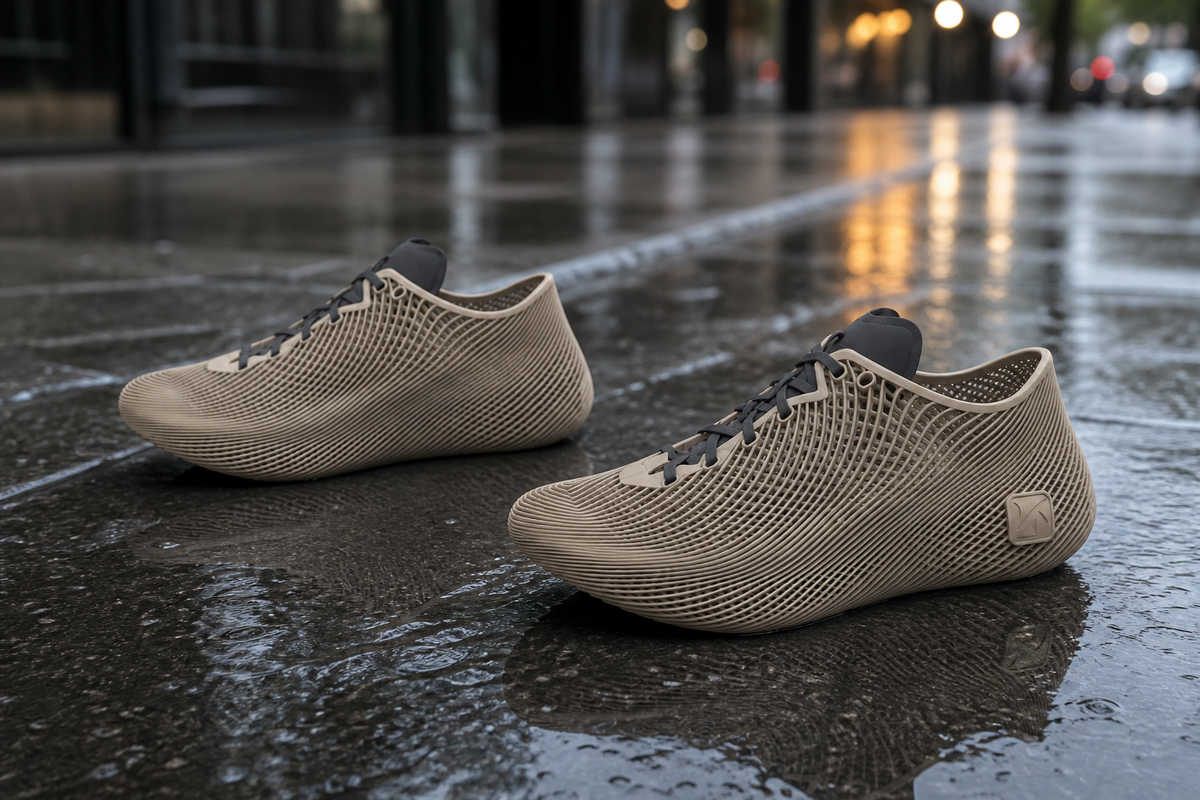
Ask anyone who has worn sneakers to death, and they can tell you exactly where they die: the midsole foam collapses, the glue fails and the sole peels, the textile upper soaks up water and never dries. Those three failure modes — foam fatigue, adhesive failure, water absorption — are structural properties of conventional construction, not accidents. Printed shoes sidestep each one: there is no foam midsole to lose its rebound, because cushioning comes from the geometry of a tough polymer rather than an aging, gas-filled compound; there are no glue points to fail, because the shoe is one continuously printed piece; and the material itself — typically thermoplastic polyurethane (TPU) — barely absorbs water, which is why printed shoes drain and dry quickly instead of staying soggy. Given that heat and moisture trapped in shoes are clinical conditions linked to friction and blisters (U.S. National Library of Medicine review), a shoe that doesn't hold water against your skin isn't just convenient — it's kinder to your feet.
None of this means printed shoes are indestructible — we'll come back to that honesty below. But the failure timeline is different: instead of "the foam dies in month eight," it's "will the printed structure hold up?" — a question of design and material quality, not a built-in expiry date.
The Economy and Culture of Shoes Are Changing Underfoot
The final reason often decides all the others: the industry itself is moving, and early adopters are buying a direction rather than a snapshot. Grand View Research values the 3D-printed-shoe segment at $1.6 billion in 2023, projecting roughly $5.4 billion by 2030 — a compound annual growth rate near 19% (Grand View Research). More telling than the numbers is what the giants do with the money: over the past decade, the biggest names in running — Nike with its early 3D-printed prototypes, adidas with production-scale digital-light-synthesis midsoles — have treated additive manufacturing as the next performance tool rather than a novelty; printed-first brands like Zellerfeld and, yes, Arkky have built entire product lines on it. Additive manufacturing also changes where and when shoes are made: without injection molds, small batches become economical, design iteration is fast, and production can sit close to customers instead of being locked into factories built around tooling. That's a cultural shift as much as a technological one — shoes move from "mass-produced in molds" to "software that can be updated."
Side by Side: What Actually Changes
To see the difference clearly, here is the wearing experience of the same kind of shoe under the two manufacturing paradigms:
| Conventional sneaker | 3D-printed shoe | |
|---|---|---|
| Sizing | Standardized lasts and size numbers | Standard sizes as the base; geometry tuned per size (no per-foot scanning) |
| Cushioning comes from | Foam compound (fixed density; ages, compresses) | Zone-tuned printed lattice structure |
| How it's made | Cut-and-sew plus adhesive bonding | Printed in one piece, glue-free |
| Material waste in production | High — cutting and assembly discard large amounts | Near-net-shape — material placed only where needed |
| Water & care | Fabric absorbs water, dries slowly; foam ages | Non-absorbent polymer; drains, rinseable |
| End of life | Multi-material, glued into one inseparable unit; hard to recycle | Single material; recyclable where a take-back plan exists |
| Typical price today | Mainstream $60–200 | Current printed models $150–250 |
| Maturity | A century of refinement | Young, evolving fast |
Treat this table as a trade-off, not a verdict. Conventional shoes are cheaper, more mature, and available in every style imaginable. Printed shoes win on the structural attributes above — and lose, for now, on breadth of styles and track record.
First Time in a 3D-Printed Shoe: What You'll Feel
Feel is subjective, so this article won't promise you "walking on clouds" — only what is mechanically certain to happen, and a method you can use to test it yourself. The real difference doesn't show up in the first try-on; it shows up two hours later, a week later, a month later.
First step: "firm" before "soft." A foam midsole gives you a sink-in squish; a printed lattice gives you a resilient spring-back — impact deformation is absorbed by geometry, the return is more direct, and the support is more explicit. "Firmer than I expected" is the most common first reaction to printed shoes — usually not a flaw, but a difference between two philosophies of cushioning. Judge it at the end of the day, not in the thirty seconds of a try-on.
Zones aren't a spec-sheet term — you can feel them underfoot. Open cells and dense cells each have a job: more cushioning where the heel lands, more support at the arch and the edges. After a full day of walking, the place that gets tired first will tell you whether they got it right. The in-shoe microclimate research cited above shows that open structures measurably reduce temperature and humidity inside the shoe — in practice, that's "less stuffiness." And after stepping in a puddle, the non-absorbent material lets water run out through the open structure: what needs drying is your trouser hem, not the shoe.
The feel is stable from day one — what changes is your adaptation. A printed shoe has no "the more I wear it, the flatter it gets" aging curve, and it doesn't need the long break-in of leather. What takes time is your foot getting used to a new way of being supported — from "cushioned by a soft pad" to "held by structure." Noticing a difference for the first week or two is normal: it isn't the shoe changing, it's you adapting.
A thirty-day comparison is more honest than any review. Keep your old shoes in the closet and alternate days for a month, tracking three signals: how tired your feet feel at the end of the workday, how stuffy or clammy they get after sweat or rain, and when that "flattened" feeling returns in the old pair. Your feet will write the rest of this review — see "Keep your old shoes as a control" below for how to run the test.
What You'll Give Up — An Honest Note
Any serious evaluation of young technology owes you the other side of the ledger, so here it is. Today's 3D-printed shoes cost more than comparable foam shoes; the market is only beginning to reach mainstream price points, and current printed models typically sit between $150 and $250. Choice is narrower — you won't find printed versions of the foam world's full range (basketball high-tops, spikes, dress shoes), full width systems, or every niche category. The durability advantage is mechanically real but evidentially young: printed shoes haven't been through millions of feet over a decade of wear, and quality varies noticeably between brands because of differences in density maps, materials, and print parameters. And on the specific task where elite runners chase race-day seconds, professional racing shoes with carbon plates and super foams are still the better instrument today — printed everyday shoes don't pretend to replace them. The honest frame is not "printing beats tradition" but: for almost every shoe use case (daily miles, daily steps), printed construction now solves problems that conventional construction structurally cannot.
How to Switch Without Regret
If the argument above persuades you, the trick is to switch like a rational buyer — gradually, with testable assumptions:
Start with the shoe you wear most. If you live in sneakers for commuting and walking, that's the right first printed pair — because it's the scenario where fit, drainage, weight, and durability matter every single day. Don't start your experiment with a niche purchase you wear twice a month.
Buy from brands with real return policies and size guides. Printed shoes fit differently from foam shoes — less stretch, more structure — so your usual size number is only a starting point. A brand that explains sizing honestly and allows returns knows this.
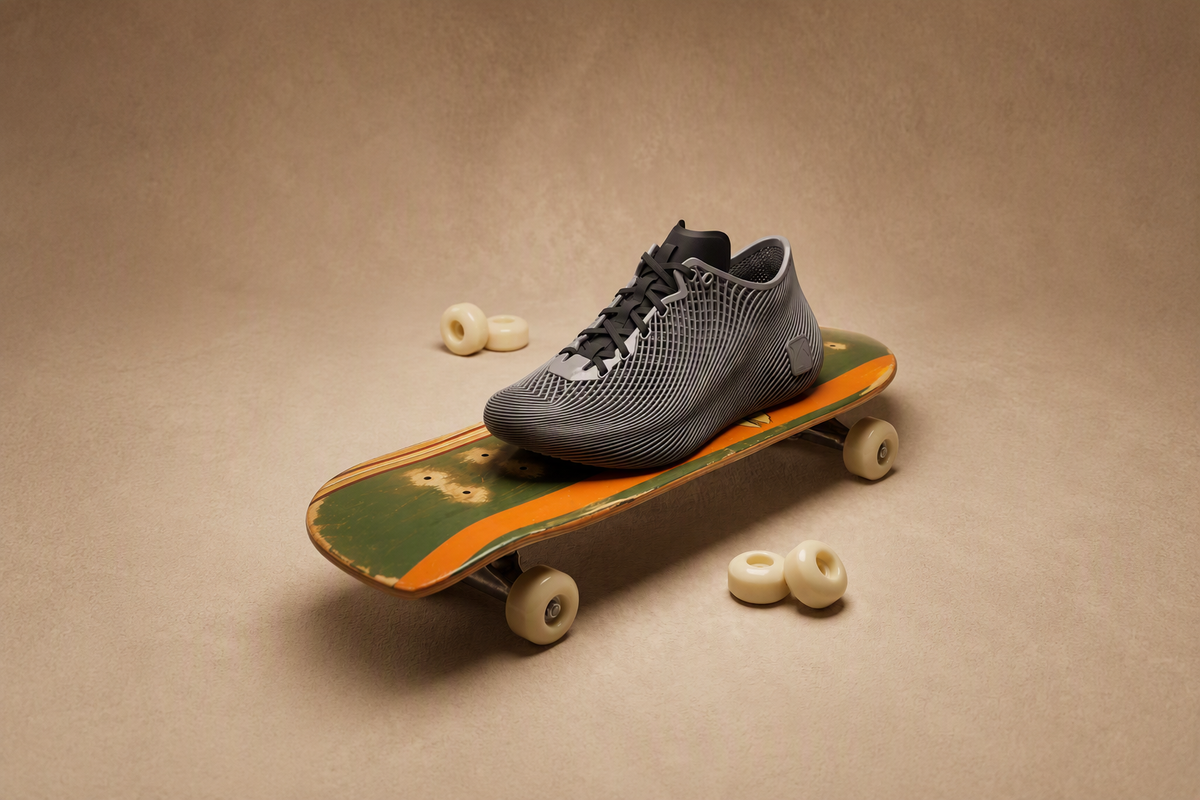
Look at the density map, not the marketing. A printed shoe is only as good as its geometry. Ask (or look) where the lattice is dense and where it's open: firm zones should sit where your foot needs support; open zones where you need cushioning and airflow. If every region looks the same, printing is just decoration.
Verify the care story. If easy cleaning matters to you, confirm the shoe is genuinely rinseable and quick-drying — these are structural properties of the material and design, and brands that engineered for them will say so directly.
Keep your old shoes as a control. The only honest test of "is it really more comfortable and better fitting?" is a month of alternating wear. Your feet will settle the argument faster than any review — which is exactly the point of this experiment.
Buying Advice: Match the Shoe to the Buyer
Recommended on mechanism, with a disclosure: the printed shoes discussed below are ours.
If you wear sneakers every day: make a printed shoe your first pair. Who it's for: commuters, walkers, travelers — anyone tired of "shoes that leak, flatten, and never quite fit." Why: a printed lattice delivers the structural benefits described above — zone-tuned cushioning, non-absorbent quick-drying material, no glue lines, no foam expiry — with prices starting around $199. The flagship is Arkky's AeroDash: printed in one piece, described by the brand as "breathable from every angle," with drainage built into the sole and a fully recyclable single-material construction. Watch out for: the fit difference versus foam shoes (use the size guide, use the return policy), and our obvious bias. To compare current options yourself, browse our full range of 3D printed shoes at leisure — and take the size chart as seriously as you'd take a try-on.
If you train for races and want the most mature market product: a proven foam daily trainer. Who it's for: runners whose weekly plan is built on easy miles and who already own (or will buy) a dedicated race-day shoe. Why: foam trainers have a century of refinement, wider width and model selection, and better price competition; for most runners they're still the pragmatic workhorse — this article isn't trying to persuade you otherwise. Watch out for: the three failures every foam shoe eventually shows — midsole collapse, outsole delamination, fabric water absorption — and budget for replacement accordingly.
If you want both worlds: a printed shoe plus a dedicated racing shoe. Who it's for: runners who race seriously but also walk and train every day. Why: it's the rational two-shoe wardrobe — a specialist racing shoe for the narrow race-day window (where carbon plates and super foams are proven), and a durable printed shoe for the other 350 days (where fit, drainage, and longevity matter more than marginal economics). Watch out for: the cost of two specialized shoes — buy the racer only if your pace actually justifies it.
FAQ: Switching to 3D-Printed Shoes
Are printed shoes as durable as regular sneakers?
Structurally, the failure modes are different rather than gone. There's no foam to collapse and no glue to open, and the polymer is tough and water-resistant — but durability depends on the quality of the specific print, the density map, and how you use the shoe. Mechanically favorable; the evidence is still accumulating.
Are they comfortable?
Comfort comes first from structure and material, not from being "made for you." Printed shoes ship in standard sizes, but the lattice geometry can be tuned independently for each size: dense where you need support, open where you need cushioning and airflow — rather than one foam block of fixed density cut into every size. Add the barely-absorbent material and the draining structure, and the everyday comfort baseline is real. There's no shortcut on fit, though: choose by the size guide, try them with the same skepticism you'd bring to any new shoe, and use the return policy.
Can printed shoes be washed?
Most can — and more easily than fabric shoes: with no water-holding lining, printed shoes can usually be rinsed directly and dry quickly. Always follow the manufacturer's instructions — materials and surface finishes differ.
Why are 3D-printed shoes more expensive than foam shoes?
Volume and maturity. The market is young — Grand View Research projects growth from $1.6 billion in 2023 to roughly $5.4 billion by 2030 — and prices fall as volume scales, following the same trajectory as every new manufacturing technology before it. The premium for structural advantages is being steadily eroded as the market grows.
Are they actually a better fit?
It depends what you mean by "fit." If you mean "scan my foot and make a shoe that belongs only to me" — that's not what standard-sized printed shoes do, and this article doesn't claim otherwise. If you mean "within a given size, the structure can sit closer to how your foot loads and ventilates" — printed geometry tuned per size does offer that possibility in a way a foam block of fixed density can't. Whether a particular shoe suits your foot still comes down to the brand's sizing model and your foot — which is why return policies matter.
Will printed manufacturing replace traditional sneakers?
Eventually this question will look as odd as "will email replace letters?" Conventional shoes won't disappear — they're mature, cheap, and everywhere. But the industry's direction — from subtractive cut-and-glue manufacturing toward additive, single-material, digitally driven production — is visible in both market forecasts and the strategies of the biggest brands. The switch isn't a single day's event; it's the cumulative effect of thousands of consumers making the rational choice described in this article.
Conclusion
The reasons to switch aren't slogans; they're four structural facts. Making these shoes discards astonishing amounts of material, and the product ends up as an unrecyclable lump of foam and glue. As a cushioning vehicle for half a century, foam can't be tuned zone by zone the way printed geometry can. Glued fabric shoes absorb water and die from the inside. And the entire industry — from startups to the biggest names in sport — has placed its bet on additive manufacturing. None of this means every printed shoe today beats every foam shoe. It means the trajectory is clear, the reasons are grounded, and the rational moment to start your own cautious, testable switch is now — one pair, one month, with your own feet as the judge.
This article is for general information only and does not constitute medical advice; for pain or foot conditions related to fit, please have them assessed by a podiatrist or orthotist.
Share:
ARKKY vs. Carbon Fiber Plated Shoes: Which Is for You?
Comparing ARKKY Colors: Which Fits Your Style?