

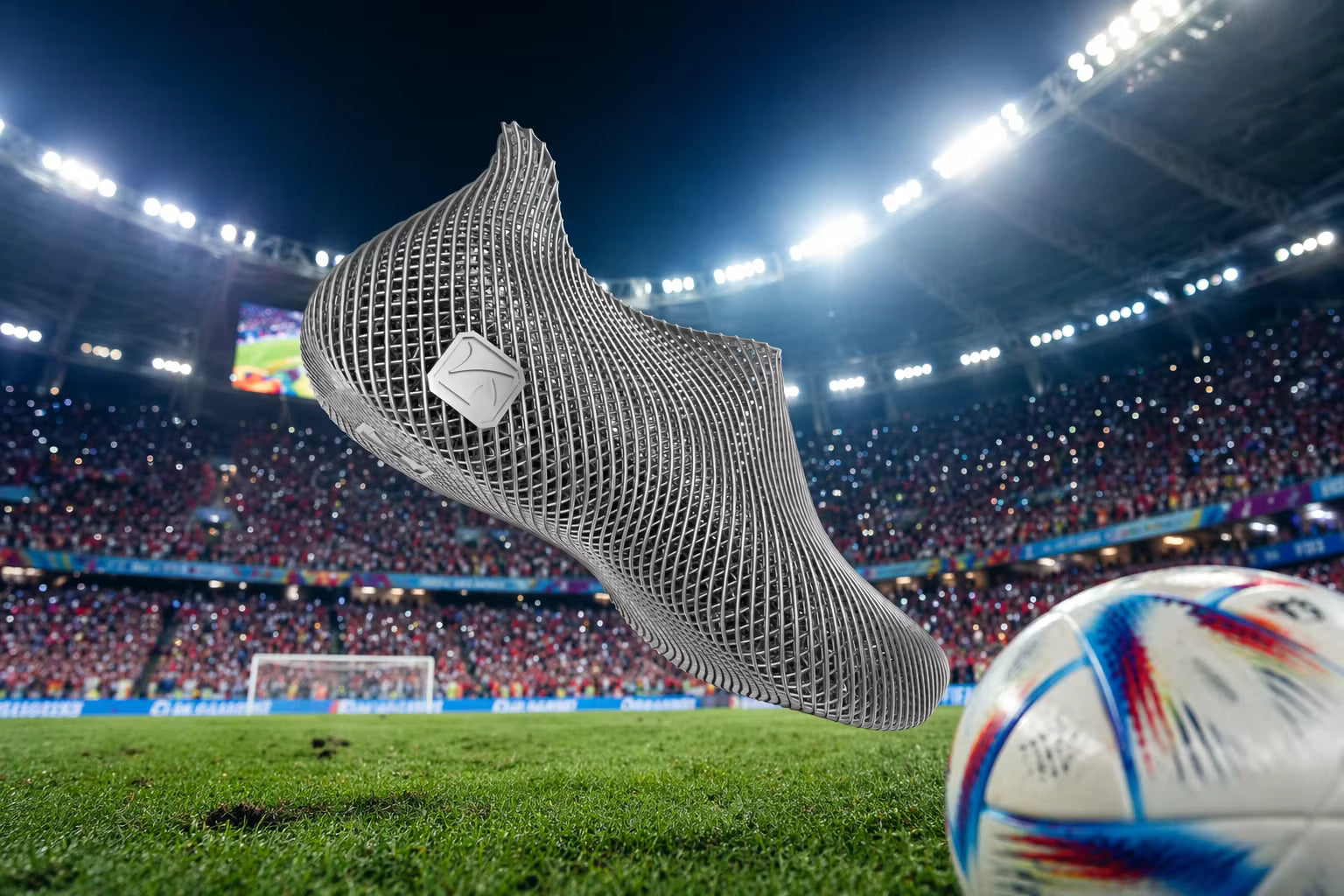
As we navigate the scorching mid-summer heat of 2026, the concept of luxury is undergoing a fundamental phase shift. For decades, luxury was defined by "heft"—the weight of premium leather, the density of vulcanized rubber, and the opacity of prestige. However, in our rapidly warming urban centers, weight has become a liability. According to recent data from the World Meteorological Organization, urban "heat island" effects are intensifying, with city temperatures often exceeding rural surroundings by up to 10°C. In this high-temperature reality, the techwear summer style is moving away from the suffocating layers of the past toward a new, skeletal form of elegance. We are witnessing the birth of the "Voxel" aesthetic, where 3D printed lattice structures provide the ultimate solution: a shoe that is architecturally robust yet visually and thermally transparent. This article explores how this futuristic footwear design is not just about staying cool—it is about a new digital craftsmanship that renders traditional molds obsolete.
The Ghost of Architecture: Visual Translucency Through Structure
 Concept map
The most striking feature of the new avant-garde sneakers 2026 is what they lack: solid surfaces. In the traditional design paradigm, a shoe is a container—a solid wall of foam and fabric that traps the foot. The Voxel aesthetic replaces this container with a "structural ghost." By utilizing advanced 3D printing, designers can now create lattice networks where up to 90% of the volume is occupied by air. This creates a unique visual translucency that isn't achieved through transparent plastics (which often yellow and trap moisture), but through the sheer absence of matter.
When light passes through a voxel-based lattice, it creates a shifting moiré effect, a shimmering play of shadows that mirrors the complexity of modern urban architecture. This visual lightness is the first pillar of 2026 summer luxury. It communicates a "high-tech breeze" even before the wearer takes a step. Unlike the neon-soaked cyberpunk tropes of the previous decade, this aesthetic is quiet, sophisticated, and deeply rooted in futuristic footwear design. It suggests that the wearer has moved beyond the need for heavy, opaque armor and has instead embraced a design language that works in harmony with the environment.
The psychological impact of this translucency is profound. In a crowded city, wearing a shoe that appears to be made of "frozen air" creates a sense of spatial freedom. It is the antithesis of the chunky, overbuilt sneakers of the 2010s. By thinning the boundary between the body and the world, these shoes offer a feeling of weightlessness that is essential for a contemporary techwear summer style.
Parametric Prowess: The Hidden Technology of Invisible Math

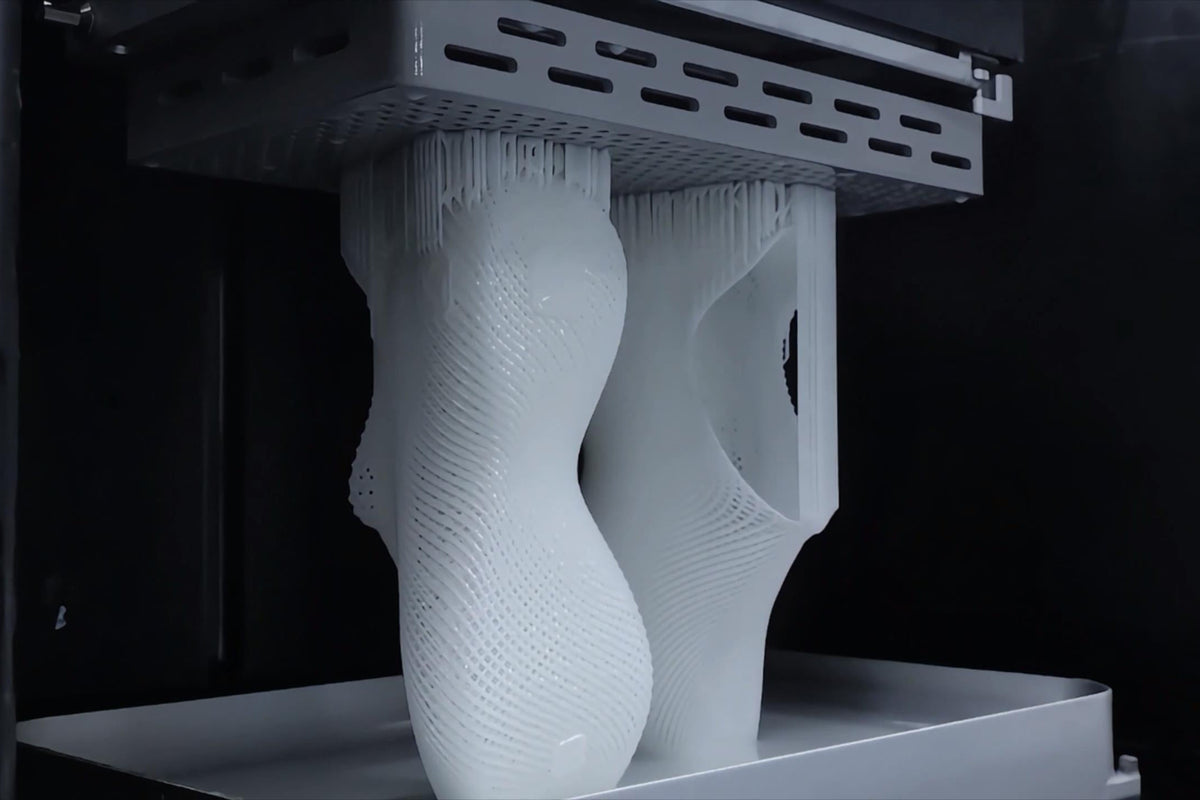
The complexity of a 3D printed lattice is a form of "hidden prestige." Traditional luxury relies on visible hand-stitching or rare materials; Voxel luxury relies on the sheer impossibility of its creation. These intricate textures, composed of thousands of intersecting struts, cannot be manufactured using traditional injection molds. Any attempt to pull such a shape from a mold would result in catastrophic structural failure. Thus, the very presence of a complex lattice on a person's foot is a marker of techwear summer style—a signal that they possess the "invisible math" required for elite digital fabrication.
This is parametric design at its peak. Every "voxel"—a three-dimensional pixel—is calculated by an algorithm to optimize for specific variables: weight, airflow, and localized support. "We are moving away from designing 'objects' and toward designing 'processes'," says Dr. Julian, a leading researcher in additive polymer science. "When you look at an ARKKY-style lattice, you aren't just looking at a sole; you are looking at a solved mathematical equation for comfort and thermodynamics. This is the new craftsmanship."
In the context of futuristic footwear design, parametric aesthetics represent a shift from the hand of the artisan to the brain of the coder. However, this is not a cold, sterile transition. The resulting patterns often mimic biological structures—the trabecular bone, the architecture of coral, or the vein patterns of a leaf. This "Digital Biomimicry" creates a deep aesthetic resonance, making these avant-garde sneakers 2026 feel like a natural evolution of the human body rather than a mechanical attachment. It is luxury that is felt in the precision of the stride and seen in the impossible complexity of the voxel.
Skeletal Luxury: Why the "Full Hollow" is the New Status Symbol

3D printed shoe concept image
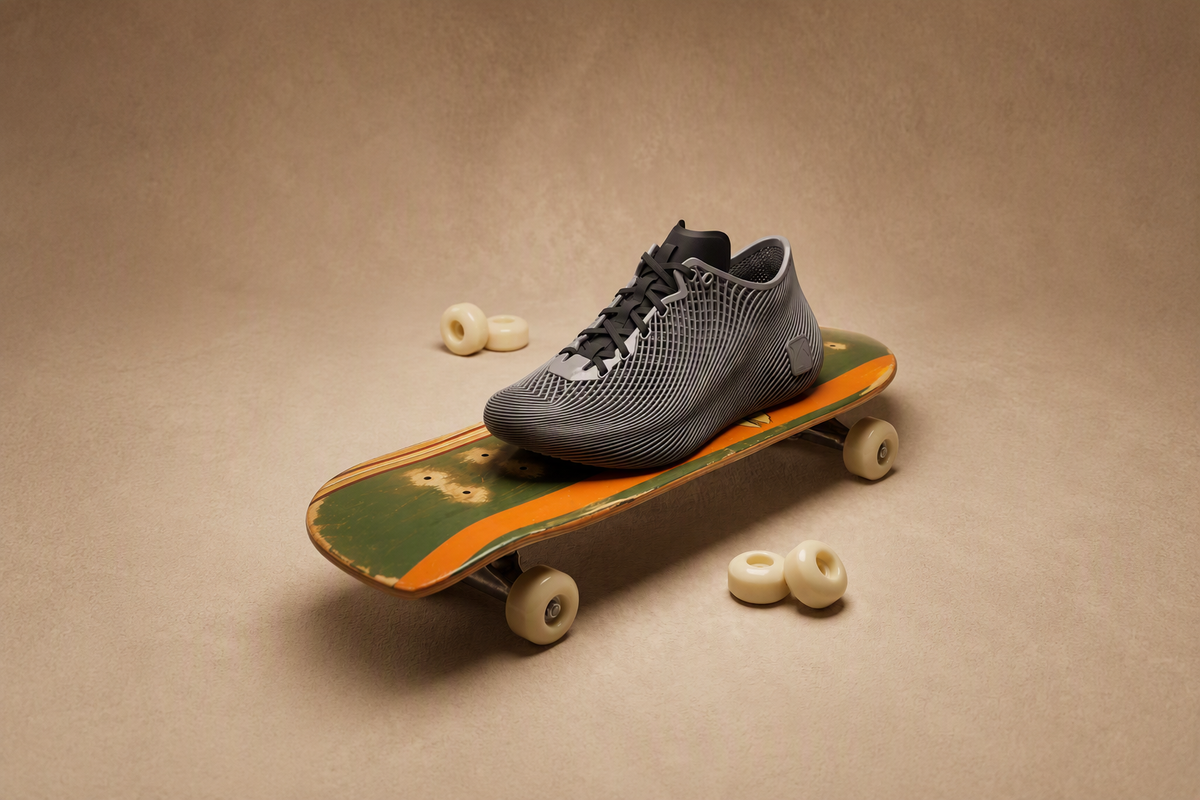
For the last five years, the "Chunky" or "Dad Shoe" trend dominated the high-fashion world. It was a trend built on exaggeration and ironic clunkiness. But as we move deeper into 2026, the cultural pendulum has swung back toward efficiency and essentialism. The status symbol of today is not how much material you can wear, but how little. The "Skeletal" look—defined by full-hollow midsoles and lattice uppers—is the definitive techwear summer style.
This shift is driven by a desire for "Performance Transparency." In an era of sustainable 3D printed shoes, consumers want to see the engineering. A skeletal shoe hides nothing; you can see the air passing through the midsole, you can see the foot interacting with the structural struts. This transparency is a form of honesty that resonates with the modern, eco-conscious luxury buyer.
Furthermore, the skeletal aesthetic allows for a new kind of "Hyper-Personalization." Because the shoe is digital matter, different zones of the lattice can be tuned to different colors or densities without adding weight or parts. You can have a gradient of voxels that shifts from dense black at the heel to ethereal silver at the toe, all within a single print. This creates a level of visual detail that traditional manufacturing simply cannot replicate. In the world of avant-garde sneakers 2026, the most exclusive shoes will be those that appear to have been "grown" in a lab, optimized for a single individual’s biomechanics and style.
Comparison: Solid Foam vs. Voxel Lattice Architecture
| Feature | Traditional Solid Foam | 3D Voxel Lattice |
|---|---|---|
| Airflow | Zero (Insulating) | 360-degree (Active cooling) |
| Material Efficiency | Low (Wasteful cutting/molding) | High (Zero-waste additive) |
| Customization | Standardized (Mass market) | Parametric (Individualized) |
| Visual Weight | Opaque/Heavy | Translucent/Ethereal |
| Durability | Compression set (Flattening) | Geometric resilience (Spring-like) |
| Craftsmanship | Hand-stitched / Molded | Algorithmic / Digital |

Recommendations for the Summer 2026 Techwear Aesthetic
To master the techwear summer style this year, one must choose footwear that balances structural integrity with visual lightness. Here are three archetypes of the Voxel aesthetic:
- The "Phantom" Sole: Look for shoes where the midsole is entirely replaced by a wide-open lattice. This is the ultimate expression of futuristic footwear design. Reason: It maximizes the "ground-feel" and airflow, making it perfect for humid urban environments.
- The 3D-Knit Hybrid: Sneakers that combine a voxel sole with a 3D-knit recycled upper. Reason: This offers a softer, more familiar tactile experience while maintaining the sustainable 3D printed shoes credentials.
- The Monolith Voxel: A rare, single-piece print where the entire shoe is a continuous lattice of varying densities. Reason: This is the peak of avant-garde sneakers 2026, offering a seamless, futuristic look that is entirely circular and recyclable.
Frequently Asked Questions
Q: Does a hollow lattice trap a lot of dirt and stones? A: High-end voxel designs use "closed-cell" or specific geometric strut angles that prevent larger stones from entering. For dust and sand, the shoes are designed to be waterproof and can be rinsed clean in seconds.
Q: Are these lattice shoes actually durable? A: Yes. Because they are made from high-grade TPU (Thermoplastic Polyurethane), the lattice acts like thousands of tiny springs. Unlike foam, which loses its "pop" over time, a voxel lattice maintains its structural memory for hundreds of miles.
Q: Can I wear socks with the voxel aesthetic? A: Absolutely. In fact, many in the techwear community use colorful or patterned socks to create a layered visual effect through the translucent lattice, further customizing their techwear summer style.
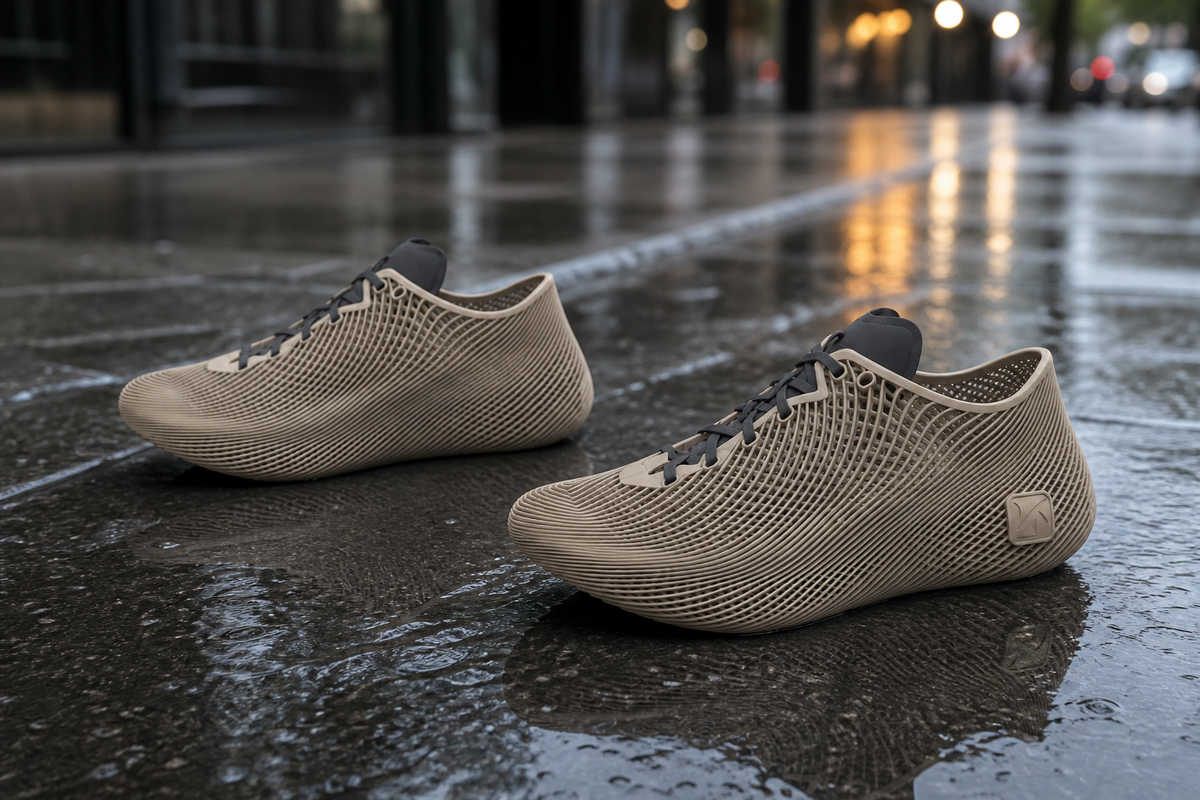
Q: Is it okay to wear these in the rain? A: While they provide no water protection, they also don't "soak" like traditional sneakers. Water flows straight through, and the materials are quick-drying and non-absorbent, making them oddly practical for summer storms.
Conclusion
The Voxel aesthetic is not merely a passing fashion whim; it is a manifestation of our new digital reality. As we seek to balance the demands of a changing climate with our desire for high-expression design, the 3D printed lattice stands as the perfect medium. It is a symbol of techwear summer style that values intelligence over mass, and translucency over opacity. In 2026, the ultimate luxury is a shoe that feels like a breeze and looks like a ghost—an architectural masterpiece that you can wear.
Share:
Surviving the European Heatwave: The Ultimate Breathable Capsule for Rome, Paris, and Madrid
Mastering Quiet Luxury: How to Style 3D Printed Sneakers