

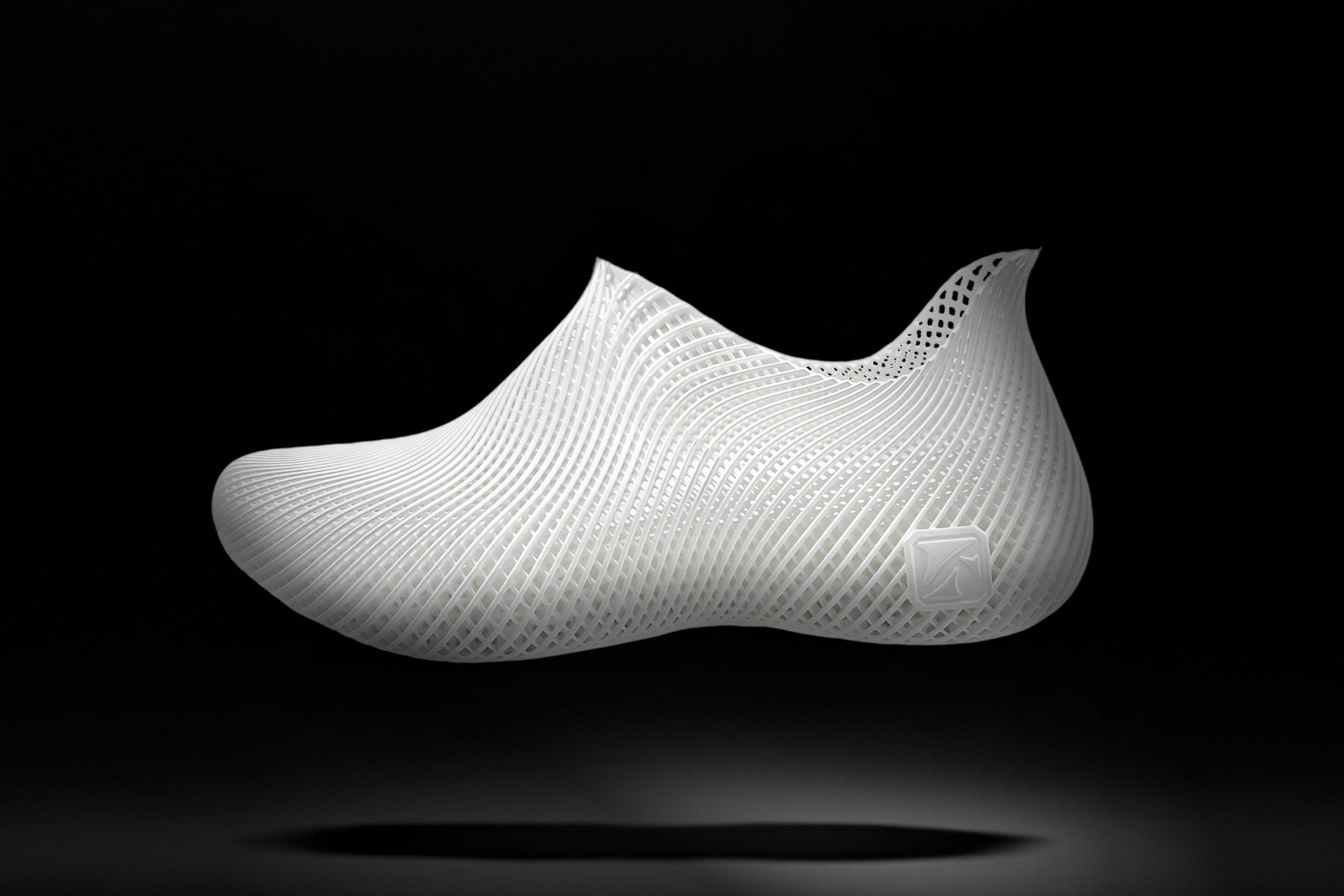
The Rise of 3D Printing and Customized Footwear
There was a time when owning a pair of shoes that truly fit like a glove felt like a privilege reserved for the lucky few. Most of us have grown used to compromising within a limited range of standard sizes, quietly putting up with discomfort caused by mismatched lasts or inadequate support. But a revolution driven by 3D printing technology is quietly changing all of that. What was once seen as a futuristic concept is now infiltrating the footwear industry at an unprecedented pace, completely overturning every stage—from design and manufacturing to the consumer experience itself. This isn’t just an upgrade in production tools; it’s a fundamental shift in mindset—from “mass production for the masses” to “creation for the individual.”
In today’s market, personalization is no longer a luxury—it’s a core way consumers express themselves and pursue a higher quality of life. People want products that precisely match their unique physiology & lifestyle, and footwear, as the essential gear that carries us through every step of the day, has some of the strongest demands for true customization. Every pair of feet is one-of-a-kind, with subtle differences in arch height, foot width, pressure distribution, and gait patterns. Yet traditional shoemaking has always struggled to meet these nuanced needs.
Conventional footwear production is built on economies of scale, and at its heart lies the “mold.” Whether it’s EVA foam midsoles or rubber outsoles, everything depends on expensive tooling. This system forces brands to offer only a limited set of standardized sizes, cramming billions of uniquely shaped feet into rigid industrial templates. The “one-size-fits-most” approach not only leads to widespread discomfort—think plantar fasciitis, ankle strain, other issues—but also generates massive waste. To cover demand, brands overproduce, resulting in excess inventory & material loss that have become silent pain points for the entire industry. These manufacturing constraints have also stifled design creativity, making meaningful innovation in structure & function painfully slow.
It is against this backdrop that 3D printing has stepped onto the stage with game-changing potential. By eliminating the need for molds entirely and turning digital designs directly into physical products, it has opened the door to genuine “made-to-measure” footwear. The technology makes it possible to generate a completely unique shoe structure based on each person’s exact foot data. It solves the rigidity of traditional sizing while delivering unprecedented breakthroughs in cushioning, support, and creative freedom. 3D printing is ushering the footwear industry into a brand-new era—one that is user-centered, precise, efficient, and sustainable. This transformation signals that every pair of shoes we wear is about to become an extension of our own bodies: a perfect fusion of technology & individuality, and a true work of art.
The “Shackles” of Traditional Footwear Manufacturing
To truly appreciate the revolutionary nature of 3D printing shoes, we first have to confront the deep-rooted limitations of traditional shoemaking. The core contradiction is simple yet profound: using standardized industrial products to meet highly individualized human needs.
- Mass production vs. individual foot variation: Traditional footwear relies on standardized lasts & molds for large-scale production. Brands typically offer only a handful of sizes and width options (regular, wide, etc.). Yet real feet vary dramatically across length, width, arch height, instep volume, pronation/supination angles, and more. This “one-size-fits-most” approach creates a massive mismatch—most people end up with the “closest” size rather than the “perfect” one, quietly tolerating discomfort for years. Worse, ill-fitting shoes are a leading cause of common foot and lower-limb issues like plantar fasciitis, bunions, and ankle strain.
- Size standards and poor fit: Sizing systems are linear and based on length alone—they can’t capture the three-dimensional complexity of feet. A size 42 narrow foot and a size 42 wide, flat foot might fall into the same category, yet their needs are worlds apart. Standardized midsoles simply cannot deliver personalized arch support or pressure distribution, increasing the risk of injury.
- Design constraints and material limitations: Conventional processes physically restrict innovation in both design and performance. Mainstream midsole foams (EVA, PU, etc.) require injection molding—once the mold is made, density, firmness, and geometry are locked in. Achieving true zoned cushioning (different support levels for different pressure zones of the foot) becomes extremely difficult and prohibitively expensive.
- Long lead times & inventory waste: Mold-driven production is inherently slow and wasteful. From initial design to opening molds and finally reaching shelves, the cycle often takes months—or even over a year—making it hard for brands to react quickly to trends. To cover demand, companies overproduce, and inaccurate forecasting leads to mountains of dead stock that eventually get cleared out at heavy discounts. The result: eroded profits and enormous resource waste.
3D Printing: Unlocking the Future of Footwear Manufacturing
- It’s precisely against these pain points that 3D printing has emerged as a game-changing force. By completely eliminating molds, introducing parametric design, and pioneering lattice structures, it directly solves every problem listed above.
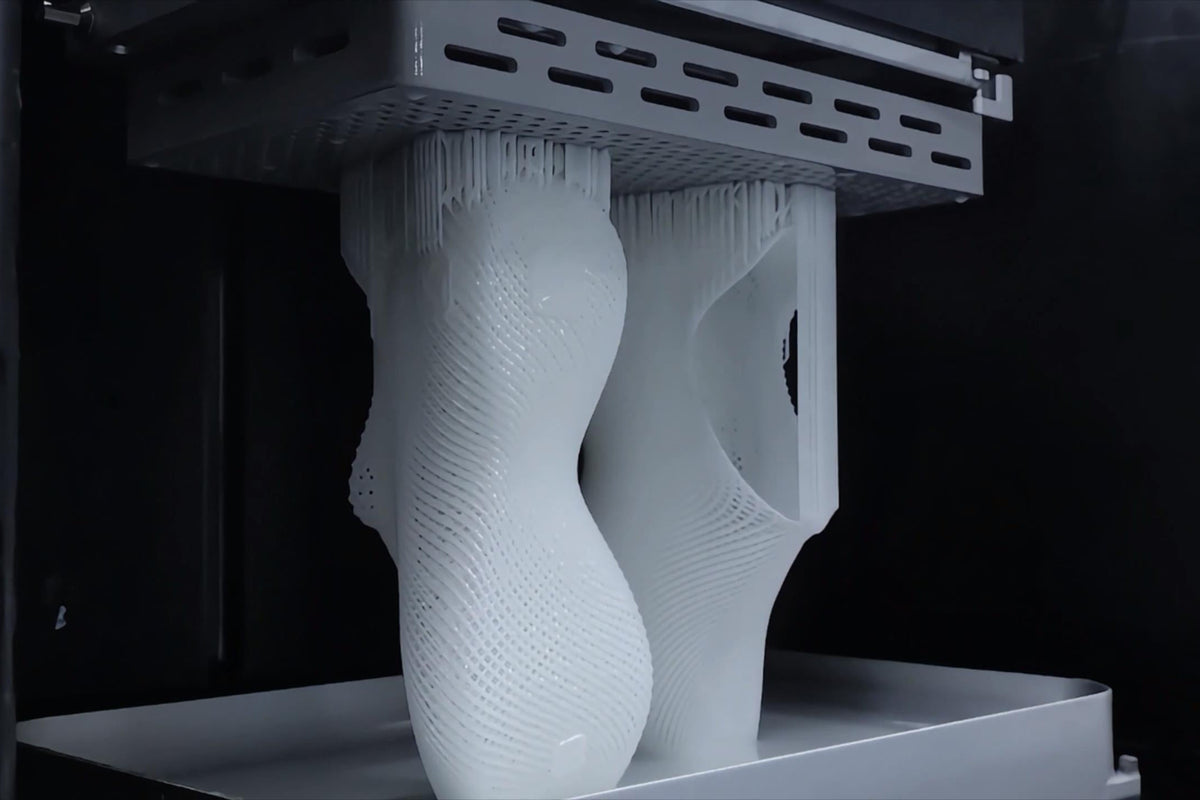
- No molds required: 3D printing turns digital files straight into physical objects, layer by layer. This removes huge tooling costs & slashes production lead times from months to hours or days, enabling true on-demand manufacturing and essentially eliminating inventory risk.
- Parametric design enables “made-to-measure” footwear: Paired with high-precision foot scanning, 3D printing uses parametric modeling to generate a completely unique shoe structure for every single customer. The paradigm flips: instead of forcing feet to adapt to shoes, shoes now adapt perfectly to feet—shifting us from “pick a size” to “built just for you.”
- Lattice structures: a performance revolution: 3D printing can create intricate lattice midsoles. These bio-inspired porous geometries allow precise control over performance by varying cell shape, size, and wall thickness. They outperform traditional EVA and PU foams while existing as a single, continuous part. True zoned cushioning becomes reality—denser lattices under high-pressure arches for firm support, more open structures under the heel for maximum impact absorption.
- Rapid iteration: A new concept can go from idea to a wearable prototype in under 24 hours. This agility gives brands unprecedented speed to test new structures & functions, then instantly refine based on real-user feedback.
Case Study: ARKKY
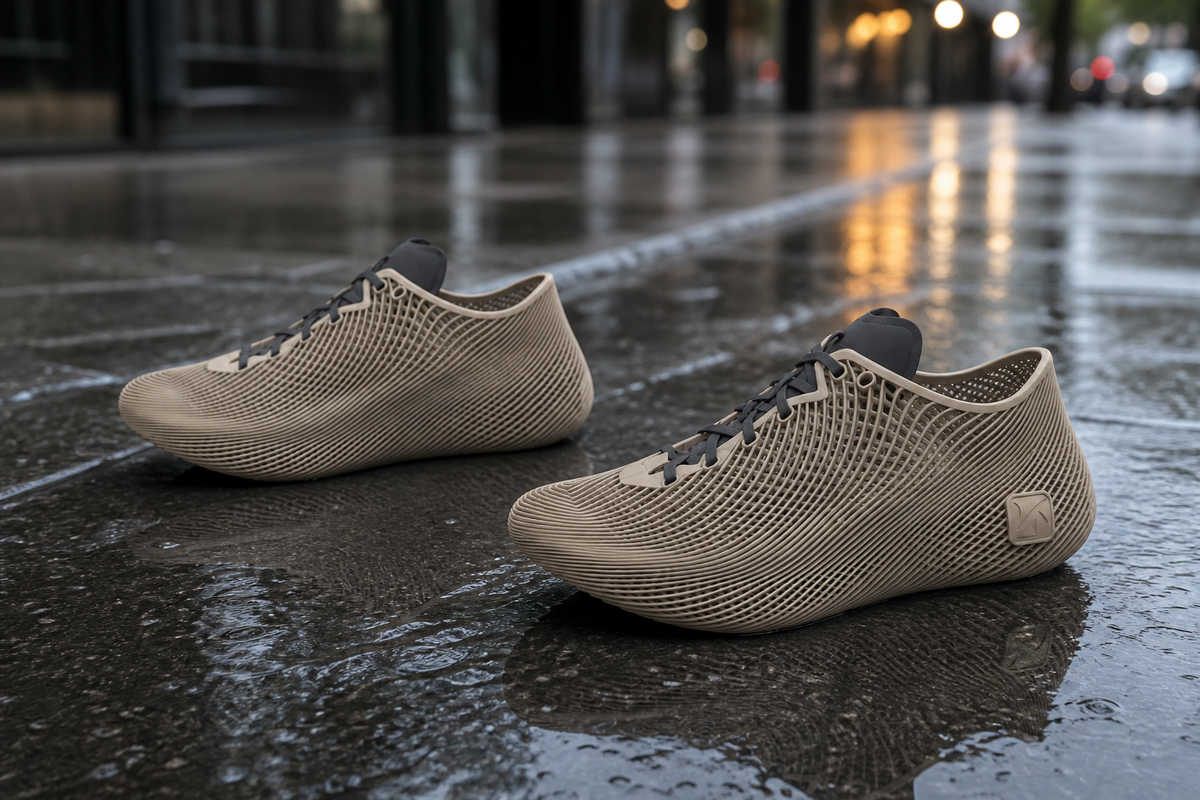
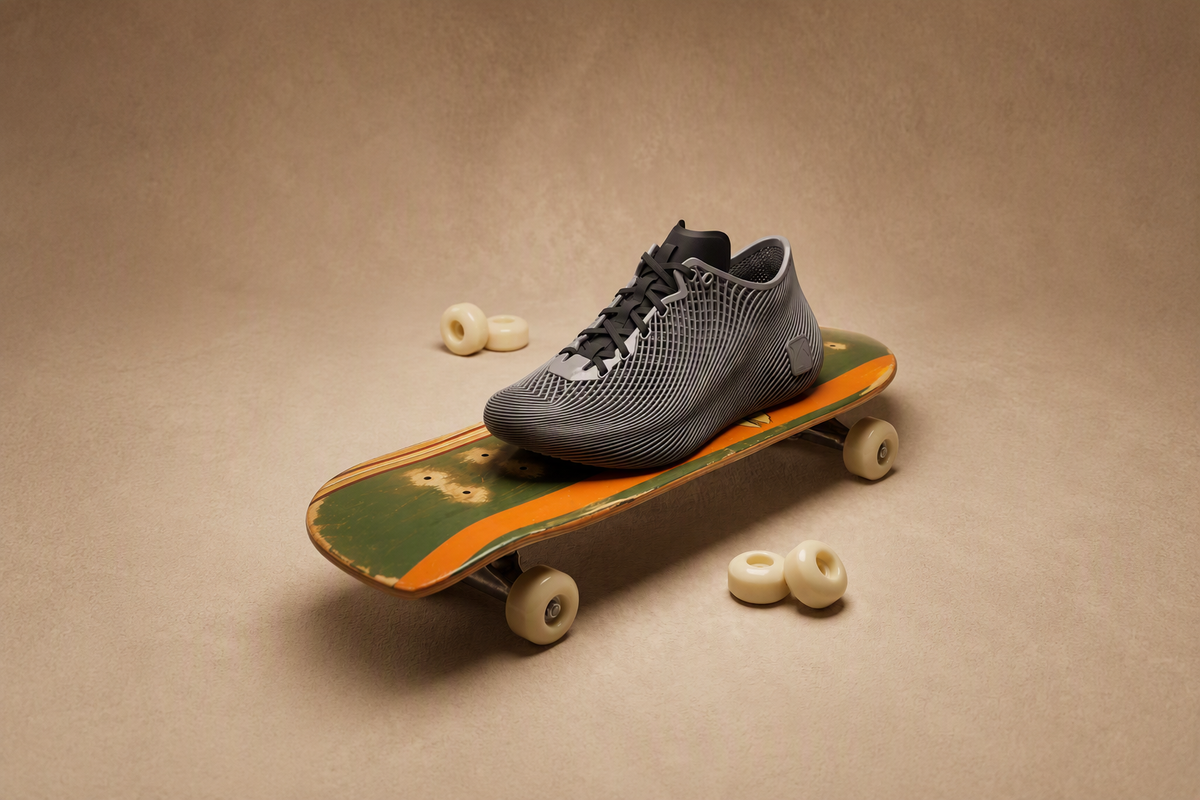
Among the many brands exploring 3D-printed footwear, ARKKY has emerged as a true pioneer of next-generation customization thanks to its systematic approach and relentless focus on user experience. ARKKY perfectly demonstrates how 3D printing, when combined with AI & biomechanics, can deliver an unprecedented level of personalized footwear.
Detailed Analysis
ARKKY’s innovation can be broken down into three core pillars: 3D-printed lattice midsoles, one-piece integrated construction, and zero-waste manufacturing.
Data-Driven Foot Mapping: AI-Powered Personal Lasts The ARKKY customization journey begins with data. Users scan their feet in high precision—either via a smartphone app or professional scanning station—capturing full 3D biometric data: foot length, width, arch height, ankle circumference, pressure distribution, and more. This data is uploaded to the cloud, where ARKKY’s AI algorithms analyze it against massive foot databases and biomechanical models to generate a fully personalized, parametric digital last. The system even factors in dynamic variables like body weight & gait patterns for optimal results.
3D-Printed Lattice Midsoles: Precision Zoned Cushioning Using the AI-generated personal last as the foundation, ARKKY’s signature technology—the 3D-printed lattice midsole—literally “grows” into existence.
- Precision zoning: In the arch zone, the lattice is denser and stiffer for rock-solid support during push-off & landing. In the heel-strike area, it’s more open and elastic to absorb impact. In the forefoot, the structure is tuned for maximum energy return and propulsion efficiency.
- Beyond materials: These performance differences aren’t achieved by gluing together different foams. Instead, they’re created within a single bio-based material simply by varying geometry—delivering superior precision, responsiveness, and durability compared to traditional “material-based” cushioning.
Zero-Waste Manufacturing: A Sustainable Philosophy Sustainability is baked into every step of ARKKY’s process.
- On-demand production: Every pair is printed only after the customer’s order and scan data are received—completely eliminating overproduction and dead stock.
- Single-material, glue-free construction: ARKKY is pushing toward the ultimate goal of fully mono-material shoes. Using high-performance, recyclable TPU & similar polymers, the midsole, outsole, and even parts of the upper are printed as one seamless piece—no chemical adhesives required. This makes the shoes stronger (no delamination risk) and infinitely easier to recycle.
The table below highlights the key differences between ARKKY’s customized 3D printed footwear and traditional mass-produced shoes:
| Feature |
ARKKY 3D-Printed Shoes |
Traditional Standardized Shoes |
Core Advantage |
|
Fit |
★ AI-generated personal last—perfect 3D match to individual feet |
☆ Fixed sizes based on averages—forces compromise |
Eliminates fit issues at the root |
|
Cushioning & Support |
★ Lattice midsole with precise zoning—tailored support & cushioning exactly where needed |
☆ Uniform foam—same performance across the entire foot |
Superior biomechanical support, greater comfort, lower injury risk |
|
Manufacturing Model |
★ On-demand, zero inventory, no chemical glues |
☆ Mass production, high stock, glued multi-part construction |
Drastically reduces waste and environmental impact |
|
Iteration Speed |
★ Rapid iteration—digital updates, finished pairs in hours |
☆ Slow iteration—new molds required, months-long cycles |
Unmatched agility and innovation speed |
Note: ★ = Outstanding performance / clear advantage ☆ = Limited performance / notable drawback
Real Benefits for Athletes and Everyday Wearers
The ultimate winners of this technological revolution are ordinary consumers and active individuals alike.
- Boosted performance & reduced injury risk: For runners and walkers, a shoe custom-built around your exact gait and pressure map dramatically improves biomechanical efficiency. Precise arch support and zoned cushioning help prevent common issues like plantar fasciitis, Achilles tendinitis, and knee strain.
- Perfect solutions for unique feet: Wide feet, high arches, flat feet—no longer “special cases.” 3D-printed shoes make perfect fit the default, not the exception.
- Restoring natural gait: Many 3D-printed shoes brands embrace Zero Drop designs—heels and forefeet at the same height—encouraging a more natural mid/forefoot strike that improves posture and strengthens foot muscles over time.
- All-day comfort: Tailored support and cushioning mean dramatically less foot fatigue, whether you’re on your feet all day at work or just running errands.
How 3D Printing Delivers True Customization
At its core, 3D printing flips the script from “pick a size” to “made exclusively for you” by unlocking virtually limitless design freedom.
- Perfectly matched support & cushioning: Your weight, gait, and arch type dictate the exact lattice density & geometry. You no longer choose between “stability” or “cushion”—you get both, blended precisely for your feet.
- Endless style, texture, and structure: Freed from molds, designers can create intricate, biomorphic patterns & textures that were previously impossible. Your initials, a personal graphic, or a completely unique aesthetic can be built right into the shoe’s structure—turning every pair into a one-of-a-kind piece.
Sustainability Impact
The environmental advantages of 3D printing are just as transformative.
- Lower manufacturing emissions: No steel molds means no energy-intensive mold production or shipping of heavy tooling.
- Eliminating inventory waste: On-demand printing wipes out millions of pairs of unsold stock that would otherwise end up in landfills or incinerators.
- True recyclability: Mono-material, glue-free construction allows old shoes to be ground up and reprinted into brand-new ones—creating a genuine closed-loop system.
Looking Ahead
We’re standing at the dawn of a new era in footwear. The fusion of AI and 3D printing means personalized shoes will soon shift from niche to mainstream.
- Across all categories: This technology will move from performance running into hiking, casual, fashion, and even dress shoes.
- Your digital last in the cloud: In the near future, everyone may have a permanent “digital foot profile” stored securely online. Buying shoes will be as simple as granting a brand access—your perfect pair prints and ships within hours. Traditional sizing charts could become relics of the past.
Conclusion: The Age of Perfectly Matched Footwear Has Arrived
3D printing is fundamentally rewriting the rules of shoemaking and reawakening our awareness of healthy, natural movement. It takes power away from factory molds & hands it back to the individual. We’re no longer passive shoppers forced into rigid sizes—we become active co-creators of shoes that are truly, unmistakably ours. Pioneering brands like ARKKY are leading the charge by fusing AI, biomechanics, and cutting-edge manufacturing. They’re not just selling footwear—they’re delivering a new way to move through the world with comfort, performance, and personal expression. The revolution that started under our feet has only just begun.
Share:
Zero Drop Sandals 101: Everything You Need to Know
Different 3D Printing Methods Used in 3D Printed Shoes Explained