

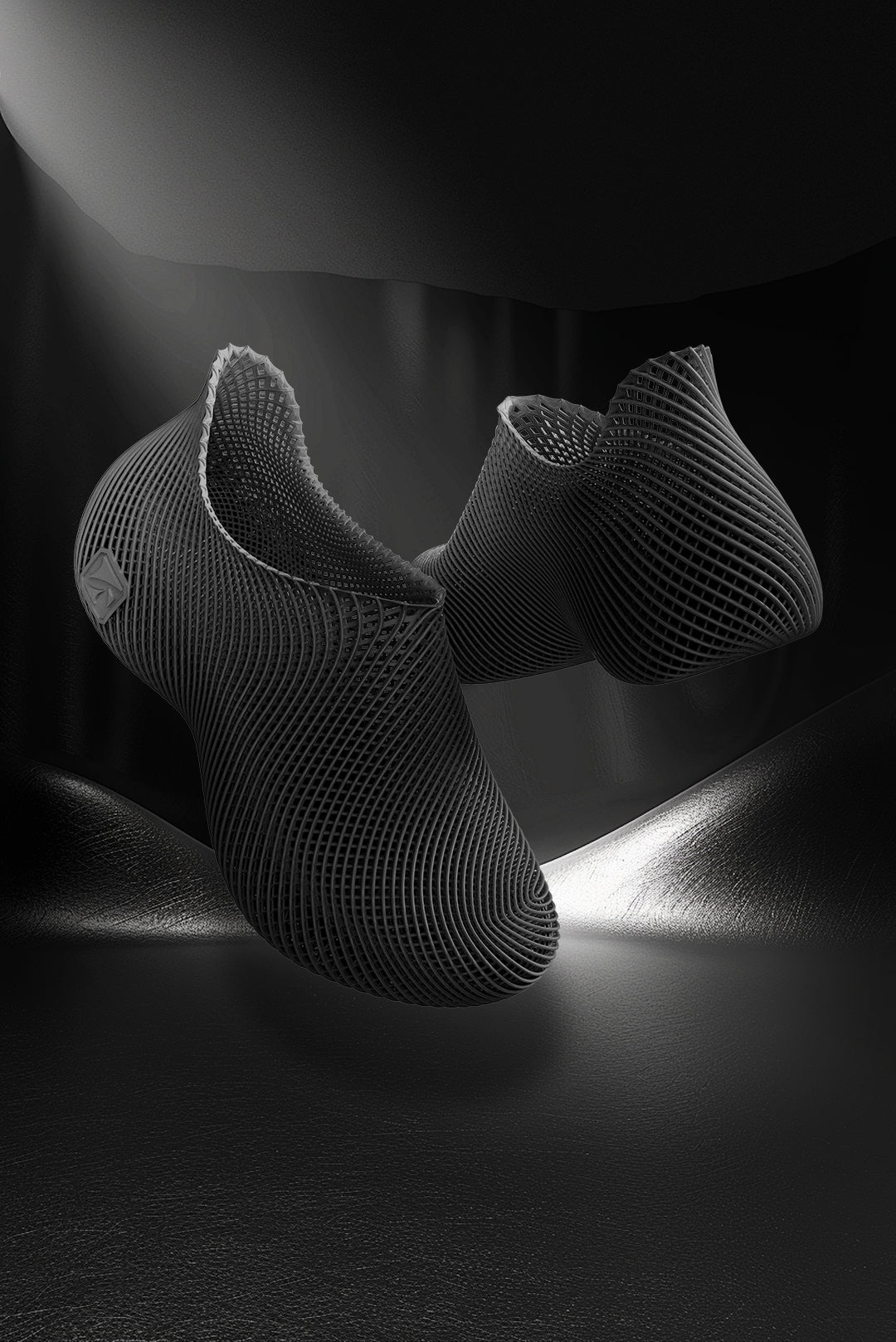
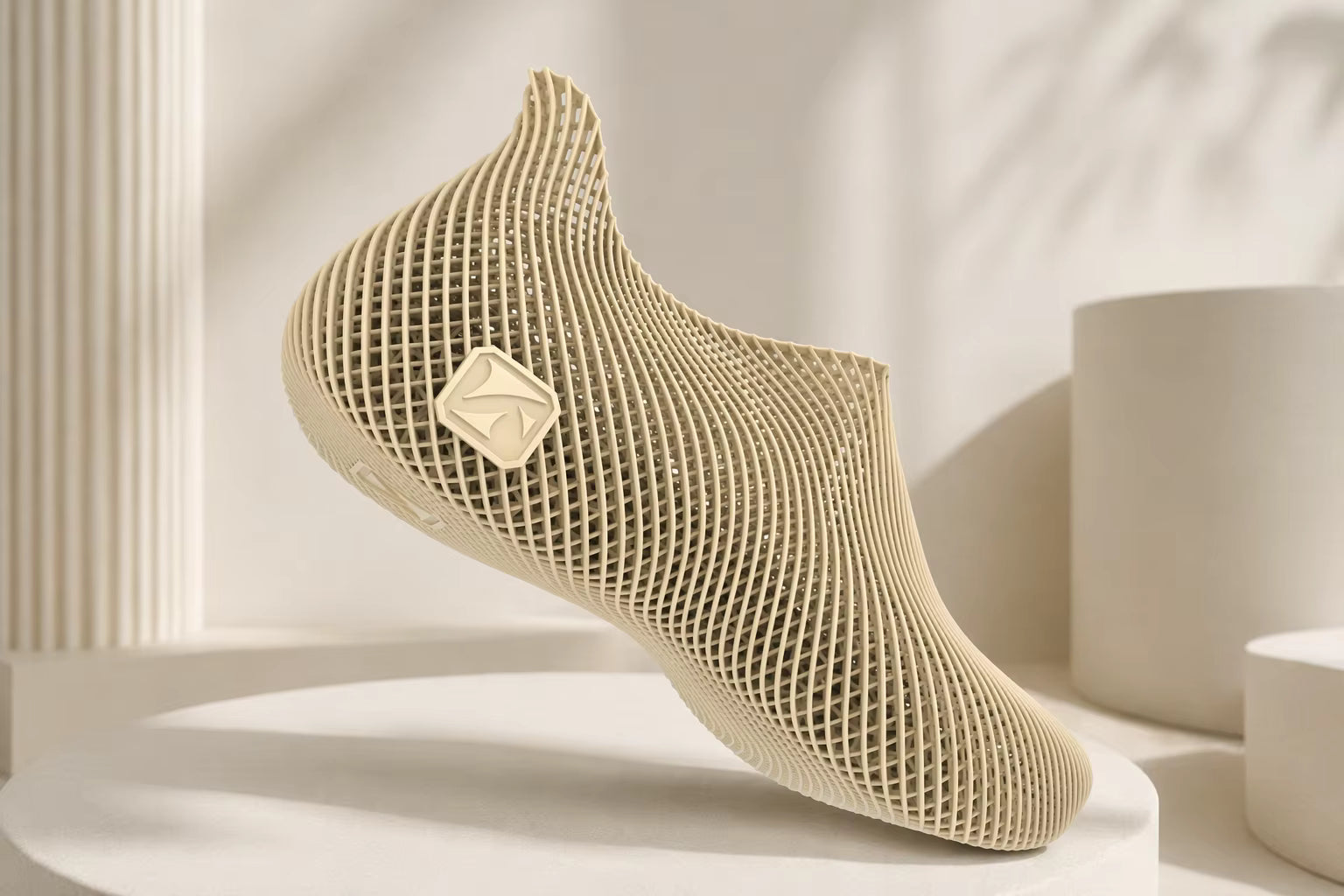

Walking through the streets of Paris or Berlin in mid-July often feels like a test of endurance for one’s feet. In a world where the footwear industry produces over 24 billion pairs of shoes annually, only to see 90% end up in landfills, a quiet revolution is taking place on our pavements. According to research published by the Ellen MacArthur Foundation, the textile and footwear industry is responsible for nearly 10% of global carbon emissions. This stark reality leads us to a fundamental question: Can a shoe be as breathable for the planet as it is for the wearer? The emergence of sustainable 3D printed shoes is not just a technological trend; it is an architectural answer to the environmental crisis. By replacing massive assembly lines with precise, zero-waste algorithms, we are finally seeing the "eco-friendly soul" of footwear manifest in the form of breathable, circular, and locally-made solutions.
The Paradox of Inventory and the On-Demand Solution
Traditional footwear manufacturing is a gamble against time and consumer taste. Brands often produce millions of pairs in anticipation of demand, leading to a massive surplus that eventually faces incineration or burial. This "overproduction" is the hidden carbon tax of the fashion industry.
The introduction of additive manufacturing changes the narrative from "push" to "pull." Sustainable 3D printed shoes allow for a zero-inventory model. Instead of storing 50,000 pairs in a warehouse in Asia, a brand can maintain a digital library of files. When a customer in London clicks "buy," the shoe is rendered in a local facility. This shift doesn't just reduce the carbon footprint of warehousing; it eliminates the waste of unsold products entirely.
Furthermore, 3D printing enables "Generative Design." Engineers use algorithms to place material only where it is mechanically necessary. This results in footwear that is significantly lighter than traditional counterparts, utilizing up to 40% less raw material without compromising structural integrity. In the context of eco-friendly sneakers, every gram of material saved is a gram of plastic that never needs to be produced or recycled.
Monomaterial Architecture and the End of Glue

One of the greatest hurdles in circular fashion footwear is the complexity of deconstruction. A typical sneaker is a chemical cocktail: EVA foam midsoles, rubber outsoles, polyester uppers, and nylon laces, all fused together with toxic adhesives. Once these shoes reach the end of their life, they are nearly impossible to separate for high-quality recycling.
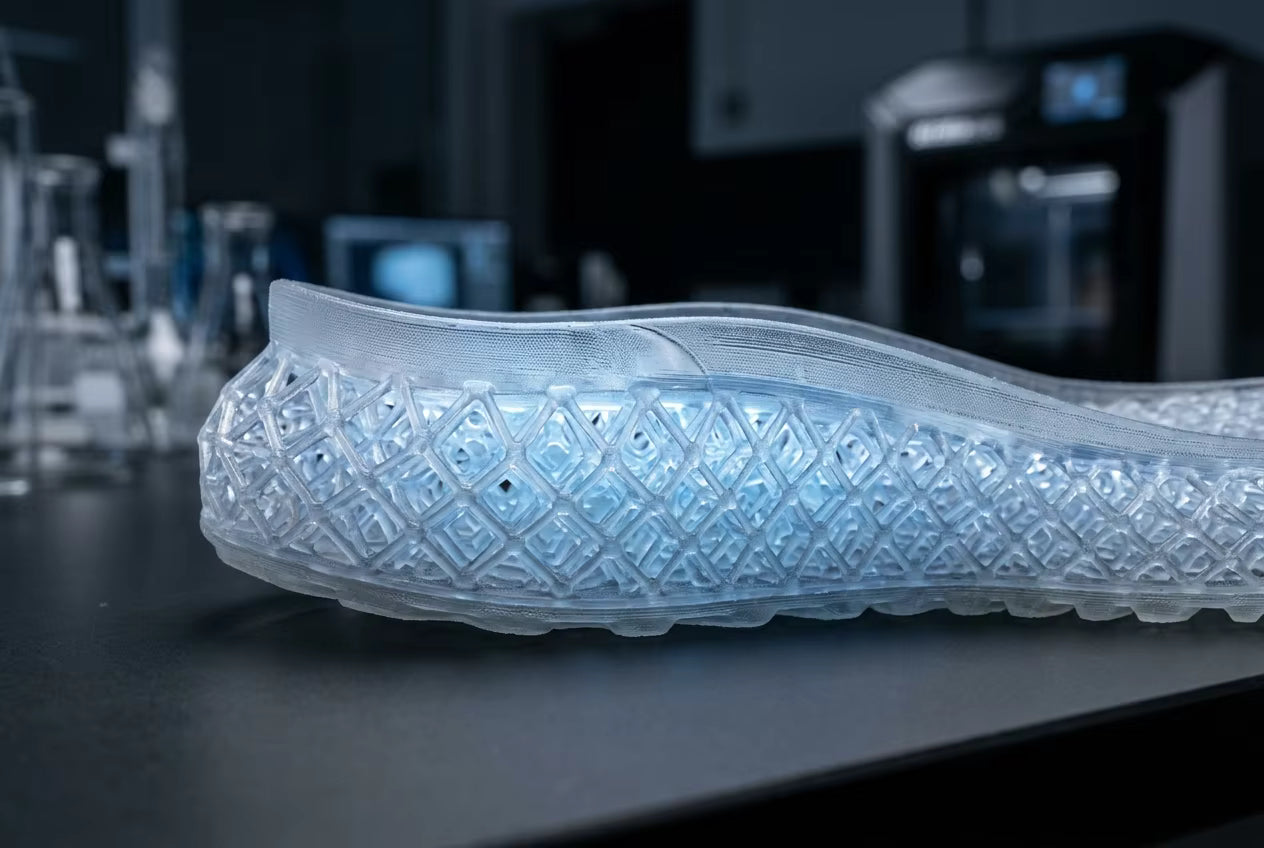
The 3D printed footwear movement champions the "Monomaterial" philosophy. By using a single type of high-performance thermoplastic (such as TPU), designers can create varying densities—soft for the insole, rigid for the arch support, and durable for the tread—within a single print job. This "Digital Materiality" means there is no need for glue.
"The absence of adhesives is the holy grail of circularity," notes Dr. Julian, a leading material scientist specializing in additive polymers. "When a shoe is composed of a single polymer family, it can be ground down directly into granules and fed back into the printer. We aren't just recycling; we are achieving a closed-loop system where the old shoe literally becomes the feedstock for the new one."
This 100% degradable and recyclable nature ensures that the "soul" of the shoe never leaves the economic loop. The user experience is also enhanced; without rigid glue lines, the shoe moves more naturally with the foot’s biomechanics, reducing friction and heat buildup—a critical feature for summer comfort.
Distributed Manufacturing and the Social Significance of Localism

For decades, "Made in China" or "Made in Vietnam" meant that a pair of shoes traveled over 10,000 miles before touching a consumer's foot. The logistics of global shipping contribute significantly to the sulfur and nitrogen oxide levels in our oceans.
The vision for the future of eco-friendly sneakers lies in distributed manufacturing. Imagine small, high-tech "micro-factories" in European urban centers. Instead of a massive factory in a distant land, we see decentralized hubs in cities like Milan or Amsterdam.
This localized approach has three major impacts:
- Logistics Decarbonization: Shipping is reduced from oceanic scales to "last-mile" delivery via electric vehicles or bikes.
- Economic Resilience: It brings manufacturing jobs back to local communities, fostering a new class of "Digital Artisans."
- Hyper-Personalization: Since the manufacturing is local and digital, shoes can be perfectly fitted to a 3D scan of the customer's foot, ensuring that the footwear is comfortable from the first step, further extending the product's life cycle.
Traditional vs. 3D Printed Sustainable Footwear

| Feature | Traditional Sustainable Shoes | 3D Printed Circular Footwear |
|---|---|---|
| Material Composition | Multi-material (Recycled PET, Bio-rubber) | Monomaterial (High-grade TPU) |
| Bonding Agent | Chemical Glues / Stitching | Mechanical Interlocking / Fusion |
| Recyclability | Partial (Requires complex disassembly) | 100% (Directly grindable) |
| Production Model | Mass Production (Inventory-based) | On-Demand (Zero-inventory) |
| Ventilation | Fabric mesh (Standard) | Computational Lattice (Infinite airflow) |
| Carbon Footprint | Moderate (High shipping/warehousing) | Low (Distributed local printing) |
Recommendations for the Eco-Conscious Traveler
If you are looking to invest in your first pair of circular fashion footwear this summer, consider these curated choices based on durability and circularity:
- The Lattice Explorer: Ideal for those prioritizing maximum airflow. Its open-cell structure acts like an air conditioner for your soles. Reason: Highest ventilation score in urban heat island conditions.
- The Urban Minimalist: A sleek, monomaterial design that fits seamlessly into both office and casual environments. Reason: Easiest to return for recycling at the end of its life cycle.
- The Local Artisan Series: Shoes printed in micro-factories within a 50-mile radius of your location. Reason: Minimum carbon miles and support for local digital manufacturing.
FAQ
Q: Are 3D printed shoes actually comfortable for long walks? A: Yes. Because they use computational lattice designs, they provide superior shock absorption compared to standard foam. The stiffness can be adjusted per-pixel to match your foot's pressure map.
Q: How do I clean my 3D printed sneakers? A: Most monomaterial 3D shoes are waterproof and machine washable. Since there is no glue to degrade, they maintain their structural integrity better than traditional sneakers after multiple washes.
Q: What happens to the shoe when it wears out? A: Leading brands provide a "take-back" program. Because they are monomaterial, the company grinds the old shoes into 3D printing filament to create new pairs.
Q: Is the material safe for the skin? A: Yes. The thermoplastics used (like TPU) are medical-grade, BPA-free, and hypoallergenic, making them safer for prolonged contact than many chemically-treated synthetic leathers.
Conclusion
The transition to sustainable 3D printed shoes represents more than a change in how we dress; it is a change in how we inhabit the earth. By embracing the zero-waste ventilation of the lattice and the ethical simplicity of monomaterial design, we aren't just buying footwear—we are voting for a circular world. As the summer heat intensifies, the true luxury of footwear will not be found in a brand logo, but in the cool breeze moving through a shoe that leaves no footprint behind.
Share:
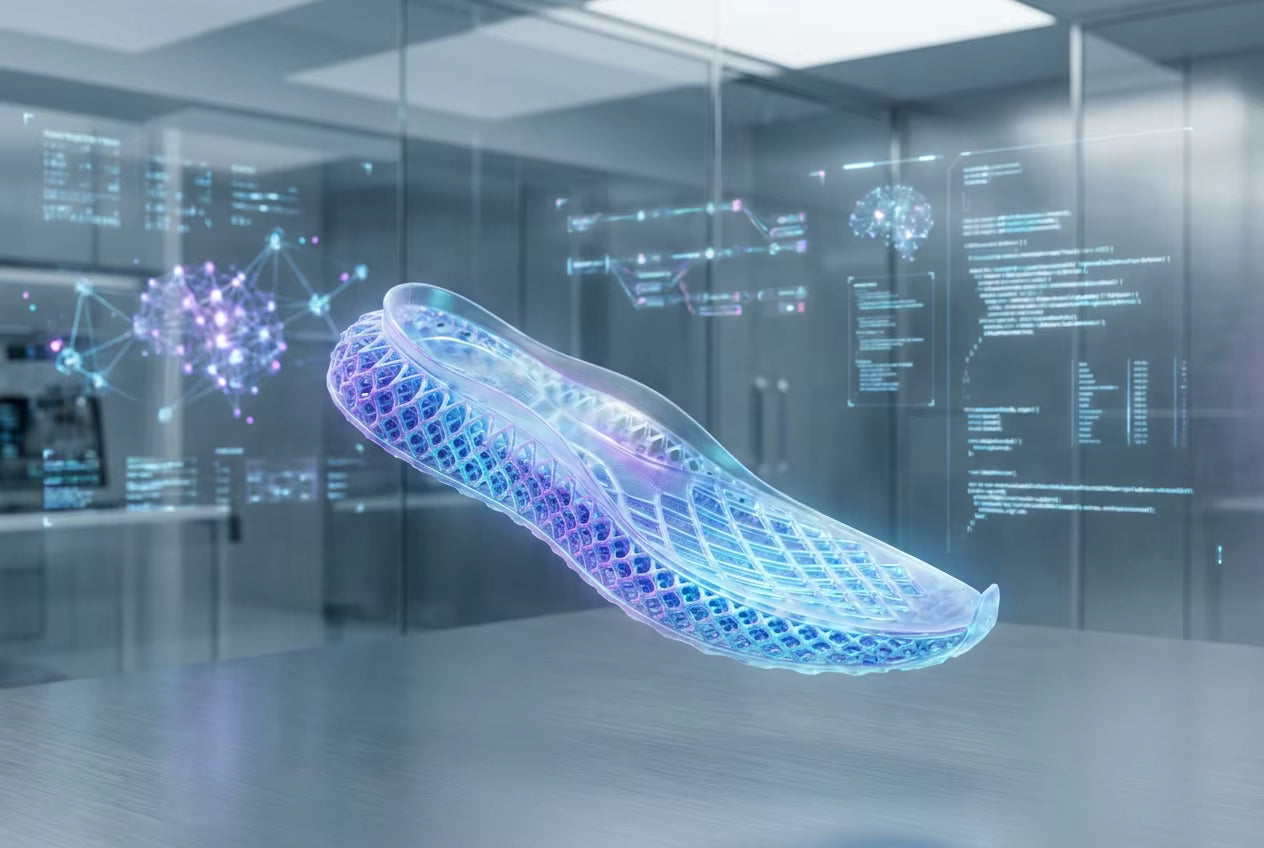
Behind the Design: The AI Algorithms That Shape Arkky’s Lattice Structures
Beyond Plastic: TPU Durability & Stability in High-Performance Footwear