



El Cambio Tectónico en la Ingeniería del Calzado
El panorama global de la moda está siendo testigo de una profunda transformación, donde los límites entre la ingeniería de alto rendimiento y la estética vanguardista se han difuminado permanentemente. Este movimiento, conocido como techwear, ha evolucionado hasta convertirse en una sofisticada filosofía de diseño que prioriza la superioridad técnica, la innovación textil y una transformación radical del calzado a través de la impresión 3D.
Durante décadas, la industria del calzado estuvo limitada por los procesos de moldeo tradicionales. Hoy, la introducción de la tecnología de celosía ha roto estos límites. Esta guía analiza por qué las zapatillas impresas en 3D son la inversión esencial para el entusiasta moderno del techwear, explorando la ciencia del TPU, las ventajas del diseño generativo y el plan para combinar estas piezas arquitectónicas en cada escenario urbano.
La Ciencia de la "Segunda Piel": Por Qué HALS y TPU son Importantes
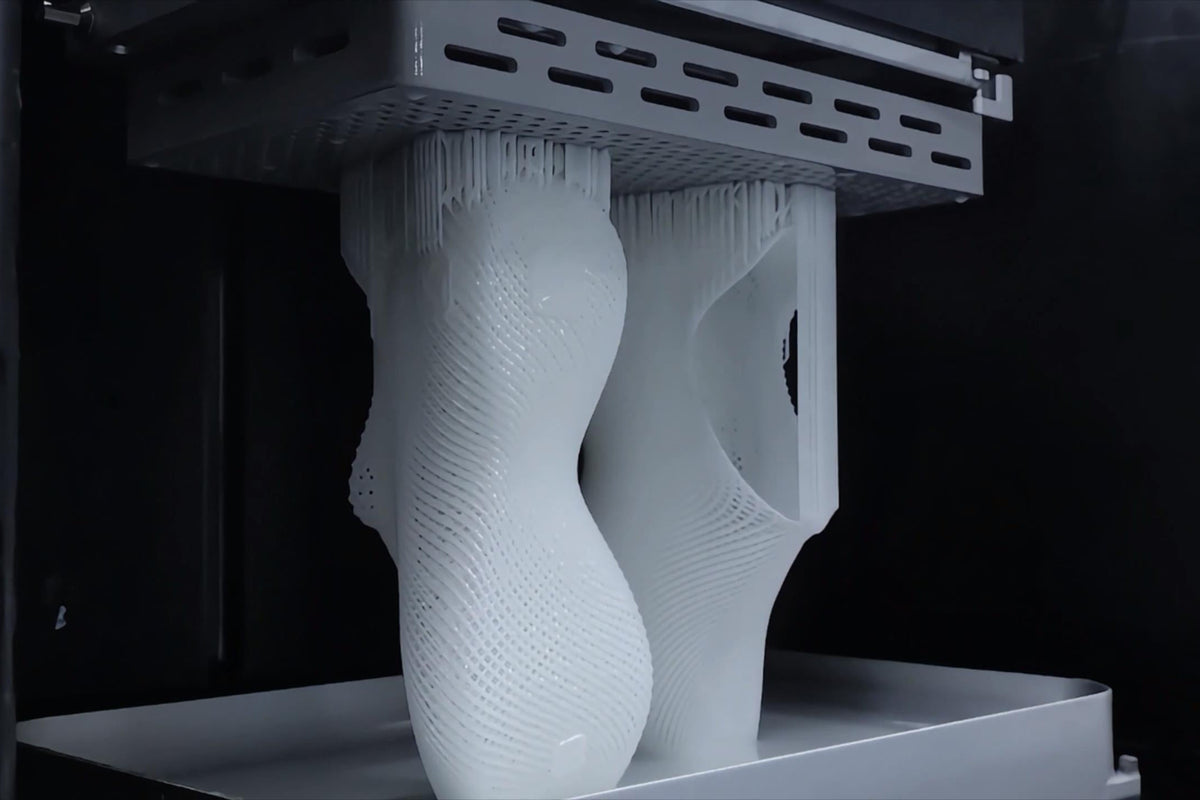
El rendimiento de los zapatos ARKKY se origina en un proceso llamado Litografía de Área de Alta Velocidad (HALS). Esta es la base sobre la cual se construye el futuro del calzado.
Más Allá del Moldeo por Inyección
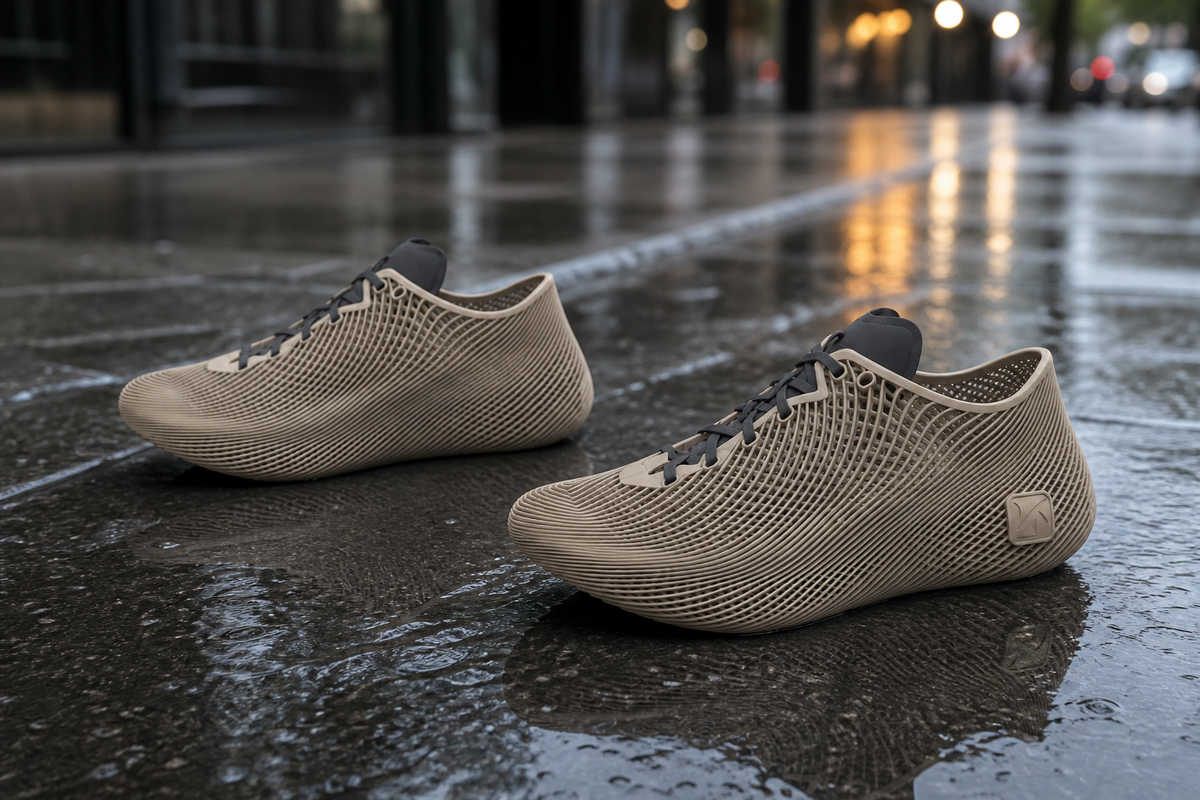
Las zapatillas tradicionales se basan en el moldeo por inyección, que crea una entresuela monolítica con densidad uniforme. Esto a menudo resulta en un compromiso entre soporte y comodidad. La tecnología de celosía, sin embargo, utiliza resinas líquidas curadas con luz para imprimir redes geométricas complejas que varían en densidad dentro de una sola estructura. Esta "sintonización zonal" permite un control preciso sobre el retorno de energía y la absorción de impactos. Los datos sugieren que las estructuras de celosía generativas pueden reducir significativamente el peso total del zapato al tiempo que aumentan el soporte estructural en zonas de alta tensión.
La Integridad del Material TPU
El material elegido—Poliuretano Termoplástico (TPU)—es una maravilla de la ciencia de los polímeros. A diferencia de la espuma EVA estándar utilizada en el calzado de producción masiva, el TPU es un elastómero que une la brecha entre el plástico y el caucho, ofreciendo una resistencia excepcional.
Información sobre el rendimiento:
- Rebote Dinámico: Mientras que la espuma tradicional comienza a colapsar y perder su "memoria" después de unos cientos de kilómetros de uso, las estructuras de TPU impresas en 3D están diseñadas para perdurar.
- Durabilidad a Largo Plazo: Las pruebas de laboratorio indican que la celosía de TPU premium puede soportar más de 1,000,000 de ciclos de compresión, el equivalente a años de uso diario, manteniendo casi toda su altura de rebote original. Esto asegura que el calzado siga siendo un elemento básico duradero en un guardarropa de alto rendimiento.
La Ventaja Biomecánica de la Celosía
La sensación distintiva de una estructura de celosía radica en su capacidad para equilibrar la absorción de impacto vertical con la estabilidad horizontal.
Transpirabilidad de 360 Grados
El calzado tradicional a menudo atrapa el calor, creando un efecto de "isla de calor" alrededor del pie. La arquitectura abierta de un diseño de celosía de ventilación completa permite un intercambio constante de flujo de aire debajo de la plantilla. En entornos de alta humedad, se ha demostrado que esto reduce la temperatura de la piel en comparación con los competidores de suela sólida, proporcionando una experiencia más fresca y seca durante todo el día.
Retorno de Energía Cinética
A medida que los bucles de la celosía se comprimen en cada paso, actúan como una vasta red de micro-resortes. En lugar de simplemente absorber energía, la estructura la devuelve, reduciendo la fatiga muscular durante largos períodos de caminata. Esto hace que la tecnología de celosía sea ideal para el entorno urbano, donde las superficies duras y los largos desplazamientos exigen una atenuación de impacto superior.
Dominando el Estilo Basado en Escenarios
Estilizar zapatillas impresas en 3D requiere una comprensión del peso visual. La complejidad arquitectónica de la celosía conlleva un detalle visual significativo, que un atuendo debe equilibrar o enfatizar.
Escenario 1: La Vanguardia Táctica (Estilo Ciber-Urbano)

La estética de la Vanguardia Táctica se define por la "Utilidad de Alta Definición". Es el lenguaje visual de la ciudad futura: nítido, protector y modular.
- Los Pantalones: Los joggers cargo ajustados son esenciales. El ajuste marcado dirige la atención a la intrincada geometría de las zapatillas. Telas técnicas como el nailon Cordura® proporcionan un brillo mate que complementa perfectamente el acabado de TPU.
- Las Capas: Una chaqueta de caparazón rígido impermeable y corta sobre una camiseta de compresión larga crea una silueta escalonada, que refleja los niveles estructurales de la tecnología de celosía.
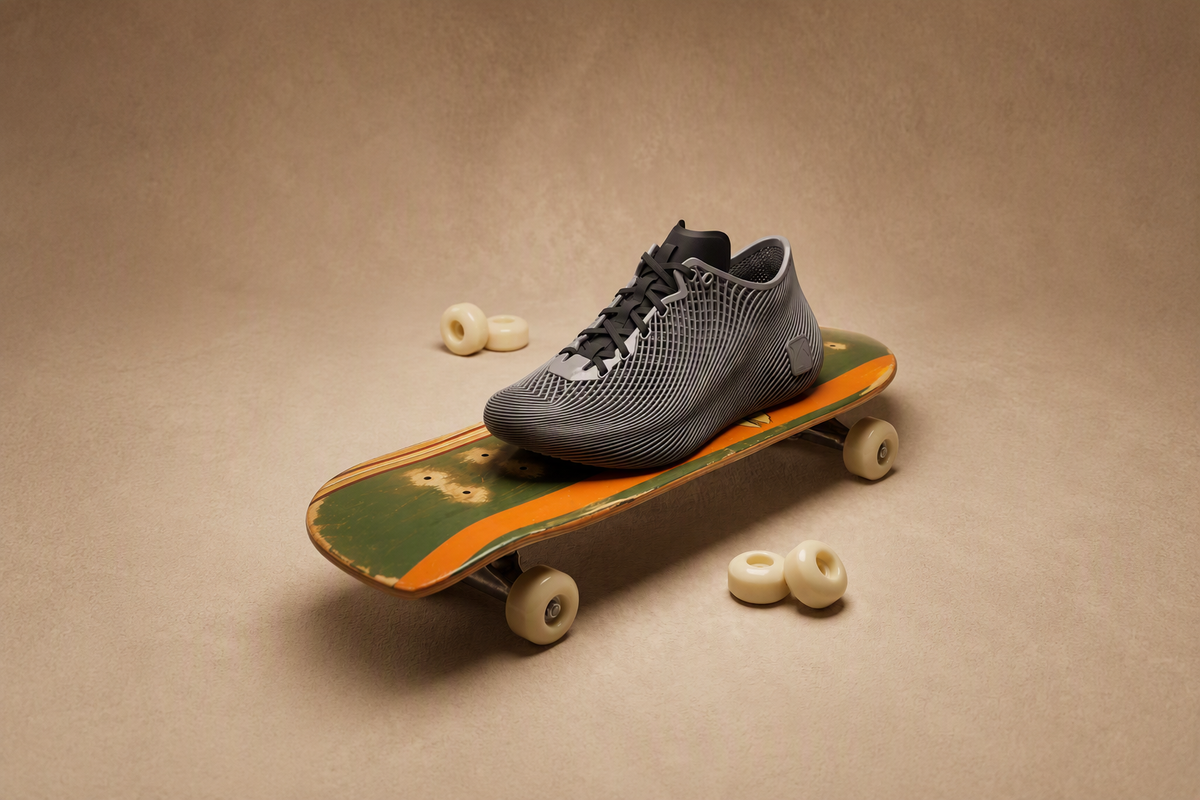
- La Paleta: Una paleta monocromática "Sombra"—Obsidiana, Antracita y Carbón—permite que las estructuras de celosía blancas o gris claro destaquen como puntos luminosos estructurales, al igual que las luces en un rascacielos.
Escenario 2: El Profesional de Greywear (Tecnología Minimalista)

A medida que el techwear madura, se mueve hacia el "Greywear", una versión sofisticada de la estética para el profesional creativo, arquitecto o fundador de tecnología.
- Los Pantalones: Los chinos tecnológicos ajustados o los pantalones de mezcla de lana con rodillas articuladas ofrecen una "funcionalidad sigilosa".
- La Parte Superior: La lana merino es el tejido técnico de la naturaleza —antimicrobiano y termorregulador—, lo que la convierte en el compañero ideal para la celosía transpirable de los zapatos.
- La Silueta: Elija combinaciones de colores tonales. Una parte superior gris pizarra con una suela de celosía gris a juego crea un aspecto impecable e integrado que es profesional pero tecnológicamente avanzado.
Escenario 3: Gorpcore y el Aire Libre Funcional

Gorpcore cierra la brecha entre la naturaleza y la calle, donde los zapatos impresos en 3D actúan como equipo de alto rendimiento.
- La Combinación: Pantalones cortos de nailon ripstop o leggings 2 en 1 extragrandes proporcionan una base resistente.
- El Contraste: Chaquetas Gore-Tex extragrandes en tonos tierra orgánicos —verde salvia, terracota u ocre— proporcionan un hermoso contrapunto a la estética de alta tecnología y fabricación humana de las zapatillas de celosía.
- Ajuste Visual: Debido a que la estructura de celosía es abierta, la elección de los calcetines se convierte en un elemento de diseño. Los colores vibrantes pueden "asomarse" a través de la estructura, lo que permite una fácil personalización del aspecto general.
El Manifiesto de Residuos Cero: Un Futuro Sostenible
La comunidad techwear se centra cada vez más en la ética del futuro. La fabricación tradicional genera una cantidad significativa de residuos a través de los procesos de corte. ARKKY utiliza la fabricación aditiva, asegurando que solo se utilice el material necesario para cada par.
El uso de TPU de base biológica se alinea aún más con el compromiso de responsabilidad ambiental. Este enfoque de residuos cero representa el futuro de la producción responsable, donde se eliminan la sobreproducción y el desperdicio de material.
Mantenimiento y Conservación
La red geométrica abierta de la estructura de celosía requiere una rutina específica para mantener su rendimiento y claridad estética.
- Limpieza con Aire: Use una lata de aire comprimido periódicamente para eliminar el polvo o los residuos de los canales de la celosía.
- Frotado Suave: Para suciedad más persistente, se recomienda un cepillo suave y agua tibia con jabón de pH neutro. Evite los productos químicos agresivos que podrían alterar el material con el tiempo.
- Secado Natural: El diseño transpirable asegura un secado rápido al aire. Siempre permita que los zapatos se sequen naturalmente en lugar de usar fuentes de calor elevadas, lo que puede comprometer la integridad del material.
Conclusión: Adentrándose en la Vanguardia
Techwear es más que simple indumentaria; es la creencia de que nuestra ropa debe protegernos, mejorar nuestro movimiento y reflejar nuestros valores. Los zapatos impresos en 3D son la máxima expresión de esta creencia. Al fusionar el diseño generativo con inteligencia artificial, la ciencia de materiales avanzada y una filosofía de cero residuos, estamos estableciendo el estándar para el próximo siglo de calzado.
El futuro es arquitectónico. El futuro es ARKKY.
Compartir:
Zapatillas impresas en 3D: la mejor opción para calzado deportivo casual que se usa sin calcetines
Sobrevivir a la ola de calor europea: la cápsula transpirable definitiva para Roma, París y Madrid