


There is a quiet ritual in every house with growing children: the foot-measuring on a sheet of paper, the finger test at the toe, the slow realization that the shoes bought in August are tight by January. Pediatric orthopedists are blunt about why the ritual matters. Feet do not stop changing when the toddler phase ends — bones are still ossifying through adolescence — and the shoes have to keep up. Dr. Lauren Geaney, a foot and ankle orthopedic surgeon at UConn Health, advises that elementary-school children typically need new shoes two to three times a year, slowing to one or two pairs a year only after about age nine, with roughly a half-inch of toe space as the standing rule (UConn Today). Meanwhile, a systematic review of walking studies found that the footwear we habitually wear measurably changes how the foot moves and loads — barefoot walking allows the forefoot to spread more under load, and people who go barefoot habitually tend to have wider feet (Franklin et al., Gait & Posture, 2015).
That second finding is the reason shoes — not feet — are the interesting variable. A child's foot is still negotiating with its environment, and every pair of shoes is a small vote about how that negotiation goes. Which brings us to the question in the title: should kids wear 3D-printed shoes? This article is written by ARKKY, a maker of 3D-printed shoes, so I will say the uncomfortable part first: ARKKY does not yet sell children's shoes — but the brand's design team is working on a children's line and has committed to releasing it only when it is genuinely suitable for kids' feet. Nothing in this article is meant to persuade a parent to squeeze a toddler into today's adult product line. What I can offer is what the evidence says growing feet need — weight, flex, room, and fit — what 3D printing does and does not change about those needs, and where the honest dividing line sits between "interesting technology" and "right tool for this foot, right now."
What growing feet actually need
The first step is to separate what most parents assume from what clinicians actually look for. In pediatric footwear guidance, four properties recur across podiatrists, pediatric therapists, and the American Academy of Pediatrics' family-health content: lightweight construction, a sole that bends at the toes rather than the arch, enough width and toe room, and fit that is re-checked every few months while growth is fast.
Weight matters for a simple mechanical reason. Every step lifts the shoe; laboratory studies on adults estimate roughly a one-percent increase in energy cost for every hundred grams added per shoe — and children take far more steps per day relative to their size than adults do. Heavy "sturdy" shoes are the most common well-meaning mistake: they feel protective, but a growing foot spends its whole day lifting them.
Flexibility matters for an equally simple reason. When the foot pushes off, it bends at the joints of the forefoot — roughly at the base of the toes. A sole that only bends at the arch, or does not bend much at all, forces the foot to work against the shoe instead of with it. That is why the "forefoot flex test" — grabbing a shoe by heel and toe and bending — is the first thing pediatric clinicians demonstrate to parents, and why stiff, "corrective" styles have fallen out of favor: the evidence for reshaping feet with rigid shoes is thin, while flexible, roomy shoes are supported by mechanism and by the foot-spread findings above.
Room is the third rail. The toes need space to spread on every step; a pointed or narrow shoe quietly prevents that. And fit is not a purchase event — it is a season. Between growth spurts, blisters, redness, and ingrown toenails are the signals clinicians tell parents to watch for (UConn's guidance is specific: those signs mean bigger or wider, not "break them in").

Why kids' shoe marketing rarely talks about weight or flex
Here is where the confusion starts. If you search for children's shoes, most of what you find — from toddler brands to school-supply aisles — is marketed on cushioning, support, or cute styling, not on weight or flexibility. That is partly because marketing rewards what you can see in a photo, and partly because the market has quietly organized itself around very young children.
Walk through what is actually on offer for kids:

| Shoe type | Typical weight & flex | Toe room | Evidence position | Best suited to |
|---|---|---|---|---|
| Rigid/"supportive" school shoes | Heavier; stiff through the arch | Often narrow | Corrective claims not supported by good evidence | Mostly being phased out of guidance |
| Soft-sole and first-walker shoes | Very light; fully flexible | Roomy | Strong for early walkers indoors | Babies and new walkers, mostly indoors |
| Cushioned athletic sneakers (kids) | Varies; midsole stiffness common | Often narrow | Comfortable but not obviously foot-healthy | Older kids in organized sport |
| Minimalist / "barefoot-style" | Extremely light; flat, flexible | Very roomy | Mechanism supported; strong-opinion camps, thin long-term data | Kids already used to flexible shoes, with careful transition |
| 3D-printed lattice (today) | Light by design; flex at toe via geometry | Roomy in available sizes | Mechanism promising; no youth-specific clinical data | Teens and older kids who fit adult size ranges (EU 36+) |
The table's honest summary: every shoe is a bundle of trade-offs, and the trade-offs are rarely printed on the box. The "barefoot vs. support" debate in particular has become tribal — yet the underlying agreement across both camps is wider than the fight suggests: children do best in shoes that are light, bend at the toes, leave room to grow, and are replaced on schedule. The disagreement is mostly about how extreme to go, and the evidence base for extreme positions is thinner than either side likes to admit.
What 3D printing changes — and what it does not
3D-printed shoes enter this conversation at an unusual angle: they are new, so they inherit the promises of "the future," and they are physical, so they inherit the burden of real feet. Let me address both halves honestly.
What the technology can plausibly offer
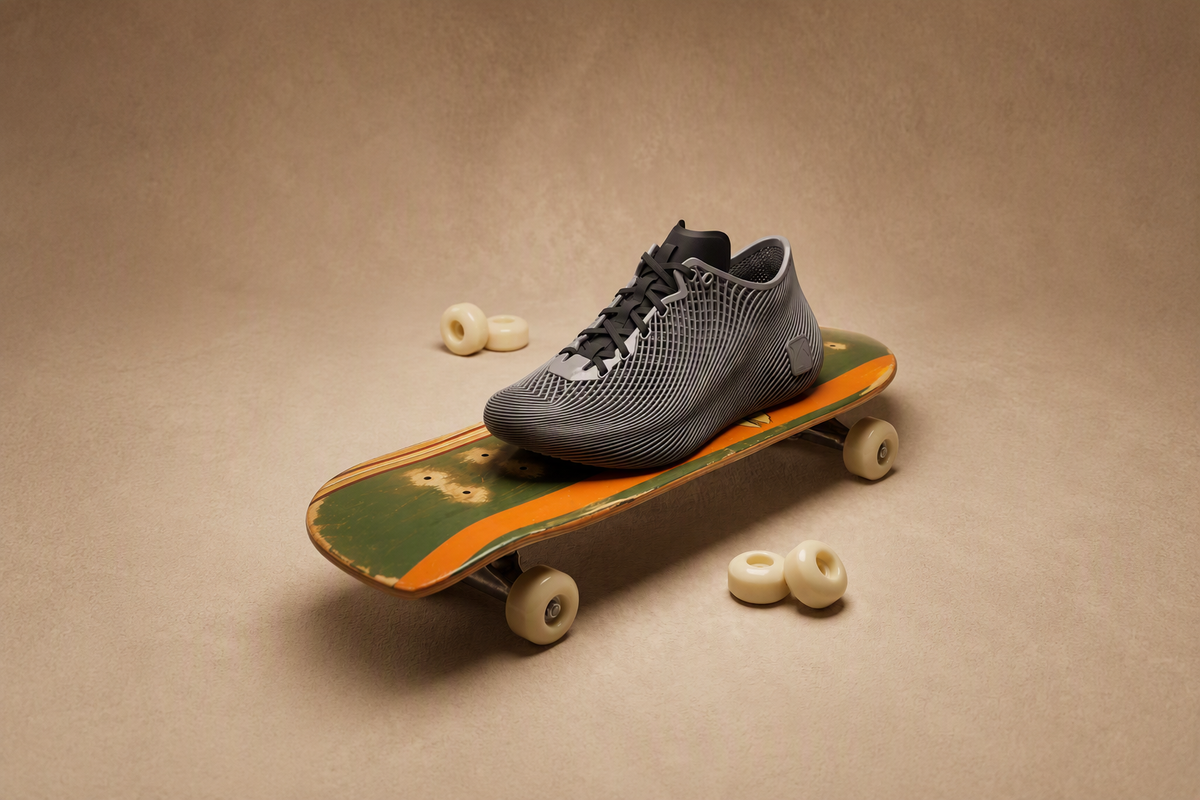
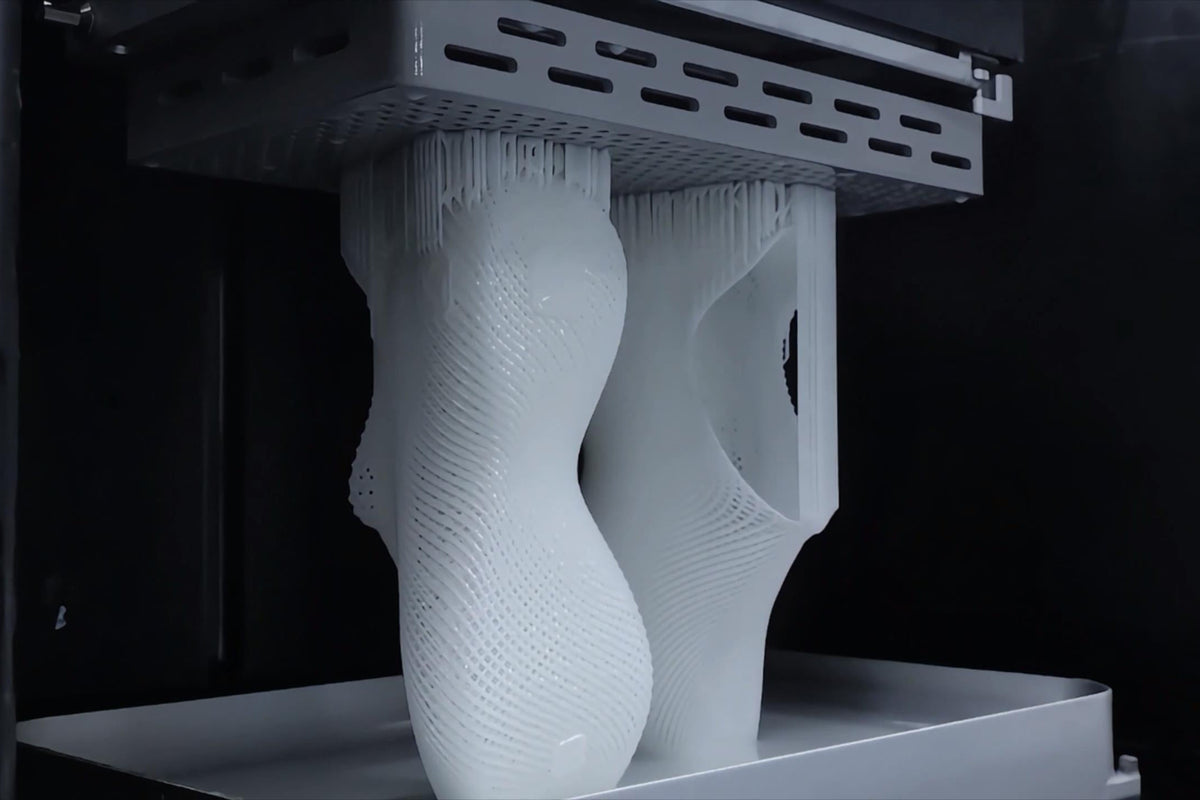
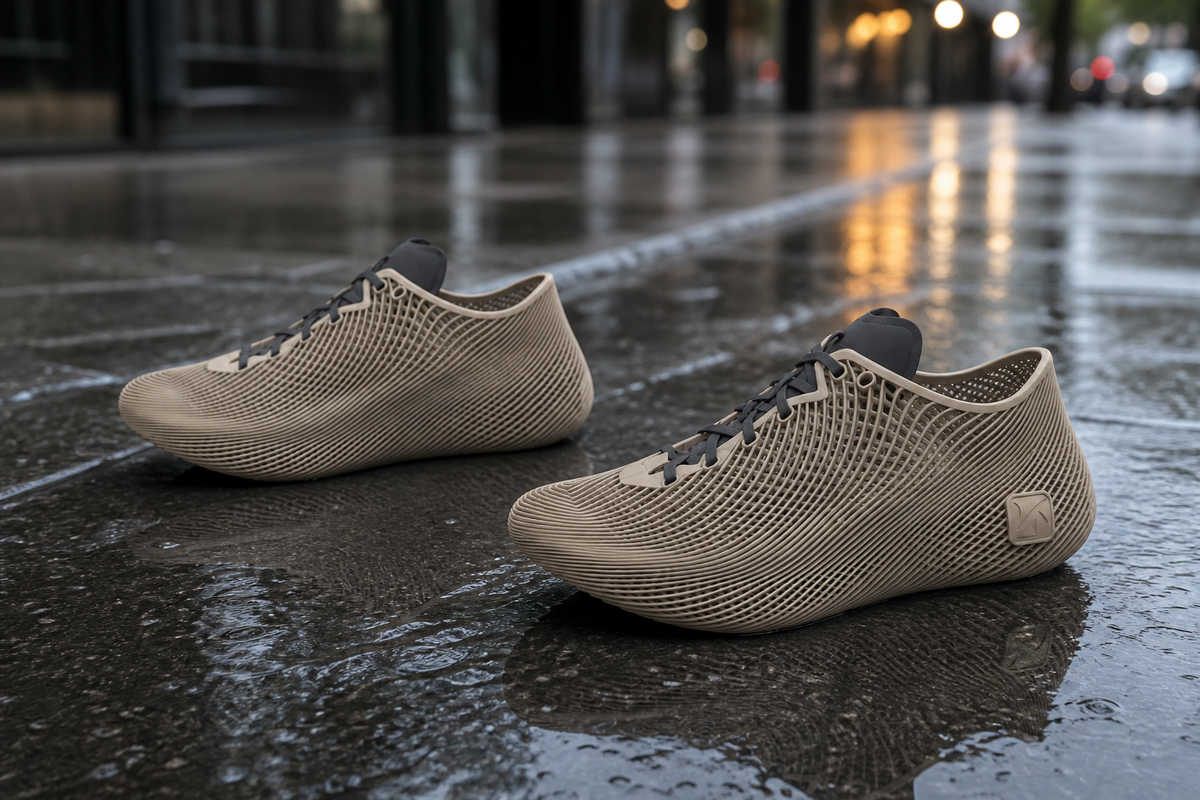
The interesting property of a printed lattice sole is that flexibility and support stop being a single material choice. A foam sole is one density from heel to toe; a printed sole is geometry, so the designers can make the sole bend where the foot bends — at the toe joints — while staying supportive under the arch. ARKKY describes its AeroDash as flexible yet tough, made in one piece without glue, with the lattice structure tuned across the size range rather than stamped from one mold. There are no stiff glue joints in a printed shoe, which removes one classic failure point (the sole separating) and one classic stiffness source. ARKKY's engineering writing on TPU explains the material logic behind this — why printed geometry can be both compliant and durable. This is mechanism, not a clinical claim: nobody has published controlled studies of children wearing 3D-printed shoes, and this article will not pretend otherwise.
What the technology does not change
Here is the part that matters most for the headline question. A printed shoe does not change the three rules of growing feet: it still must be light, flexible at the toes, and — above all — it must fit, with room, and be replaced as the foot grows. Printing does not make a shoe "self-sizing." And for now, it does not make a children's shoe you can buy.
The current ARKKY line starts at EU 36 (about 230 millimeters, charted around a U.S. women's 5.5 / men's 4), with the smallest option in the catalog — the CozLite slipper — dipping to EU 35. In length terms, those first sizes can overlap with older children roughly around ages eight to twelve, but today's line is not marketed, sized, or tested for children. That may change: ARKKY's design team is developing a children's line, with a stated rule that it will only be released once it meets the fit, flex, room, and safety standards the category demands. Until that day, a printed shoe that flexes at the toe and rinses clean in seconds can be a sensible option for an active teen whose feet have reached adult size ranges — and it is not an option for a six-year-old, full stop.
A decision framework for parents
If you are a parent reading this, here is the process that survives contact with the evidence — and with a teenager's wardrobe.

For young children, the category barely matters; the fit and flex do. Choose light, toe-flexible shoes with roomy forefoots, re-measure every few months, and let feet be bare or near-bare at home where safe. When in doubt, the pediatric guidance is consistent: blisters and red marks are fit signals, not character-building.
For older kids and teens, ask what the shoe is for. A soccer cleat, a running shoe, and a school shoe solve different problems. If the need is a durable, washable everyday shoe for an active teenager, a printed lattice shoe becomes worth considering — because the teenager's foot has reached sizes the product line actually covers. If the need is a toddler's first year of walking, no 3D-printed shoe currently on the market is the right answer, including ours.
Treat weight and flex as specs, not adjectives. If a brand will not tell you the weight of the shoe or demonstrate where the sole bends, that silence is information. ARKKY, for the record, does not publish a weight figure for the AeroDash — its "feather-light" language is marketing phrasing, not a measured spec — and honest shoppers should weigh it against brands that do publish numbers.
Ignore the future hype, keep the future in mind. Printing is genuinely young: sizes are adult-first, and no youth-specific evidence exists — although ARKKY's own children's line is in development, with no release date announced. That is a reason to wait for a child today, and a reason not to dismiss the category for a teenager whose foot already fits it.
Questions parents ask about 3D-printed shoes and growing feet
Are 3D-printed shoes safe for children's developing feet?
There is no clinical evidence yet one way or another, and ARKKY does not yet sell children's sizes — its children's line is in development and will only be released when it is genuinely suitable — so for young children the honest answer is: not applicable today, and no responsible brand would claim otherwise. For teens whose feet reach the adult size range, printed shoes are structurally similar in principle to any flexible, roomy, well-fitted shoe.
How do I know if my child's shoe is flexible enough?
The forefoot flex test: hold the heel in one hand, the toe in the other, and bend. A good kids' shoe bends at the base of the toes without extreme force. If it resists or bends in the middle of the arch, keep looking.
How often should growing feet be re-measured?
Pediatric orthopedic guidance (UConn Health) suggests new shoes two to three times a year for elementary-age children, slowing to one or two pairs a year after about age nine. Re-measure whenever you see blisters, redness, or complaints of tightness.
Can my big kid wear adult-sized 3D-printed shoes?
If their foot measures into the adult size range — ARKKY starts at EU 36 — they can physically. Whether it is a good choice depends on the same fit and flex checks as any other shoe, plus honest scrutiny of claimed specs.
Do 3D-printed shoes help flat feet or other conditions?
No. ARKKY makes no medical or corrective claims, and no evidence supports using printed shoes (or any ordinary shoe) to reshape a child's foot. Foot pain or concerns about flat feet should go through a pediatrician or podiatrist, not a shoe website.
Will 3D-printed kids' shoes exist soon?
Sizes are adult-first across the industry today, but that is changing at the edges: ARKKY's design team is working on a children's line, with release planned only once it genuinely suits children's feet — there is no announced date. Whenever children's sizing arrives, the same rules will apply: light, toe-flexible, roomy, and replaced on schedule — printing would change the manufacturing, not the foot.
The reason to keep the question open
Children's feet are not miniature adult feet; they are a system mid-development, and the best available guidance is consistent: keep it light, keep it flexible at the toes, keep it roomy, and keep the fit current. 3D printing is the most interesting way we have yet found to engineer flexibility into a sole — but interesting technology does not change biology, and it certainly does not change shoe sizes. For the years when children's feet are too small for adult ranges, the answer to "should kids wear 3D shoes?" is simply: not yet, and here is what to buy instead. For the teenager whose foot has crossed into adult sizes, the question becomes a practical one — and a printed shoe deserves a place in that comparison, judged by the same three rules as everything else. The framework, not the novelty, is what protects the foot.
Sources and further reading
- Dr. Lauren E. Geaney (UConn Health / AOFAS), orthopedic advice for back-to-school shoes — UConn Today, 2019.
- Franklin et al., "Barefoot vs common footwear: A systematic review of the kinematic, kinetic and muscle activity differences during walking," Gait & Posture, 2015 (PubMed-indexed).
- American Academy of Pediatrics family-health content on children's feet and footwear (referenced in text).
- Pediatric physical- and occupational-therapy guidance and pediatric podiatry blogs cited in the wider discussion (Movement Mama, KidStart, cfoxdpm).
- Laboratory estimates of shoe-weight energy cost on adults (Frederick 1984; Fuller et al. 2015) — adult data, referenced as such.
- ARKKY AeroDash product page and knowledge hub (TPU stability engineering post) — manufacturer claims cited separately from independent evidence.
يشارك:
Drying Tips: Why Air Drying is Best for Lattice 3D Printed Shoes
Quick-Dry Shoes: Why Lattice Soles Beat Foam and Mesh