

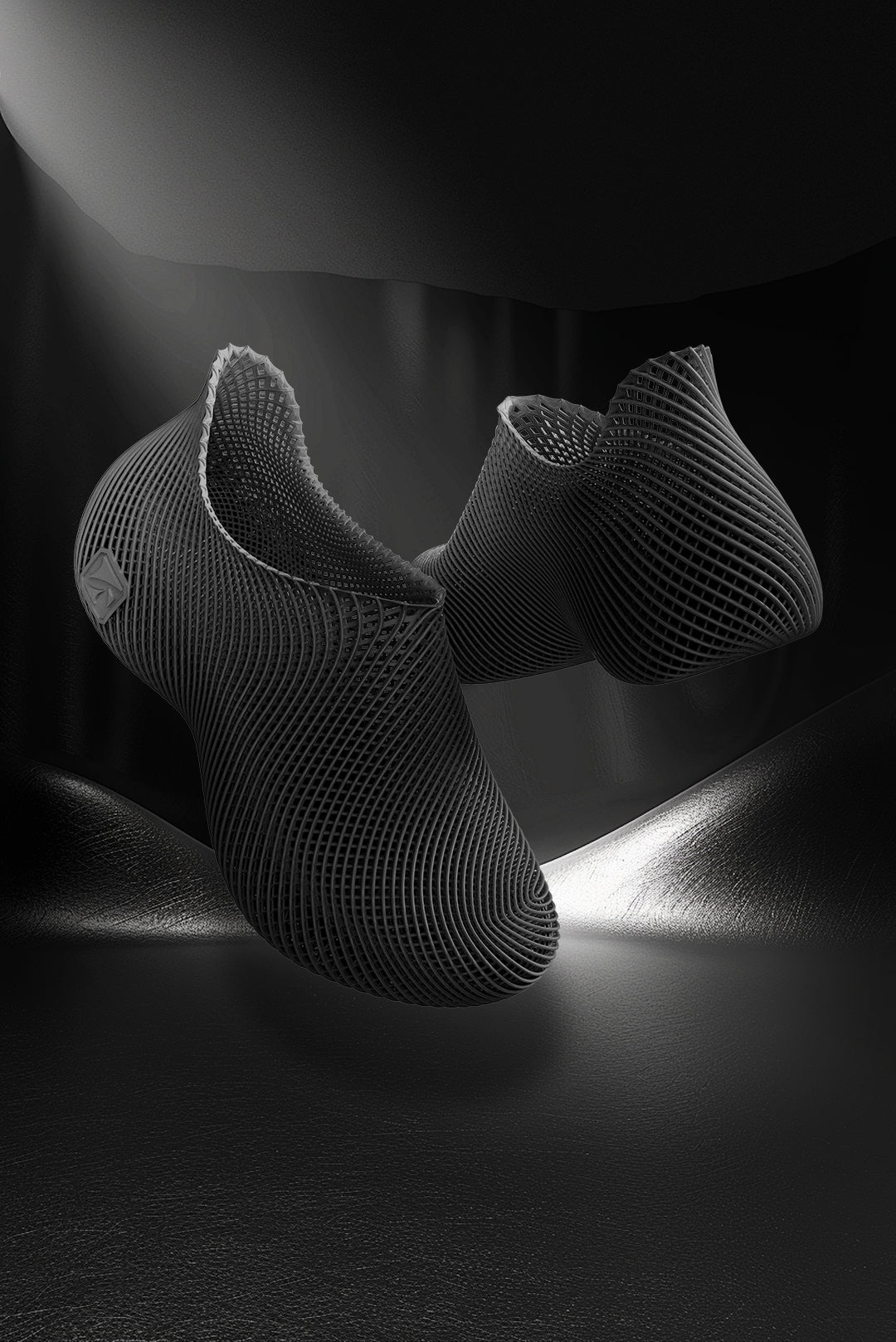
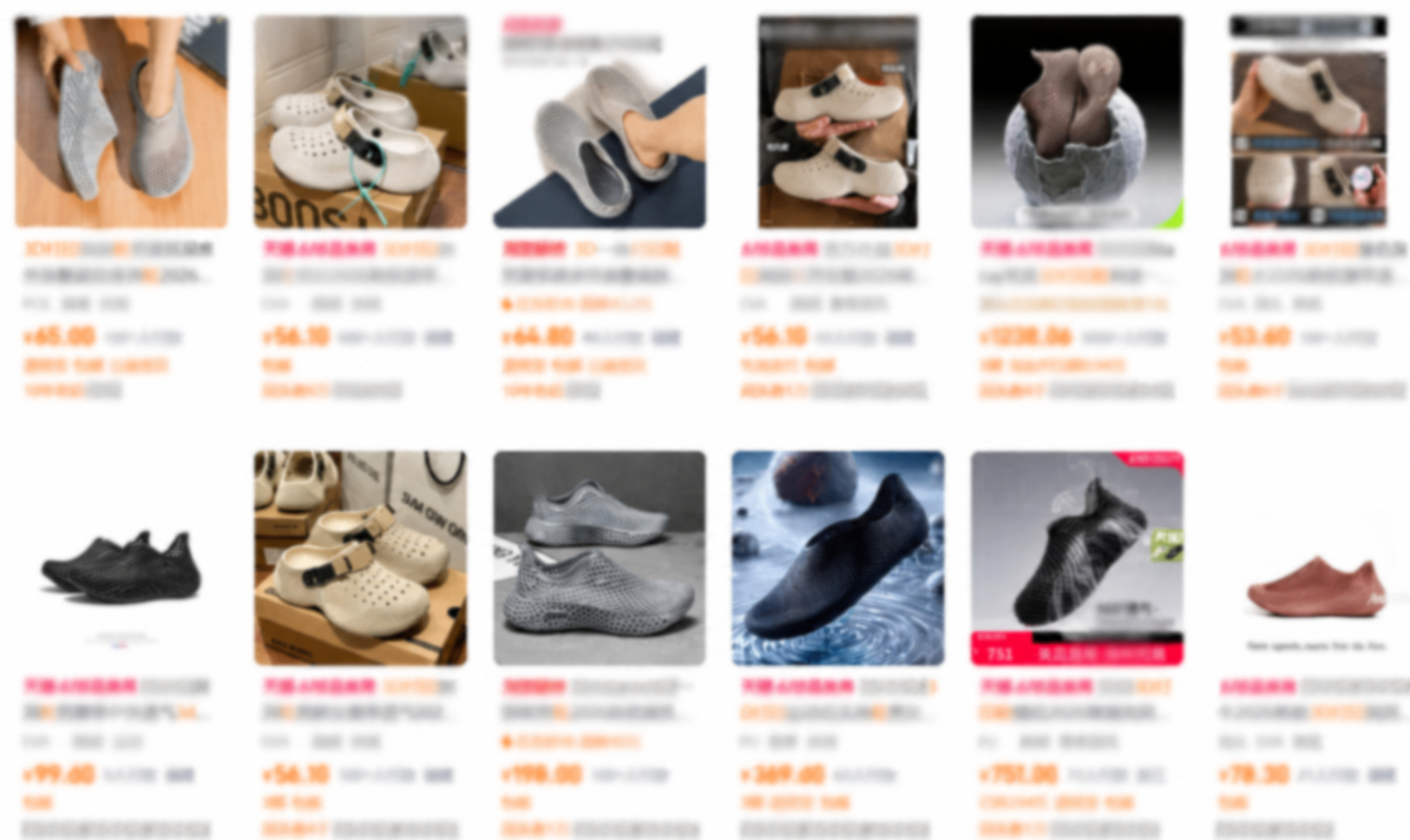
مع اقتراب فصل الصيف، يبلغ الطلب على الأحذية خفيفة الوزن، والمسامية، وغير الضاغطة ذروته. وقد أصبحت الأحذية المطبوعة ثلاثية الأبعاد، بتصاميمها الشبكية المفتوحة بالكامل وملمسها الناعم والمرن، المفضلة الجديدة في السوق. ومع ذلك، فإن بحثاً سريعاً على منصات التجارة الإلكترونية يكشف عن أن "الأحذية المطبوعة ثلاثية الأبعاد" تتراوح أسعارها من 15 دولاراً فقط إلى أكثر من 150 دولاراً. وبينما يحتفل البعض بذلك على أنه "دمقرطة للتكنولوجيا"، يشكو آخرون من أحذية "صلبة كالحجر" أو "تتفكك بعد يومين".

هل هذه المنتجات منخفضة التكلفة هي طبعات ثلاثية الأبعاد أصلية، أم أنها مجرد أحذية تقليدية مصبوبة بالحقن ترتدي قناع "التكنولوجيا"؟ اليوم، يقوم ARKKY بتفكيك الفروقات الأساسية بين الأحذية المقلدة والحقيقية المطبوعة ثلاثية الأبعاد عبر التصنيع والمواد والأداء لضمان عدم طرد الابتكار الأصيل من قبل المنتجات المقلدة ذات الجودة المنخفضة.
01. "الأحذية المطبوعة ثلاثية الأبعاد" الاقتصادية هي في الغالب مصبوبة بالحقن
لكشف الحقيقة، قمنا بتحليل العديد من "الأحذية المطبوعة ثلاثية الأبعاد" منخفضة التكلفة للغاية (مثل 15 دولاراً أو أقل) التي تغمر السوق حالياً. عند تفكيكها، وجدنا أنها أحذية تقليدية مجمعة:

- المواد: النعل مصنوع من رغوة EVA القياسية، والجزء العلوي مصبوب بالحقن من مادة PU أو POE.
- التجربة: تبدو صلبة عند اللمس وتوفر إحساساً بلاستيكياً رخيصاً على القدم، مع عدم وجود أي من خاصية استعادة الطاقة المتوقعة من الطباعة ثلاثية الأبعاد الحقيقية.
المبدأ بسيط: يستخدم المصنعون قوالب لصب مظهر يشبه الشبكة ثلاثية الأبعاد بالحقن. ثم يتم لصقها وتجميعها – وهي عملية لا علاقة لها إطلاقاً بالطباعة ثلاثية الأبعاد. تكلفة الوحدة للصب بالحقن منخفضة للغاية، وهو السبب الجذري لسعرها الرخيص. ببساطة: هذه ليست "مطبوعة"؛ إنها "مصبوبة".
02. كيف يتم "تطوير" حذاء ARKKY حقيقي مطبوع ثلاثي الأبعاد
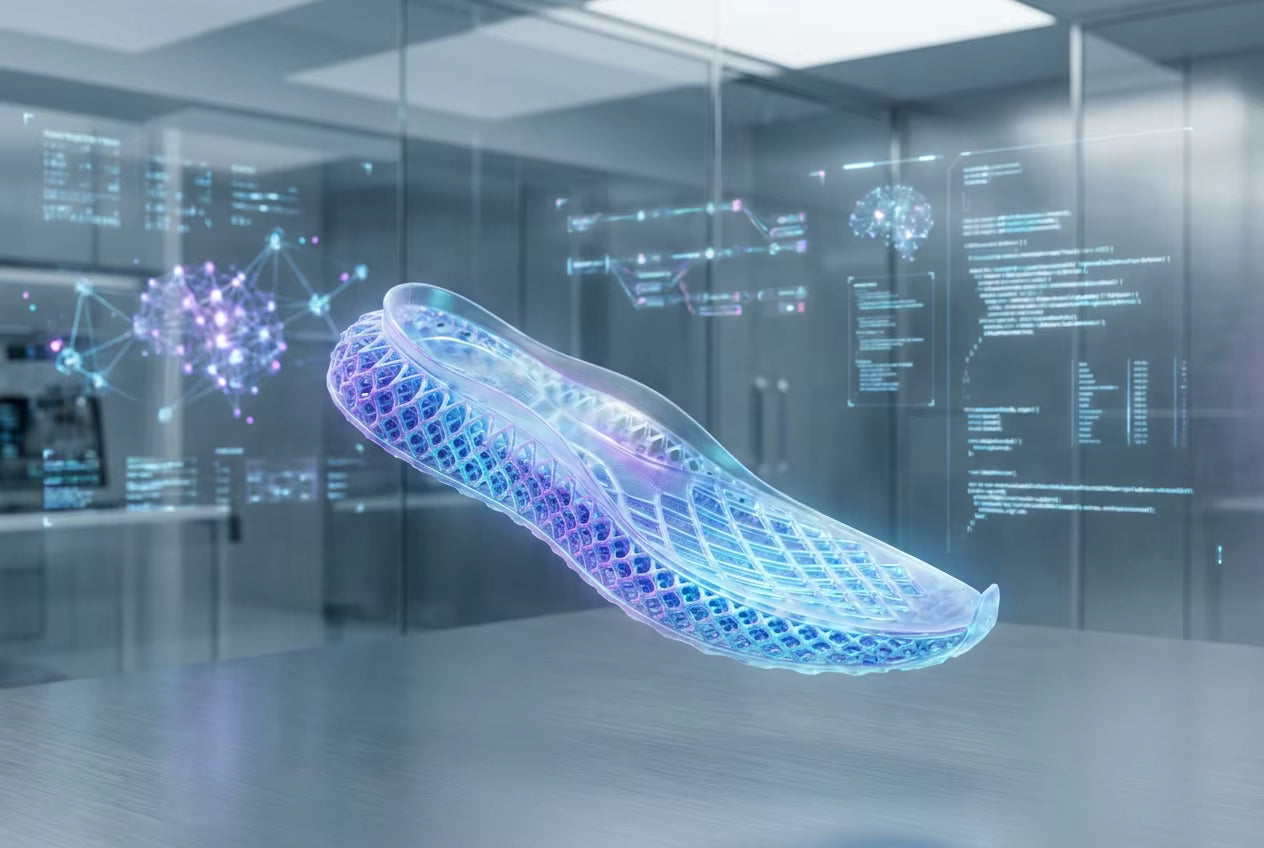
تستخدم الأحذية المطبوعة ثلاثية الأبعاد الأصيلة، مثل سلسلة CozLite من ARKKY، تقنية الطباعة ثلاثية الأبعاد بالبوليمر الضوئي المرن.
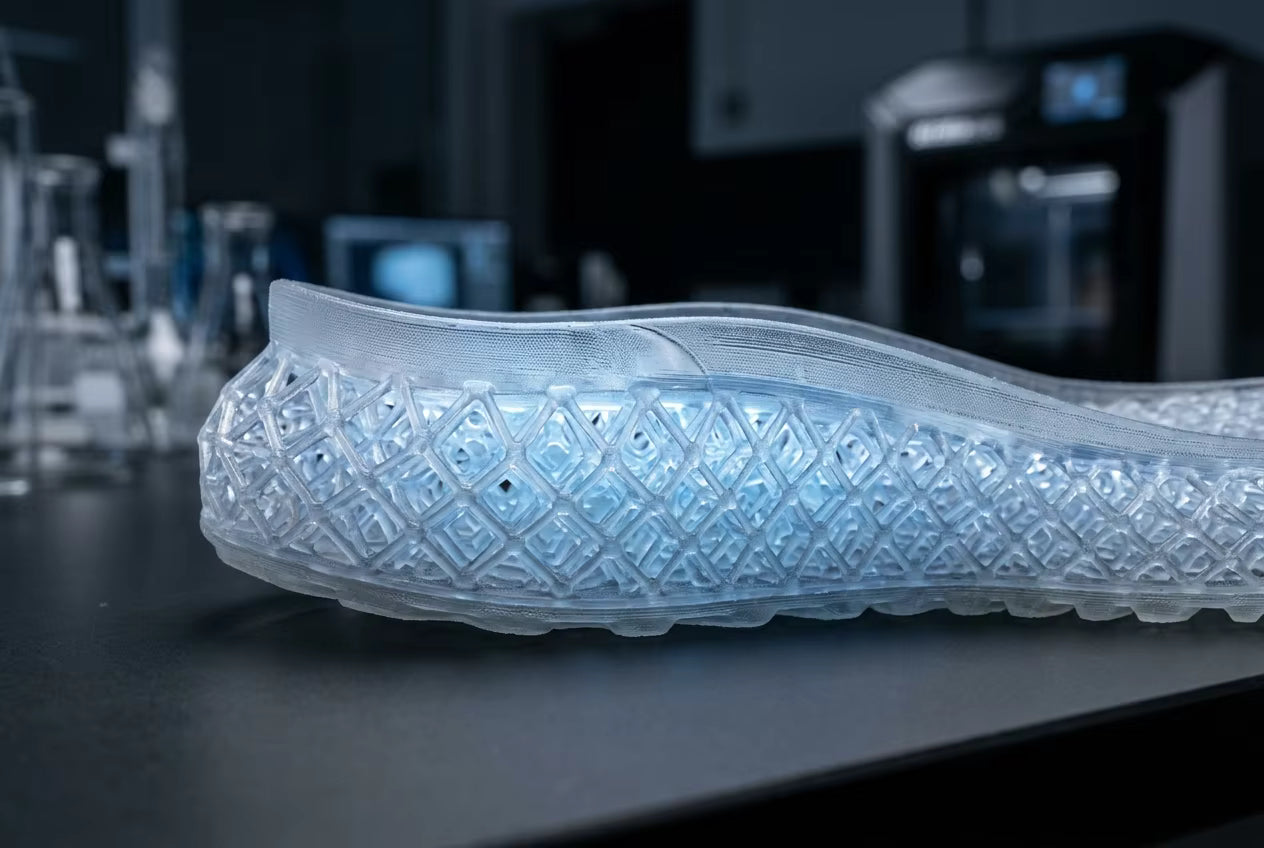
بالاعتماد على تقنية HALS (محلول سائل إضافي عالي السرعة) المملوكة لشركة ARKKY، يتم "تطوير" الأحذية طبقة بعد طبقة من الراتنجات عالية الأداء الحساسة للضوء تحت ضوء الأشعة فوق البنفسجية.
- تصميم قطعة واحدة: يتم "تطوير" الحذاء بالكامل مباشرة من نموذج رقمي، ولا يتطلب أي غراء أو خطوط تجميع.
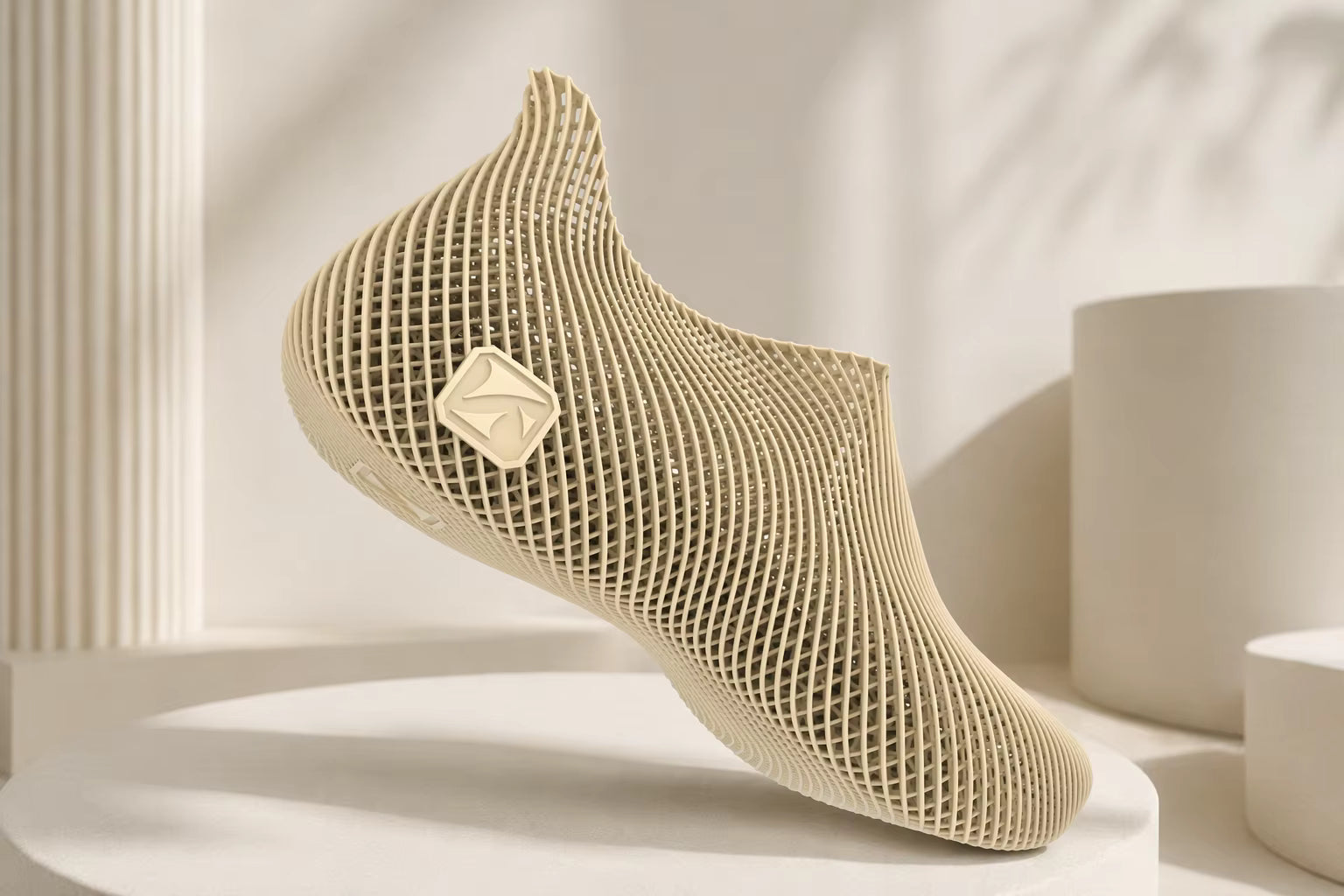
- شبكة حيوية: يتم إنشاء الشبكة الداخلية بواسطة خوارزميات رقمية دقيقة، وتتميز بكثافات متفاوتة تدعم القدم مثل الهيكل العظمي الحيوي.

حالياً، حققت ARKKY قدرات إنتاج ضخمة ناضجة. تقنية HALS أسرع بعشرات المرات من طرق الطباعة ثلاثية الأبعاد التقليدية. ومع ذلك، فإن تعقيد التصنيع لحذاء حقيقي مطبوع ثلاثي الأبعاد من المطاط الصناعي يعني أنه من المستحيل بيعه بالتجزئة بأسعار منخفضة للغاية.

03. فجوة الأداء: الطباعة ثلاثية الأبعاد الحقيقية مقابل الصب بالحقن
يركز العديد من المستهلكين على المظهر والسعر فقط، لكن الفرق الحقيقي يكمن في الأداء:
| الميزة | أحذية مطبوعة ثلاثية الأبعاد حقيقية | "أحذية مطبوعة ثلاثية الأبعاد" مزيفة (مصبوبة بالحقن) |
|---|---|---|
| التصنيع | تصلب ضوئي طبقة تلو طبقة، قطعة واحدة | صب بالحقن + رغوة EVA، أجزاء ملصقة |
| المواد | مطاط صناعي عالي الأداء (مرن، ارتداد عالٍ) | بلاستيك قياسي + EVA (صلب، هش، عرضة للتقادم) |
| الهيكل | شبكة معقدة، سلسة، لا تتطلب تجميع | ثقوب منتظمة، خطوط قوالب مرئية، علامات غراء |
| إحساس القدم | ارتداد ناعم، ملاءمة مريحة، توسيد فائق | إحساس بلاستيكي صلب، ملاءمة سيئة، يسبب التعب |
| التهوية | شبكة مفتوحة الخلايا بالكامل، دوران هواء 360 درجة | مظهر مجوف ولكن بقاعدة صلبة، عرضة للإحكام |
| المتانة | لا يوجد غراء، مقاوم للتمزق، قابل للغسل وسريع الجفاف | تتقشر المفاصل الملصقة بسهولة، تتشوه وتتشقق مع تقدم العمر |
| الاستدامة | بدون قوالب، مواد قابلة لإعادة التدوير، صديقة للبيئة | نفايات قوالب عالية، مواد يصعب تحللها |
- مرونة المواد: تستخدم ARKKY راتنجات متخصصة تم تطويرها من خلال عشرات الآلاف من التجارب. تجمع بين مرونة المطاط وقوة الهندسة ولا تتصلب بمرور الوقت مثل المنتجات المقلدة المصبوبة بالحقن.
- دقة الهيكل: تم تحسين الشبكات ثلاثية الأبعاد الأصلية بناءً على بيانات حركة الإنسان. المناطق المختلفة (ارتداد مقدمة القدم، دعم القوس، توسيد الكعب) لها تدرجات صلابة دقيقة، على عكس الثقوب المنتظمة والصلبة للمنتجات المقلدة.
- المتانة: يلغي البناء من قطعة واحدة مشكلة "تقشير النعل" الشائعة في الأحذية التقليدية الملصقة.
04. لماذا يستحق حذاء مطبوع ثلاثي الأبعاد أصيل هذا السعر؟
- المادة هي الدرع الواقي: توفر راتنجات ARKKY المتخصصة خاصية استعادة الطاقة ومقاومة التمزق التي تتجاوز بكثير البلاستيك العادي.
- أداء محدد بواسطة الذكاء الاصطناعي: يتم تحسين كل عقدة في الشبكة بواسطة الذكاء الاصطناعي لتقديم أقصى تجربة أداء.
- تصنيع مرن ومخزون صفري: لا تتطلب الطباعة ثلاثية الأبعاد قوالب وتسمح بالإنتاج حسب الطلب، مما يقلل بشكل كبير من النفايات الصناعية. هذا هو "التصنيع الأخضر" الحقيقي.
- عائد طويل الأجل: هذا الاستثمار يؤتي ثماره على المدى الطويل من خلال حماية الركبة، والراحة التهوية، والمتانة الدائمة.


05. استعادة النزاهة للسوق: مهمة ARKKY
إن تدفق المنتجات المقلدة منخفضة الجودة لا يضر بالمستهلكين فحسب؛ بل يهدد مستقبل صناعة الطباعة ثلاثية الأبعاد بأكملها. عندما يشتري المستخدم منتجًا مقلدًا ذو جودة رديئة ويستنتج أن "الأحذية المطبوعة ثلاثية الأبعاد مجرد خدعة"، فإن الشركات المبتكرة الحقيقية تعاني.

بصفتها رائدة في مجال الأحذية المطبوعة ثلاثية الأبعاد، تكرس ARKKY جهودها ليس فقط للإنتاج الضخم ولكن أيضًا لتثقيف السوق. نحن نؤمن بالشفافية ونريد أن تفيد تقنية الطباعة ثلاثية الأبعاد الجميع حقًا، بدلاً من أن يتم إقصاؤها بسبب المنتجات المقلدة منخفضة الجودة.
"مستقبل الطباعة ثلاثية الأبعاد لا يقتصر على التصنيع الصناعي فحسب؛ بل يتعلق بجعل نمط الحياة عالي التقنية متاحًا للجميع." - هذه هي الرؤية الأساسية لـ ARKKY.
عندما تواجه سعراً "جيداً لدرجة يصعب تصديقها" للأحذية المطبوعة ثلاثية الأبعاد، تذكر: أنت تحصل على ما تدفع مقابله. فقط عندما ترتدي زوجاً من أحذية ARKKY المطبوعة ثلاثية الأبعاد من المطاط الصناعي، ستفهم أن الارتداد الناعم والراحة التهوية هي ما تدور حوله هذه التقنية حقاً.
يشارك:
أفضل الأحذية الرياضية القابلة للتنفس لعام 2026
دعامات تقوّيم القوس المرنة: لماذا لا تناسب كثافة واحدة الجميع