

The evolution of footwear materials has long been a tug-of-war between comfort and longevity. For decades, the industry relied on EVA (ethylene-vinyl acetate) for cushioning and vulcanized rubber for durability—a binary system that often compromised one for the other. However, the emergence of high-performance TPU shoe material marks a shift from simple "plastic" components to highly engineered polymers. This transition is not merely about 3D printing capabilities; it is a fundamental reconfiguration of how we define stability in motion. In my observations of the manufacturing landscape, the focus has shifted from the aesthetic versatility of polymers to their performance under mechanical and thermal stress. This article examines the material science that elevates high-performance TPU above conventional plastics, specifically addressing the pain points of degradation, compression set, and environmental instability that have plagued the footwear industry for generations.
According to research from the American Chemical Society, the molecular structure of TPU—comprising alternating hard and soft segments—allows for a unique combination of elasticity and toughness that linear polymers cannot match. Furthermore, data from ScienceDirect indicates that high-grade TPUs exhibit a tensile strength exceeding 30 MPa, significantly outperforming traditional elastomers in energy return cycles.
The Molecular Architecture of High-Performance TPU
To understand why TPU is classified "beyond plastic," one must look at its segmented block copolymer structure. Unlike simple plastics like PVC or polyethylene, which rely on uniform chain structures, TPU is composed of two primary phases: hard segments and soft segments. The hard segments, typically composed of diisocyanates and short-chain diols, act as physical cross-linking points. These segments provide the material with its inherent stiffness, tensile strength, and high-temperature resistance. Conversely, the soft segments, usually made of long-chain polyols, provide the flexibility and low-temperature impact resistance.
The strength of high-performance TPU is largely derived from hydrogen bonding between the hard segments. These bonds create a robust network that resists mechanical shearing. Unlike chemically cross-linked rubbers (like those found in tires), these physical cross-links are reversible. This means that when the material is heated, the hydrogen bonds weaken, allowing it to be reshaped or recycled—a critical factor in sustainable manufacturing. However, at operational temperatures, these bonds remain remarkably stable, providing the shoe with a consistent structural "memory."
This phase-separated morphology is critical for footwear stability. When a runner strikes the ground, the soft segments undergo elastic deformation, absorbing energy. The hard segments, meanwhile, ensure the material does not undergo permanent plastic deformation. This resistance to "compression set"—the phenomenon where a shoe sole loses its "bounce" over time—is what differentiates high-performance TPU from standard EVA foams. While EVA eventually collapses under repeated stress due to its closed-cell structure, TPU maintains its original volume and energy return profile through millions of cycles.
Lattice Geometry and the Physics of Additive Support
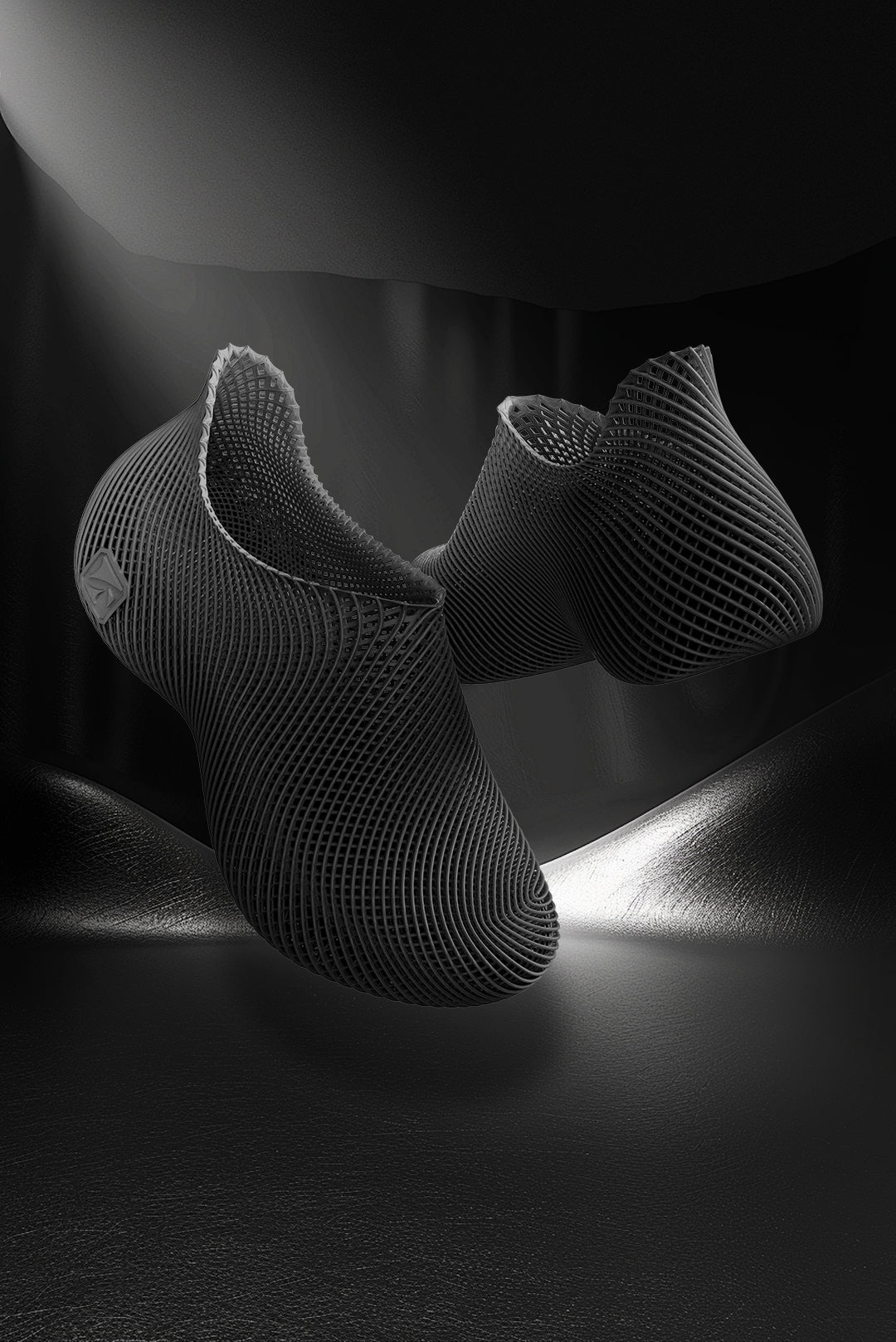
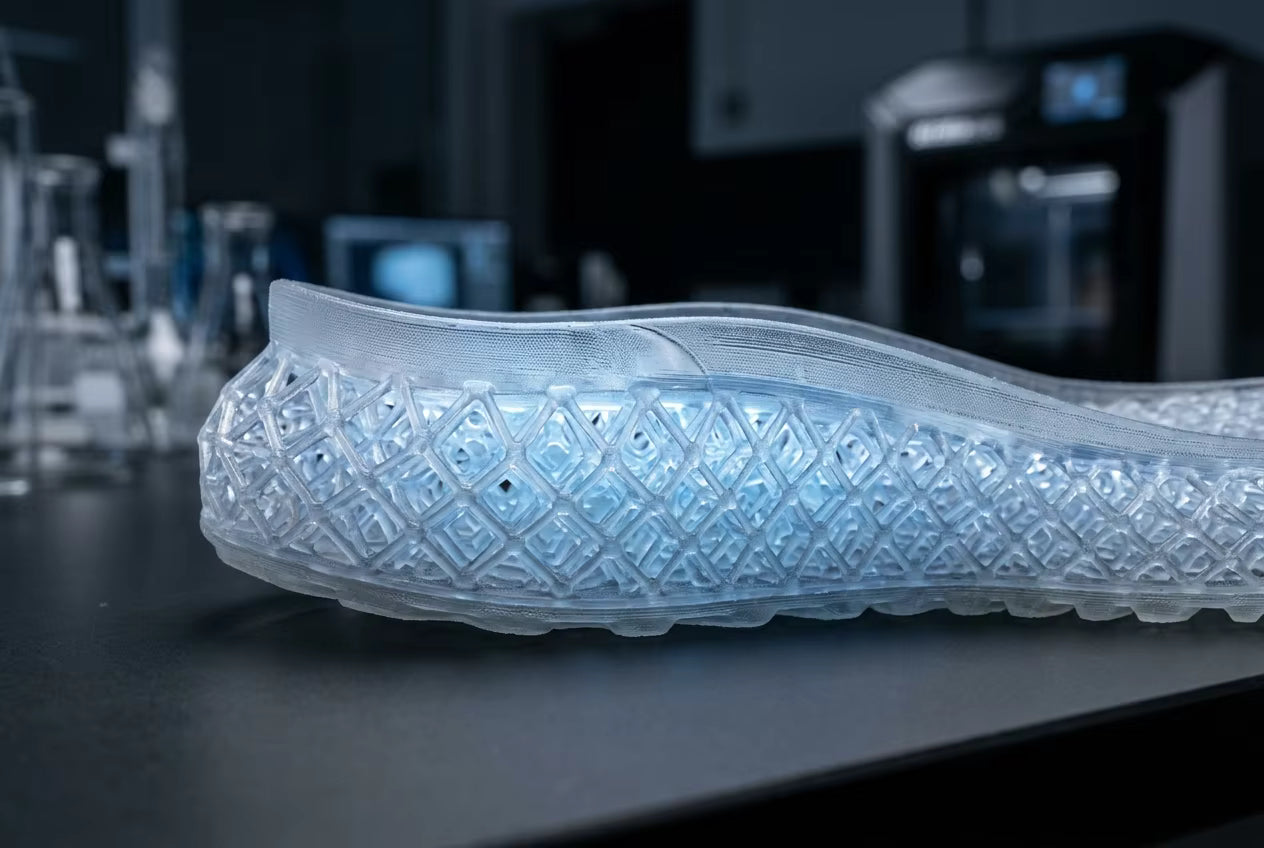
One cannot discuss modern TPU footwear without addressing the role of additive manufacturing, specifically the use of Triply Periodic Minimal Surfaces (TPMS). In traditional manufacturing, the density of a material is uniform. If you want a softer heel, you must glue a softer piece of foam to a harder one. With 3D printed TPU, engineers can vary the lattice geometry to create localized support zones within a single, continuous piece of material.
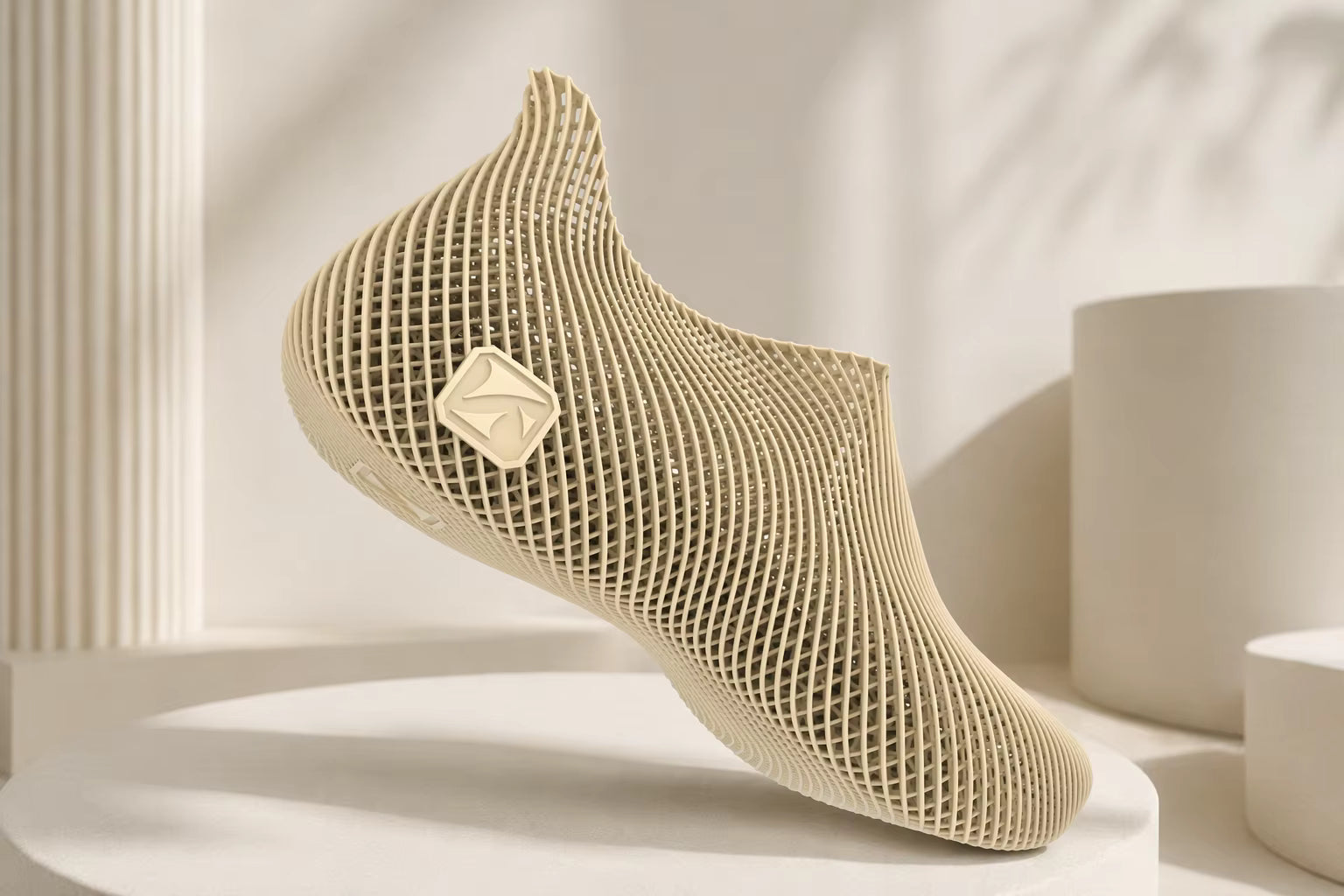
Structures like the Gyroid or Diamond lattice are particularly effective for TPU footwear. These geometries are mathematically optimized to distribute stress evenly across the surface area, preventing the localized stress concentrations that lead to material fatigue. For instance, a denser gyroid structure under the arch provides rigid support, while a more open lattice under the metatarsals allows for natural foot flexion. This "digital foam" behaves as a meta-material, exhibiting properties that the raw TPU polymer alone could not provide. By manipulating the volume fraction of the lattice, Arkky can customize the energy absorption characteristics for different body weights and running styles without changing the material formulation.

Thermal Stability and Performance Under Extreme Conditions
One of the most significant failure points for traditional footwear is temperature sensitivity. Standard rubbers often become brittle and prone to cracking in sub-zero temperatures, while many foams soften and lose their structural integrity in extreme heat. High-performance TPU addresses this through superior thermal stability. The hard segments within the TPU matrix serve as a thermal anchor, preventing the polymer chains from sliding past each other even as temperatures rise toward the material's glass transition point ($T_g$).
The glass transition temperature of footwear-grade TPU is often engineered to be as low as -40°C. This ensures that the soft segments remain in their rubbery, elastic state even in freezing conditions. On the other end of the spectrum, the hard segments do not begin to dissociate until temperatures exceed 150°C, providing a massive safety margin for daily use. This is particularly relevant for professional athletes who train on hot asphalt, where surface temperatures can easily reach 60°C. In such conditions, a traditional EVA midsole would lose its mechanical damping capacity, whereas TPU maintains its structural modulus.
In a controlled engineering environment, high-grade TPU maintains a consistent durometer (hardness) reading across a range from -20°C to 50°C. This means that a shoe designed for stability will feel exactly the same during a winter run in Chicago as it does on a summer trail in the Mojave. This consistency is not just about comfort; it is about injury prevention. If the midsole material softens too much in the heat, the wearer’s foot may over-pronate due to the loss of lateral support. TPU’s ability to resist thermal softening ensures that the engineered gait-correction remains active regardless of the climate.
Sustainability and the Circular Economy of TPU
Beyond its physical performance, high-performance TPU offers a compelling case for environmental responsibility. The footwear industry has long been criticized for its "single-use" model, where millions of pairs of shoes end up in landfills each year because their multi-material components (glued foam, rubber, and mesh) are impossible to separate and recycle. Because TPU is a thermoplastic, it can be ground down, melted, and re-extruded into new components without significant loss of its mechanical properties.
This recyclability is a cornerstone of the circular economy in footwear. Arkky and other leaders in the space are exploring "mono-material" designs, where the entire shoe—upper, midsole, and outsole—is made from various grades of TPU. When the shoe reaches the end of its life, it can be returned to the manufacturer, sterilized, and shredded into pellets for the next generation of 3D printed products. This eliminates the need for volatile organic compound (VOC) heavy adhesives and reduces the carbon footprint associated with virgin plastic production. Furthermore, because TPU is so durable, the replacement cycle is extended, meaning fewer shoes are produced in the first place—a subtle but powerful shift in consumer behavior toward quality over quantity.
Durability Benchmarks Shore Hardness and Abrasion Resistance
In the world of material engineering, durability is measured through two primary lenses: Shore hardness and the abrasion index. Shore hardness (typically Shore A for footwear) determines the material's resistance to indentation. High-performance TPU typically ranges between 85A and 95A for footwear applications. A 95A TPU provides a firm, stable base ideal for high-impact sports, while 85A offers a softer, more responsive feel for daily trainers.
The table below illustrates the technical comparison between high-performance TPU and traditional footwear materials based on standard engineering benchmarks:
| Metric | High-Performance TPU | Traditional EVA Foam | Vulcanized Rubber |
|---|---|---|---|
| Tensile Strength | 35 - 55 MPa | 2 - 8 MPa | 15 - 25 MPa |
| Abrasion Loss (DIN) | < 30 mm³ | > 150 mm³ | 80 - 120 mm³ |
| Elongation at Break | 400% - 600% | 150% - 250% | 300% - 500% |
| Energy Return | 65% - 75% | 45% - 55% | 40% - 50% |
| Compression Set | Very Low | High | Moderate |
As shown, the abrasion resistance of TPU is nearly five times greater than that of EVA. This allows designers to use thinner outsoles or even eliminate the outsole entirely, integrating the traction pattern directly into the 3D printed TPU structure without sacrificing the shoe's lifespan.

Engineering for Longevity The Arkky Approach to 3D Printed Stability
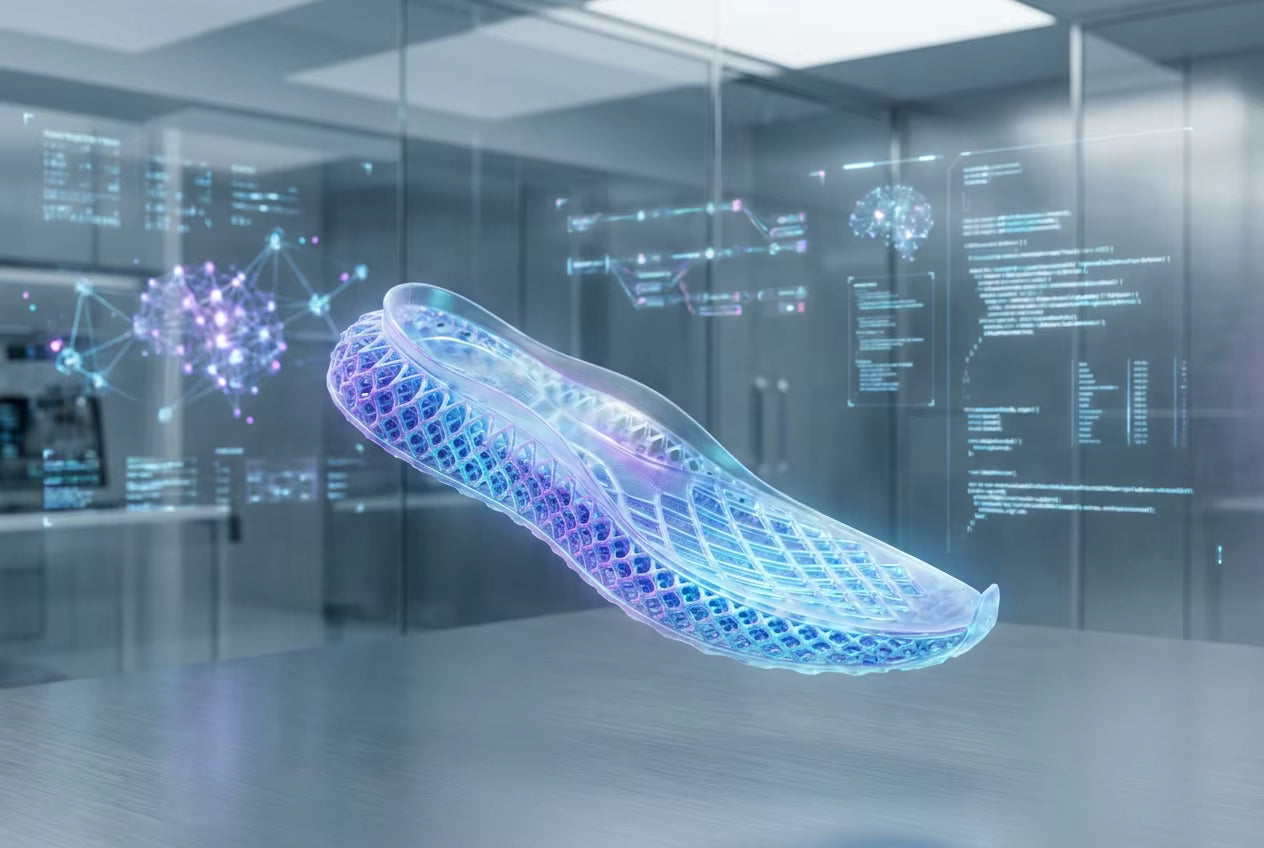
When Arkky entered the high-end footwear space, the objective was clear: to move away from the "disposable" nature of modern sneakers. By utilizing a specific grade of high-performance TPU, the brand has focused on the intersection of additive manufacturing and polymer science. The lattice structures used in their designs are not just for aesthetics; they are optimized through finite element analysis (FEA) to ensure that the material is distributed exactly where the stress is highest.
One of the unique aspects of Arkky's process is the management of hydrolysis resistance. Many standard TPUs are susceptible to hydrolysis—the chemical breakdown of the polymer in the presence of water—over long periods. By selecting a polyether-based TPU rather than a polyester-based one, the brand ensures that the structural integrity of the shoe remains intact even in humid environments or after repeated exposure to wet conditions. This engineering choice reflects a long-term commitment to durability that exceeds the industry standard 300-500 mile replacement cycle.

Material Selection Guide Choosing TPU for Performance and Comfort
Selecting a TPU-based shoe requires an understanding of your specific stability needs. Not all TPU is created equal, and the way it is processed—whether through injection molding or 3D printing—changes its feel significantly.
Shopping Recommendations for Engineered Footwear:
- For High-Impact Athletes (Running, Cross-Training): Look for a "High-Rebound" TPU with a Shore A hardness of at least 95. This ensures maximum energy return and prevents the shoe from "bottoming out" during intense lateral movements. The firm structure provides the necessary counter-force to explosive movements.
- For Daily Comfort and Recovery: Opt for a 3D printed lattice structure utilizing an 85A TPU. The lattice design allows the material to behave more softly than a solid block, providing a "cloud-like" sensation while still maintaining the long-term durability that EVA lacks.
- For All-Weather Durability: Ensure the footwear specifies "Polyether-based TPU" if you live in high-humidity or coastal areas. This is the gold standard for resisting long-term chemical degradation caused by moisture.
The primary advantage here is that TPU allows for a "tuned" experience. By adjusting the density of the 3D printed lattice, a single material can provide different zones of stability and softness within the same midsole, a feat that traditional multi-density foams struggle to achieve without complex gluing processes that eventually fail.
The Future of Footwear Engineering
The shift toward high-performance TPU represents more than a trend; it is the maturation of footwear as a tool of human performance. By moving beyond the limitations of basic plastics and foams, we are entering an era where a shoe can be as precisely engineered as an aerospace component. The data is clear: TPU offers a combination of thermal stability, mechanical strength, and abrasion resistance that traditional materials simply cannot match. As we continue to refine these polymers, the goal remains the same: to create footwear that does not just support the foot, but endures the journey.
يشارك:
تهوية بلا نفايات: الروح الصديقة للبيئة للأحذية الصيفية المطبوعة ثلاثية الأبعاد